


Understanding Scarcity, Collectibility, and Market Hype in Modern Muscle and Supercars
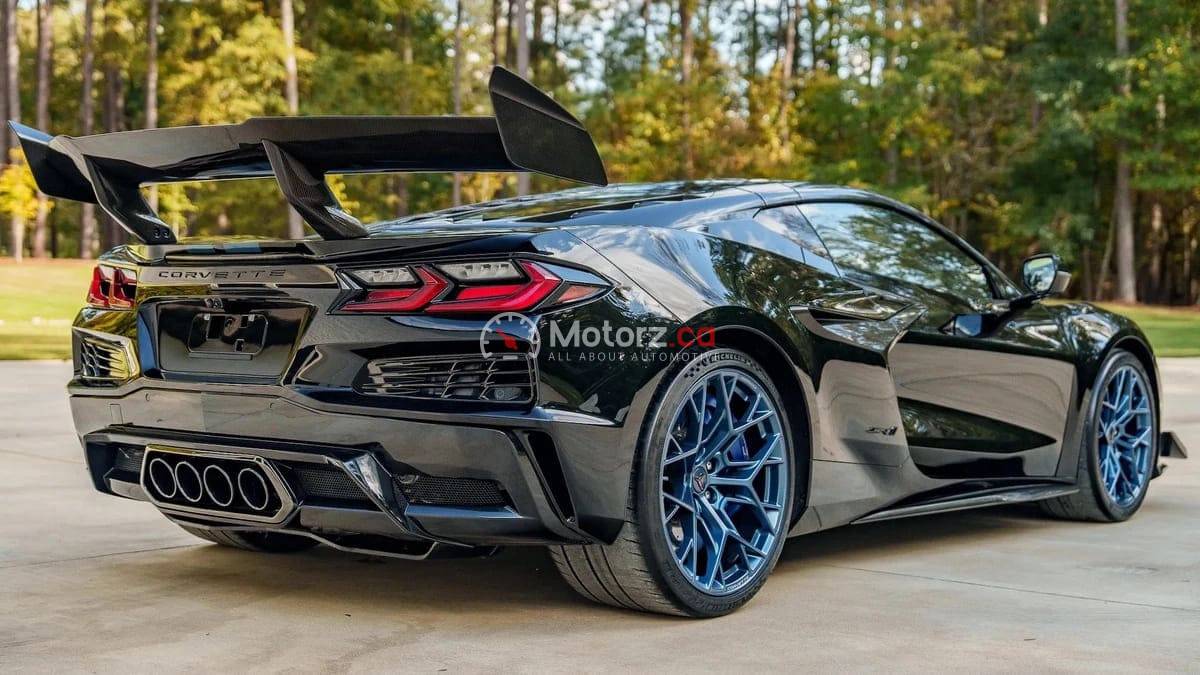
The high-performance Corvette ZR1 Flippers Score landscape is currently a fascinating, and often frustrating, study in market economics. For years, the market has been defined by two distinct powerhouses: the refined, track-focused precision of the Chevrolet Corvette and the brash, high-horsepower swagger of the Dodge Challenger/Charger Hellcat family.
Recent trends, however, have drawn a clear line between the financial trajectories of their respective flagship models. The Corvette ZR1—particularly the new C8 generation, boasting immense horsepower and limited availability—is commanding staggering premiums on the secondary market, allowing early buyers, or “flippers,” to walk away with tens of thousands in profit. Simultaneously, the market for the mighty Dodge Hellcat is normalizing rapidly, pushing used values back toward, and often below, their original sticker prices, leaving many enthusiastic owners and speculators facing significant depreciation.
This divergence is more than just a passing trend; it reveals fundamental differences in brand strategy, collectibility, production volume, and market positioning. This analysis explores why one performance titan is an appreciating asset for a privileged few, while the other is returning to the predictable depreciation curve of a high-volume performance car.
The Appreciating Asset – The Corvette ZR1 Phenomenon
The latest generation of the Chevrolet Corvette ZR1 has positioned itself as an instant collectible, ensuring that the few cars delivered early command massive markups and lead to rapid, profitable flips for the original owners.
Engineered Scarcity and Hyper-Performance
General Motors (GM) has intentionally manufactured scarcity and exclusivity around its top-tier Corvette variants, a strategy that directly fuels secondary market appreciation.
Ultra-Limited Allocation: Like the C8 Z06 before it, the C8 ZR1 (the most powerful Corvette ever produced, with up to 1,064 horsepower in its top trim) is released in extremely limited batches, especially during its initial model years. This restricted supply immediately creates overwhelming demand that far outstrips production capacity.
The “First to Own” Premium: Wealthy enthusiasts and social media influencers are willing to pay enormous premiums—often exceeding 70,000 USD over the MSRP (which starts over 200,000 USD)—simply to be among the first owners. This premium acts as a functional, short-term lease cost for having the car a year or more earlier than waiting for a standard allocation.
Flipping Example: A recent 2026 Corvette ZR1 with only five miles on the odometer, originally stickered at approximately 220,745 USD, was quickly resold for an astonishing 290,000 USD on an auction site. This single transaction netted the flipper nearly 70,000 USD in gross profit, despite GM’s efforts to void warranties on cars resold within 12 months.
Supercar Status: The ZR1’s performance figures—including 0-60 mph times under 2.3 seconds and a top speed exceeding 230 mph—place it in direct competition with supercars costing three to five times its price. This inherent value proposition, often referred to as “bang for the buck,” further solidifies its desirability to both collectors and performance drivers.
GM’s Anti-Flipping Measures and Their Limited Impact
To discourage flipping and ensure cars go to genuine enthusiasts, GM implemented strict contractual agreements and warranty restrictions, yet these measures have had only a modest impact on the secondary market frenzy.
Warranty Voiding Policy: GM threatened to void the factory warranty on any new ZR1 that was resold by the original buyer within the first twelve months of ownership. This harsh penalty was designed to make the flip financially unviable by stripping the car of its essential long-term protection.
The Investor Mentality: The fact that buyers continue to pay massive premiums for a car with a potentially voided warranty underscores the strength of the ZR1’s collector demand. For high-net-worth investors, the potential profit from the immediate sale far outweighs the risk of a voided warranty, treating the car less like a vehicle and more like a high-value commodity.
The Normalizing Asset – Hellcat Depreciation Hits Hard
In sharp contrast to the ZR1, the Dodge Challenger and Charger Hellcat models, which democratized 700+ horsepower performance for the masses, are now experiencing a rapid return to normal depreciation curves.
Volume, Velocity, and the Market Correction
The primary factors driving the decline in Hellcat resale value are rooted in the model’s production volume and the recent shift in the broader used-car market.
High Production Volume: Unlike the Corvette, which is deliberately constrained, the Hellcat was a high-volume model produced for nearly a decade. While the final model year editions (like the Jailbreak and Last Call series) saw temporary premiums, the sheer number of 707+ horsepower Challengers and Chargers on the road prevents true scarcity for the majority of the model year runs.
The Pandemic Peak Correction: During the post-pandemic market boom of 2021-2023, nearly all used performance cars, including Hellcats, saw unprecedented value retention, sometimes even appreciating. That bubble has burst. Used Hellcat values are now settling back to predictable levels, with many 2015-2018 models seeing a depreciation drop of nearly 10 percent in average sale price since their 2023 peak.
Depreciation Statistics: On average, a high-performance muscle car like the Challenger loses a significant percentage of its value in the first few years. For a five-year-old Hellcat, the average depreciation sits around 29 percent of its original MSRP, demonstrating a clear loss of value for those who bought new with the hope of breaking even or profiting.
Loss of Market Dominance and the Electric Transition
The retirement of the V8 Hellcat and the introduction of new competitors have also played a role in softening the secondary market.
The End of an Era: While the “Last Call” designation should theoretically boost values, the impending transition to the electric Dodge Charger Daytona (which replaces the gasoline-powered V8 cars) creates uncertainty. Buyers who wanted the final V8 cars have already purchased them, and those waiting for depreciation have arrived.
High Operating Costs: The Hellcat family has notoriously high operating costs, including insurance, fuel consumption, and the inevitable expense of replacing tires frequently. This factor limits the pool of potential used buyers to those willing and able to shoulder these long-term expenses, unlike the more collectible ZR1, which is often purchased for its status and rarity.
The “Driven Hard” Factor: Given the Hellcat’s reputation for extreme power and tire-shredding fun, the used market is filled with cars that have been driven hard. This reduces the value of most examples, reserving any potential appreciation solely for the extremely rare, low-mileage, pristine collector-grade cars.
The Flipping Playbook – Why Some Cars Appreciate and Others Don’t
The contrasting fortunes of the Corvette ZR1 and the Hellcat offer clear lessons on what makes a modern performance car a potential investment versus a rapid depreciator.
The Three Pillars of Modern Collectibility
For a new performance car to defy the normal laws of depreciation, it must satisfy three critical criteria:
Engineered Scarcity (The “Specialty” Factor): True investment-grade cars are not mass-produced. They are the top-tier, limited-run variants—the ZR1, the Porsche GT3, the Ford GT. The manufacturer controls the supply, forcing the secondary market to set the price. The Hellcat, while powerful, was a series production car designed for wide distribution.
Technological Innovation (The “First/Last” Factor): Investment cars often represent a peak in engineering. The C8 ZR1 is the peak of the mid-engine performance platform. The Hellcat represented the ultimate V8 muscle car, but because it was produced for so many years, the unique technology factor became less novel over time.
Brand Pedigree (The “Blue Chip” Factor): The Corvette nameplate has a long, established history of collectibility, often compared favorably to Porsche in terms of value retention. The Dodge muscle cars, while iconic, typically hold closer to the standard depreciation curve of high-volume performance vehicles, making them enthusiast cars, not collector assets.
Tips for Performance Car Buyers and Enthusiasts
For the Collector/Investor: Focus exclusively on the top-tier, lowest-volume trims (e.g., ZR1, GT3 RS, specific “Last Call” Hellcats with unique serial numbers). Be prepared to pay a markup, but ensure the car is held long-term (5-10 years) and kept in pristine, low-mileage condition to capture the eventual collector premium.
For the Driver/Enthusiast: Recognize that the best way to own a high-horsepower car like the Hellcat or even a C8 Stingray is to buy used after the initial owner has absorbed the most brutal depreciation. A five-year-old Hellcat is now entering the sweet spot where it is affordable, and its future depreciation curve is milder.
Beware of Dealer Markups (ADM): Paying a massive Additional Dealer Markup (ADM) on any car that is not a limited-run hyper-specialty vehicle is almost guaranteed to result in a financial loss. The C8 ZR1 is the exception to the rule, not the standard.