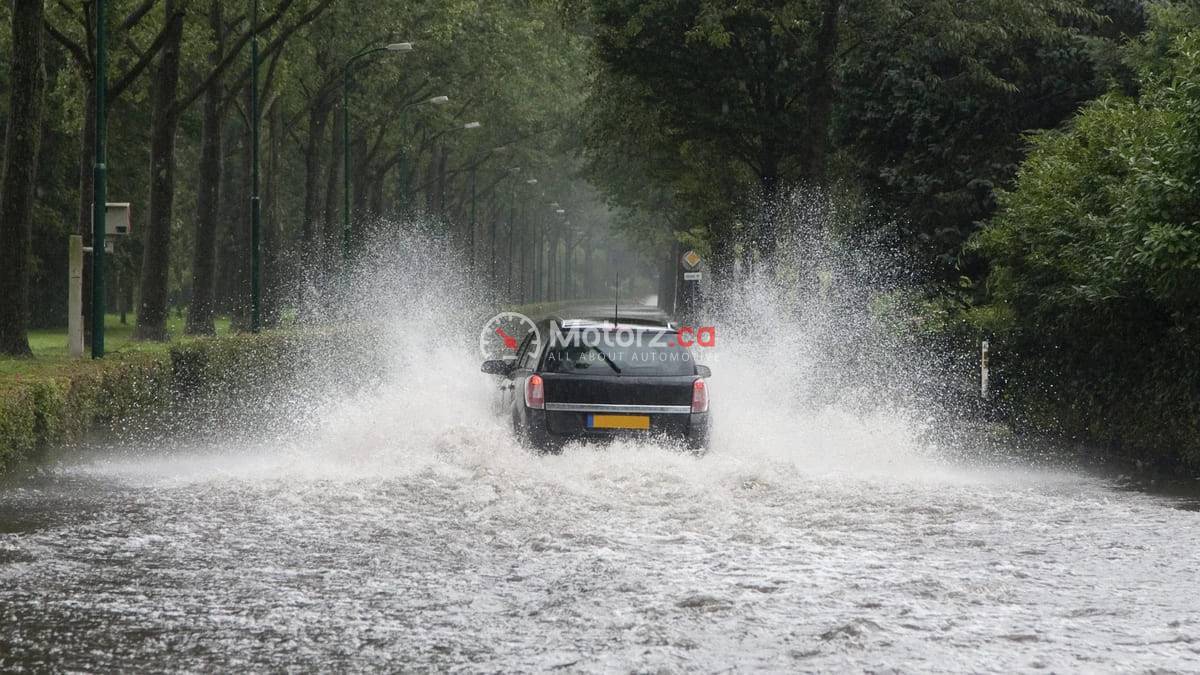

We have all been there: a heavy downpour leaves a massive puddle spanning the Driving Through Standing Water. To many drivers, it looks like a minor inconvenience or even a fun opportunity to make a big splash. You see an SUV breeze through it, so you figure your sedan can handle it too. You maintain your speed, hit the water, and for a second, a wall of spray covers your windshield.
Then, the unthinkable happens. The engine coughs, stutters, and dies with a sickening metallic “clunk.” The lights on your dashboard flicker, and you are left coasting to a stop in the middle of a flooded street.
What just happened? You likely just experienced hydrolock, a mechanical nightmare that can turn a healthy engine into a pile of scrap metal in less than a second. In this Troubleshooter guide, we will explore why driving through standing water is one of the most dangerous gambles you can take with your vehicle, the physics of how water destroys engines, and what you should do if you find yourself facing a flooded road.
The Physics of Hydrolock: Why Engines Driving Through Standing Water
To understand why a splash is so dangerous, you have to understand how an internal combustion engine works. Engines are designed to compress a mixture of air and fuel. Air is a gas, which means it is compressible; it can be squeezed into a tiny space before being ignited.
The Incompressible Problem
Water, unlike air, is a liquid. In the world of physics, liquids are virtually incompressible.
The Scenario: When your car’s air intake sucks in water instead of air, that water enters the combustion chamber.
The Result: As the piston moves upward to compress the “mixture,” it hits a wall of water. Since the water cannot be squeezed, the massive force of the engine’s momentum has nowhere to go. Something has to break.
Common Mechanical Failures
When hydrolock occurs, the internal components of the engine bear the brunt of the impact. It is common to see:
Bent Connecting Rods: The metal arms that push the pistons are forced to bend under the pressure.
Fractured Engine Blocks: The pressure can be so intense that the piston actually punches a hole through the side of the engine.
Shattered Crankshafts: The literal “spine” of your engine can snap from the sudden stop.
The “Vacuum” Effect: How Water Enters Your Engine
You might think your engine is sealed tight, but it needs a constant supply of outside air to function. This air is drawn in through an air intake system, which is the primary “gateway” for water damage.
Low-Slung Intakes
Many modern cars, especially those designed for fuel efficiency or performance, have air intake snorkels located surprisingly low in the front bumper or wheel well. Even if the standing water is only six inches deep, the “bow wave” created by your car moving through the water can push that liquid directly into the intake.
The Cold Air Intake Risk
If you have modified your car with an aftermarket “cold air intake,” your risk is even higher. These systems often place the air filter very low to the ground to grab cooler air, making them act like a straw that sucks up water the moment you hit a deep puddle.
Beyond the Engine: Electrical and Brake Damage
Even if you manage to avoid hydrolocking your engine, standing water can “sink” your car’s reliability in other ways.
Electrical Short Circuits
Modern vehicles are packed with sensors, computers (ECUs), and wiring harnesses. Many of these are located low in the chassis. Submerging these components in dirty, silty rainwater can cause immediate short circuits or, even worse, long-term corrosion. You might drive away fine today, only to have your car’s computer fail three months later because of “wicking” moisture in the wiring.
Brake Rotor Warping
If you have been driving for a while, your brake rotors are hot. Plunging hot metal into cold standing water can cause thermal shock. This often results in warped rotors, leading to a pulsating brake pedal and reduced stopping power.
Contaminated Fluids
Floodwater is rarely clean. It is a mix of oil, silt, and chemicals. If water reaches the level of your transmission or differential vents, it can mix with your gear oil. Water-contaminated oil looks like “milky coffee” and loses its ability to lubricate, leading to a total transmission failure down the road.
How to Judge Standing Water: The “Rule of Hubs”
If you cannot turn around and must navigate a patch of water, you need to judge the depth accurately.
The Wheel Hub Landmark
A good rule of thumb is the center of your wheels (the hubs). If the water appears to be deeper than the center of your wheels, do not attempt to cross. Once water reaches the door sills, it can begin to enter the interior cabin, ruining carpets and under-seat electronics.
Watch Other Vehicles
Don’t just look at the water; look at the cars ahead of you. If a car similar to yours is struggling or if the water is reaching their headlights, the road is impassable. Remember that road surfaces can be washed away under the water, meaning a puddle that looks six inches deep could actually be a two-foot-deep sinkhole.
What to Do if Your Car Stalls in Water
If the worst happens and your engine dies while you are in the water, your next steps are critical to saving the vehicle.
Do NOT Attempt to Restart the Engine: This is the most important rule. If there is water in the cylinders, trying to start the car will engage the starter motor and finalize the destruction of your engine.
Turn Off the Ignition: Cut the power to prevent further electrical shorts.
Exit Safely: If the water is rising, get out of the vehicle and move to higher ground. Your life is worth more than the car.
Call a Tow Truck: Once the car is on dry land, a mechanic will need to remove the spark plugs and “crank” the engine manually to see if water sprays out. This is the only way to safely clear a hydrolocked engine.
When in Doubt, Turn Around
A splash through standing water might make for a dramatic photo, but the mechanical risks far outweigh the few minutes you might save by not taking a detour. From the instant destruction of hydrolock to the slow decay of corroded electronics, water is a vehicle’s greatest enemy.
The next time you see a flooded road, remember: you are not just driving through a puddle; you are driving through a potential total-loss insurance claim. Stay dry, stay safe, and always choose the long way around.