
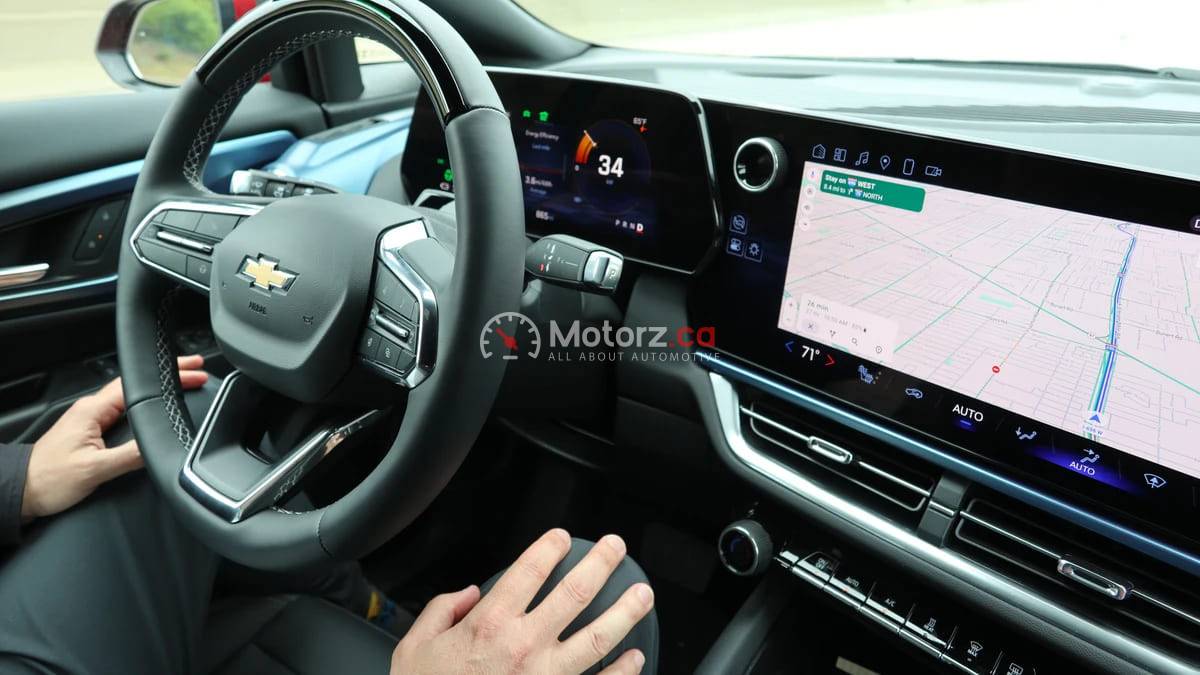

The era of Dominates the Everyday Drive is here, led by two American giants: General Motors (GM) with Super Cruise and Ford with Blue Cruise. These advanced driving assistance systems (ADAS) promise to revolutionize the daily commute and long-distance road trip, reducing driver fatigue and making time behind the wheel more relaxing.
But for the average driver—the one navigating suburban belts, regional highways, and frequent interstate journeys—which system is truly better for everyday driving? Is it GM’s wider mapped network, or Ford’s approach to driver monitoring and its growing availability?
This comprehensive comparison dives deep into the capabilities, coverage, performance, and real-world experience of Super Cruise and BlueCruise, helping you decide which hands-free technology best fits your driving lifestyle.
Understanding Hands-Free Driving: What Are ADAS Systems?
Before comparing the two, it is essential to understand what both Super Cruise and BlueCruise are—and what they are not. These are both examples of Level 2 automation according to the SAE International scale.
Level 2 Automation Defined
Level 2 systems automate steering, acceleration, and braking simultaneously under specific, controlled conditions. Crucially, they require the driver to remain attentive and ready to take control at all times.
Adaptive Cruise Control (ACC): Maintains a set speed and a safe following distance from the vehicle ahead.
Lane Centering Assistance (LCA): Actively steers the vehicle to keep it centered in its lane.
Hands-Free Capability: The defining feature of Super Cruise and BlueCruise, allowing the driver to remove their hands from the steering wheel while the system is active on pre-mapped roads.
The Core Safety Mechanism: Dominates the Everyday Drive
What separates these systems from basic ACC and LCA is the mandatory Direct Driver Monitoring System (DDMS). Both GM and Ford utilize infrared cameras aimed at the driver’s face to ensure the driver’s eyes remain fixed on the road, even when their hands are off the wheel. If the driver looks away for too long, the system will issue warnings and eventually disengage, demanding manual control. This vigilance is key to safety and is a major reason why both systems generally rank highly in independent safety reviews.
GM Super Cruise: The Extensive Network and Polished Performance
Super Cruise, first launched by Cadillac in 2017, benefits from a longer development cycle and a unique reliance on highly precise data.
Coverage and Mapping: The Geographic Advantage
The most significant advantage of Super Cruise for many drivers is its massive coverage map.
Vast Network: Super Cruise currently works on over 750,000 miles of compatible divided highways in the U.S. and Canada. This extensive network uses high-definition (HD) map data derived from LiDAR scans.
LiDAR Mapping: GM’s reliance on extremely precise, pre-scanned LiDAR maps means the system knows the road’s exact curvature, elevation, and lane positions with great accuracy, often leading to very smooth, confident driving behavior.
Real-World Impact: For a driver who frequently takes long-haul trips across state or provincial borders, or simply travels along a wide variety of interstates, Super Cruise is far more likely to be available and functional.
Advanced Features and User Experience
Super Cruise offers a suite of features that enhance the everyday highway driving experience:
Automatic Lane Change: With a simple tap of the turn signal stalk, the system checks the surrounding traffic and executes a smooth lane change autonomously.
Automatic Lane Change (Super Cruise-initiated): In newer iterations, the system can initiate a lane change on its own to pass slower traffic, returning to the original lane once clear. This mimics human driving behavior and is a significant convenience feature.
Towing Capability: Available on certain GM trucks and SUVs (like the Chevrolet Silverado and GMC Sierra), Super Cruise can be used while towing a trailer, which is a major benefit for drivers with frequent towing needs.
Unresponsive Driver Protocol: If a driver fails to respond to multiple alerts to pay attention or take over, Super Cruise is programmed to slow the vehicle to a controlled stop, turn on the hazard lights, and contact emergency services (OnStar), offering a higher level of safety backup.
Ford BlueCruise: The Top-Rated Safety and Accessibility Champion
BlueCruise, an evolution of Ford’s Co-Pilot360 suite, has rapidly gained market share and received high praise for its safety-first approach and seamless integration.
Coverage and Accessibility: The Focus on Blue Zones
While Ford’s current mapping network is smaller than GM’s, it is expanding rapidly and is built on a slightly different philosophy.
Focused Network: BlueCruise operates on designated “Blue Zones” of divided highways, currently covering over 130,000 miles of North American roads. This mileage is constantly growing through over-the-air (OTA) updates.
Sensor Stack: BlueCruise primarily relies on a combination of high-resolution cameras, radar, and GPS data, rather than the LiDAR mapping utilized by GM.
Market Availability: A key advantage for Ford is the accessibility of BlueCruise. It is available across a wider range of high-volume, mainstream vehicles, including the F-150, Mustang Mach-E, Expedition, and Explorer, often available on mid-level trims, making it more attainable for the average buyer than the typically top-trim-only Super Cruise.
Real-World Performance and Monitoring
Independent testing, including Consumer Reports, has often rated BlueCruise highly, sometimes even above Super Cruise, largely due to its driver monitoring rigor.
Gaze Monitoring: Ford’s driver-facing camera system is exceptionally strict about monitoring the driver’s eyes. This heightened vigilance ensures the driver is paying attention, which directly addresses safety concerns about hands-free technology.
Smoother Updates (BlueCruise 1.3+): Ford has consistently rolled out OTA updates (e.g., BlueCruise 1.3) that introduce more human-like and natural vehicle movements. This includes smoother, more gradual lane positioning, less abrupt braking, and improved behavior around curves and merges.
Lane Change Assist: Like Super Cruise, the BlueCruise system offers Lane Change Assist, allowing the driver to initiate an automatic lane change with the turn signal stalk.
Head-to-Head: Which System Wins for the Everyday Driver?
The choice between Super Cruise and BlueCruise heavily depends on your specific driving profile. The two systems have distinct strengths that cater to different needs.
Super Cruise: The Long-Distance, High-Feature King
Super Cruise is the better choice for:
Frequent Cross-Country Travelers: The sheer size of GM’s mapped network means you will encounter far fewer “take over” prompts on a long road trip.
Truck and SUV Owners Who Tow: The ability to use the hands-free feature while towing a trailer is a unique and significant feature that dramatically reduces the stress of hauling.
Those Who Value Automation: With its ability to autonomously execute passing maneuvers, Super Cruise offers a slightly more automated experience, closer to the promise of “set it and forget it” (while still keeping eyes on the road).
Insight: Super Cruise often feels more “polished” in its execution. Its use of LiDAR data results in highly confident and centered lane-keeping, making the experience exceptionally smooth and stable for long periods.
BlueCruise: The Commuter and Value Champion
BlueCruise is the better choice for:
Daily Commuters and Regional Drivers: If your hands-free use is limited to a couple of major interstates or Blue Zones in your region, BlueCruise provides a stellar experience on those specific routes.
Safety-Focused Buyers: Its highly strict and rapid driver monitoring system provides a stronger safeguard against inattention, which is a major factor in independent safety ratings.
Value-Conscious Buyers: Since BlueCruise is available on lower, more accessible trim levels (especially in high-volume models like the F-150 and Mach-E), you can get the hands-free technology without stepping into a top-tier luxury trim, making it a better value proposition.
Insight: BlueCruise often earns high marks for its “ease of use” and “clear when safe to use” indicators. Newer versions feel very intuitive and natural, making it an excellent co-pilot for repetitive daily drives.
Cost and Subscription: The Long-Term Commitment
Both systems require an ongoing financial commitment, which is a critical factor for the everyday driver’s budget.
Trial Periods and Activation
Initial Offering: Both GM and Ford typically offer a trial period (e.g., 90 days, three years, or a similar period) with the purchase of a new, equipped vehicle.
Hardware vs. Subscription: The necessary hardware (cameras, sensors, processing unit) is installed at the factory. The ongoing cost is a subscription fee to maintain the connectivity, map updates, and service necessary for the hands-free feature to function.
The Running Cost Factor
The exact subscription costs for both Super Cruise (via OnStar) and BlueCruise (via FordPass) are subject to change and vary based on the package and length of the subscription. However, buyers should budget for an annual or monthly fee to keep the hands-free functionality active after the trial period expires.
This subscription model means that while you may get the hardware for “free” with the car purchase, the hands-free feature itself is a running expense—a key consideration for the overall total cost of ownership for the everyday driver.
The Future of the Fight: What’s Next for Hands-Free Driving?
Both GM and Ford are committed to continually improving their systems through over-the-air (OTA) updates, which means today’s comparison is merely a snapshot.
Super Cruise Expansion: GM’s stated goal is to continue expanding its mapped network, adding more minor divided highways and eventually moving the system closer to a true Level 3 capability in controlled scenarios.
BlueCruise City Driving: Ford has hinted at future versions of BlueCruise that could potentially handle more complex driving scenarios, such as highway off-ramps, urban intersections, and traffic light recognition. This evolution would dramatically increase its utility for the everyday urban and suburban driver.
Ultimately, the competition is driving innovation that benefits the consumer. Both Super Cruise and BlueCruise are robust, reliable systems that outperform many rivals, including most forms of Tesla Autopilot, largely because of their hands-free capability coupled with mandatory, direct driver monitoring.
Final Verdict: Choose Your Co-Pilot
For the driver whose daily life involves a wide range of highway travel, long road trips, or towing, the sheer coverage and advanced passing maneuvers of GM Super Cruise make it the superior choice.
For the driver who prioritizes budget, mainstream vehicle availability, and a safety-first approach to their predictable daily highway commute, Ford BlueCruise provides exceptional value and performance.
The right choice is not a matter of one being inherently better than the other, but which system’s core capabilities align best with your typical route and driving habits. Test drive both, if possible, on your own routine roads to find the hands-free system that truly enhances your everyday driving experience.