

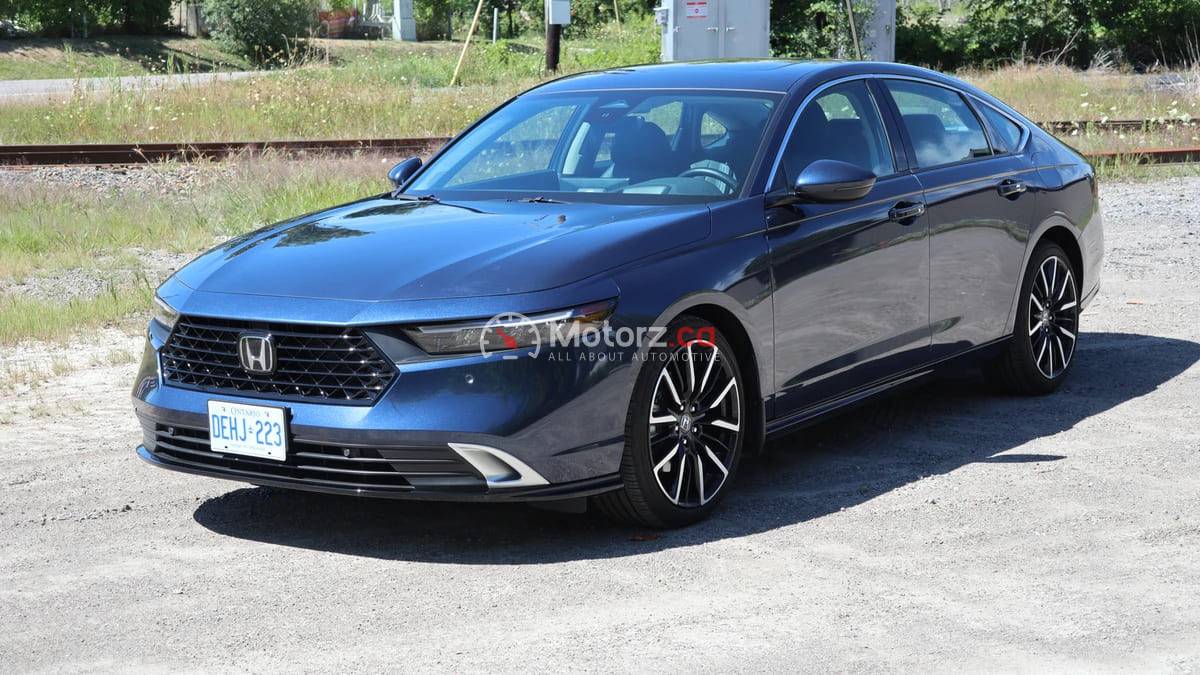

The Accord Hybrid Sedans in Canada is celebrated for its efficiency and reliability, making it a popular choice for Canadian drivers. However, a significant software defect has prompted Honda Canada to issue a safety recall affecting 6,632 Accord Hybrid sedans from the 2023, 2024, and 2025 model years. The defect, stemming from a crucial electronic component, poses a serious safety risk: the potential for a sudden loss of drive power while the vehicle is in operation.
This immediate and unexpected loss of motive power—whether the vehicle is driving in city traffic or at highway speeds—dramatically increases the risk of a rear-end collision or other crash resulting in injury. The issue is entirely digital, pointing to a programming error within the vehicle’s complex control system.
This comprehensive guide breaks down the precise technical cause of this mandatory recall (Transport Canada ID: 2025-625), identifies the affected vehicles, explains the free dealer-performed fix, and provides essential next steps for Canadian owners to ensure their safety and the continued reliable performance of their Honda Accord Hybrid.
The Technical Glitch: Why the Accord Hybrid Sedans in Canada
The issue at the heart of this major safety recall is rooted in the digital brain of the hybrid powertrain, a component known as the Integrated Control Module (ICM).
The Integrated Control Module (ICM) Software Defect
The Integrated Control Module (ICM) is a central electronic control unit (ECU) responsible for managing numerous electrical systems, including the critical flow of power from the hybrid battery and electric motor to the wheels.
The Root Cause: The defect stems from improper software programming by a third-party supplier for the ICM’s Central Processing Unit (CPU). The software was incorrectly calibrated to monitor the CPU for abnormalities.
The Misinterpretation: The faulty software was designed with an overly sensitive fault detection mechanism. It was prone to misinterpreting minor internal communication errors (sometimes caused by electrical load or “noise” as more functions were added to the module) as critical malfunctions of the CPU.
The Reaction: When the software falsely detects a “CPU abnormality,” its programmed response is to reset the Integrated Control Module.
The Consequence: When the ICM resets while the vehicle is driving, it cuts the drive power to the wheels. This sudden, unexpected loss of power can occur without warning, leaving the driver unable to maintain speed or safely move the vehicle out of the path of traffic.
Safety Risk: The sudden and complete loss of motive power while the vehicle is in motion increases the risk of a collision or injury, especially on Canadian highways where speed differentials are high.
Affected Model Years and Scope
The recall specifically targets Accord sedans equipped with the 2.0-liter hybrid system.
Model Years Affected: Certain 2023, 2024, and 2025 Honda Accord Hybrid sedans.
Canadian Population: A total of 6,632 vehicles are identified in Canada, according to documents filed with Transport Canada.
Global Context: This is part of a much wider recall campaign affecting over 256,000 Accord Hybrid units in the United States, indicating a major supplier-level software error in the mass-produced hybrid component.
Your Immediate Action Plan: Securing the Free Software Fix
Honda Canada is taking voluntary action to correct this defect by providing a free, dealer-performed software update for all affected vehicles.
How to Confirm Your Vehicle’s Status
Owners should proactively check their vehicle’s status, as official mailed notifications may take time to arrive.
Locate Your VIN: The Vehicle Identification Number (VIN) is required for verification and can be found on your insurance slip, vehicle registration, or at the base of the driver’s side windshield.
Use the Official Tool: Visit the dedicated recall lookup tool on the official Honda Canada website and enter your 17-character VIN.
Check Transport Canada: You can also check the Transport Canada Motor Vehicle Safety Recalls Database using the ID 2025-625.
Contact Your Dealer: If your vehicle is confirmed as part of the recall population, immediately contact your preferred authorized Honda dealership to schedule the service appointment.
The Correction: A Simple Software Update
Fortunately, the resolution for this critical issue is entirely digital and straightforward, requiring no hardware replacement.
The Fix: Authorized Honda dealerships will connect the vehicle to their diagnostic system and perform a software reprogramming of the Integrated Control Module (ICM). This new software is designed with corrected logic that prevents the false CPU abnormality detections, thereby eliminating the unnecessary ICM resets and the subsequent loss of drive power.
Cost and Duration: The entire procedure is covered by Honda and will be performed at NO CHARGE to the owner. The actual time needed for the software re-flash should be minimal, though total time at the dealership will vary based on their service schedule.
Owner Notification: Honda plans to begin mailing official recall notification letters to registered owners in Canada around January 5, 2026.
Understanding the Implications of Hybrid System Recalls
This software recall for the Honda Accord Hybrid underscores the increasing vulnerability of modern vehicles to digital defects, especially in complex hybrid powertrains.
The Challenge of Electrified Powertrains
Hybrid vehicles, by design, are more complex than traditional gasoline-only cars. They require intricate software to seamlessly manage the shift between the Internal Combustion Engine (ICE), the electric motor, and the regenerative braking system.
ICM Centralization: The Integrated Control Module is vital in a hybrid, acting as the nexus for these systems. A flaw in its programming, as demonstrated here, can halt the entire drive process, as the central brain fails to correctly manage power distribution.
Software Dependency: This recall confirms a growing trend: major safety recalls in modern vehicles are shifting from mechanical failures (like rusted parts or broken linkages) to software defects that interrupt electronic control. While software fixes are easier to deploy than hardware replacements, the immediate safety consequences of a software failure (like unexpected loss of power) can be severe.
Distinguishing Hybrid from Gasoline Models
It is important for owners to note that this specific recall is limited to the Accord Hybrid model.
Engine Difference: The standard, gasoline-only Honda Accord (typically with the 1.5-liter turbocharged engine) uses a different powertrain management system that is not affected by this specific ICM software glitch.
Part Commonality: The hybrid system requires specialized control modules, which is why the recall is specific to the 2.0-liter hybrid configuration and does not cross over to the traditional gasoline model.
Safety Precautions While Awaiting the Service
Although Honda reports no confirmed collisions or injuries related to this Canadian recall, the potential for a sudden loss of power requires drivers of affected models to exercise heightened caution until the software update is complete.
Tips for Driving an Affected Accord Hybrid
Drivers should be aware of the potential for the defect to manifest, especially during periods of high electrical load or stress.
Maintain Distance: Increase the following distance between your vehicle and the car ahead, particularly when driving on busy Canadian highways, to allow maximum reaction time if power is suddenly lost.
Avoid Aggressive Driving: Be smooth with acceleration and deceleration. If the vehicle is in a stressful operating condition (such as hard acceleration followed by sudden braking), this could theoretically exacerbate any electrical “noise” that the faulty ICM software might misinterpret.
Emergency Pull-Off Plan: If your vehicle experiences a sudden loss of power:
Activate your hazard lights immediately.
If any residual momentum remains, steer the vehicle safely to the shoulder or emergency pull-off area.
Once stopped, call roadside assistance and contact your Honda dealer immediately.
The Supplier Accountability Factor
Recall documentation suggests the software error was due to the supplier “not fully understanding the component specifications” when developing the monitoring software.
Industry Standard: Automakers like Honda increasingly rely on tier-one suppliers for highly complex electronic modules. This issue underscores the need for fail-safe design and enhanced quality assurance protocols between the manufacturer and its suppliers to prevent critical safety flaws from reaching mass production vehicles.
Future Reliability: The implementation of the revised software is expected to permanently resolve the issue, restoring the high reliability and safety standards that Honda is known for in the Accord Hybrid line.
Prioritizing Safety Through Prompt Action
The Honda recall of 6,632 Accord Hybrid sedans in Canada is a critical safety matter that requires the immediate attention of owners of the 2023–2025 model years. While the issue is a software glitch in the Integrated Control Module, the resulting risk of sudden power loss is a severe driving hazard.
By promptly verifying their VIN and scheduling the free software reprogramming at an authorized Honda dealership, Canadian owners can ensure their vehicle is compliant with safety standards and eliminate the risk associated with this defect, allowing them to continue enjoying the fuel efficiency and performance of their Accord Hybrid with complete peace of mind.