

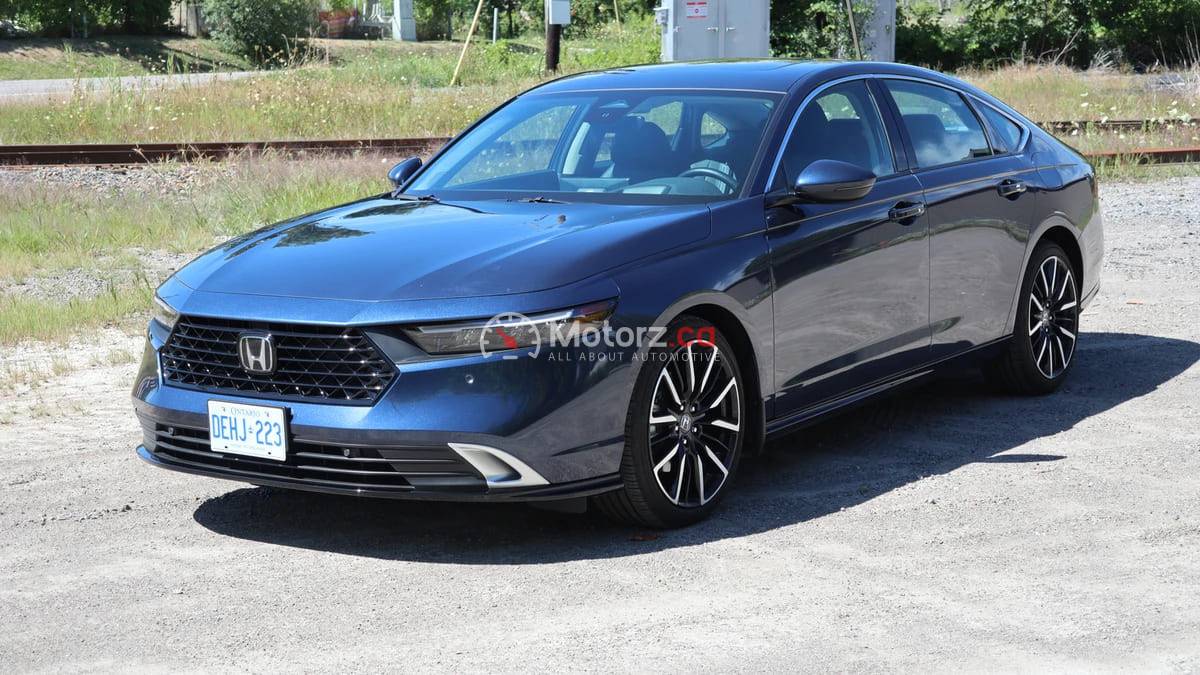

Your Hybrid Power is at Risk: What Canadian Accord Owners Must Know Now
The decision to buy a hybrid vehicle like the Honda Accord Hybrids in Canada is often rooted in a desire for efficiency, reliability, and modern engineering. The Accord, a long-standing favourite in the Canadian sedan market, especially in its electrified form, is generally viewed as a beacon of dependability.
However, recent news has highlighted a significant concern for thousands of Canadian owners. Honda Canada is voluntarily recalling 6,632 Accord Hybrids in Canada sedans due to a critical software issue that poses a serious safety risk: the potential for a sudden loss of drive power while the vehicle is in operation. This issue, caused by improper software programming within a key electronic component, affects certain 2023 through 2025 model years.
For owners of these popular hybrid models, this announcement is understandably alarming. A sudden loss of power while driving—especially on busy Canadian highways or in critical passing situations—dramatically increases the risk of a collision or injury. This comprehensive guide breaks down the recall, explains the root cause, identifies the affected models, details the simple fix, and provides essential next steps for Canadian owners to ensure their safety and their vehicle’s performance.
The Core Problem: Why the Accord Hybrid Could Lose Power
The issue at the heart of this major safety recall is entirely digital. It involves a fundamental electronic component that governs the vehicle’s electrical systems and hybrid powertrain management: the Integrated Control Module (ICM).
The Integrated Control Module (ICM) Software Glitch
The Integrated Control Module is essentially the vehicle’s central junction box and electrical brain, responsible for managing numerous functions, including the critical flow of power from the hybrid battery and electric motor to the wheels.
The defect stems from improper software programming by a supplier for the ICM’s Central Processing Unit (CPU). The software was incorrectly calibrated to monitor for CPU abnormalities.
The Flaw: The faulty programming led the ICM to sometimes misinterpret normal operational communications or increased electrical noise (particularly from the new hybrid system functions) as a CPU failure.
The Result: When this false detection occurs, the ICM attempts to protect itself by performing an unintended reset while the vehicle is running.
The Danger: An ICM reset causes an immediate and complete loss of motive power—the vehicle stops receiving drive power to the wheels. While steering and braking systems typically remain operational (relying on hydraulic or residual electric power), the sudden loss of acceleration creates a dangerous situation, especially at high speeds.
Affected Models and Scope Hybrids in Canada
The recall specifically targets Honda’s latest generation of its popular hybrid sedan.
Total North American Recall: This issue affects over 263,000 Honda Accord Hybrid vehicles across North America, underscoring the severity and widespread nature of the software defect tied to the specific supplier component.
The Safety Risk: Understanding the Consequences on the Road
While Honda Canada has stated they have not received any confirmed reports of collisions or injuries related to this specific issue at the time of the recall announcement, the potential safety risk is impossible to ignore. Recalls of this nature are mandatory precisely because the failure mode—a sudden stop—could be catastrophic under certain conditions.
High-Risk Driving Scenarios
The loss of drive power is dangerous in any scenario, but the risk is amplified in common Canadian driving situations:
Highway Speed: A sudden power loss on a 400-series highway or Trans-Canada Highway at 100-120 km/h leaves the driver with no ability to accelerate or maintain speed, turning the vehicle into a slow-moving obstacle.
Passing Manoeuvres: If the power loss occurs during an attempted pass, the driver is left stranded in an oncoming lane or on the shoulder, significantly increasing the risk of a head-on or rear-end collision.
Busy Intersections: Losing power while pulling out into traffic from a side street or making an unprotected left turn can lead to an immediate crash.
Steep Inclines: On hilly terrain, the inability to maintain momentum means the vehicle will quickly slow down, potentially rolling backward if the driver is not quick to engage the brakes.
The voluntary nature of the recall by Honda and the formal notification by Transport Canada emphasize the urgency of having the remedy performed.
The Simple, Crucial Fix: How Honda is Addressing the Issue
Fortunately for owners, the remedy for this electronic defect is a straightforward, software-based solution. No major mechanical components need to be replaced, minimizing the time your vehicle will spend at the dealership.
The Reprogramming Procedure
Authorized Honda dealerships across Canada will perform the repair free of charge to the owner.
The Action: The dealer technician will reprogram the Integrated Control Module (ICM) with improved, corrected software.
The Goal: The new software contains the correct, precise parameters for monitoring the ICM’s CPU. This update prevents the erroneous detection of abnormalities, thereby eliminating the unexpected reset and the resulting loss of drive power.
Timeframe: This is typically a quick, digital service procedure that can be completed in a single service appointment. While the duration can vary by dealership scheduling and queue, the technical process itself is fast.
Honda Canada’s commitment is to cover 100% of the cost for this repair, including labour and parts (the software update).
Actionable Checklist for Affected Accord Hybrid Owners
If you own a 2023, 2024, or 2025 Honda Accord Hybrid in Canada, the time to act is now. Delaying the repair puts you and others at unnecessary risk. Here is your essential checklist:
Confirm Your Vehicle’s Status
Do not wait for a letter in the mail. Take proactive steps to confirm if your specific Vehicle Identification Number (VIN) is included in the recall population.
Online Lookup: Visit the official Honda Canada recalls website (www.Honda.ca/recalls) and use the VIN lookup tool. Your VIN is a 17-character code usually found on your dashboard (visible through the windshield) or on the driver’s side door jamb.
Phone Contact: Call Honda Canada Client Services directly at 1-888-946-6329 (1-888-9-HONDA-9). Have your VIN ready when you call.
Expect Official Notification
Honda Canada is required by law to notify all registered owners of affected vehicles by mail. This letter will contain the specific recall number, details of the defect, the remedy, and instructions on how to schedule your repair. While the remedy is available immediately at dealerships, the official owner notification letters are typically sent out in a scheduled mailing batch.
Schedule the Free Repair Immediately
Once you confirm your vehicle is affected, contact your local authorized Honda dealer’s service department without delay.
Book an Appointment: Clearly state that you are calling to book the Accord Hybrid ICM Software Recall service.
Inquire About Time: Ask the service advisor how long the procedure will take so you can plan your day, or arrange for a loaner vehicle or shuttle service if necessary.
Know Your Rights: The Consumer Protection Standard
In Canada, automotive recalls are governed by Transport Canada’s Motor Vehicle Safety Act. This ensures that safety-related defects are addressed promptly and at no cost to the owner. The dealer must perform this repair for free, regardless of whether your vehicle is still under warranty.
Broader Implications: Software Reliance in Modern Vehicles
This Honda Accord Hybrid recall serves as a powerful reminder of the increasing reliance on complex software systems in modern vehicles, particularly hybrids and EVs.
The Rise of Software-Related Recalls
While mechanical recalls (like faulty brakes or structural corrosion) were once the most common, the industry is seeing a clear shift toward software-related defects. The Integrated Control Module’s role in this recall highlights a significant trend: the car is becoming a computer on wheels, and a simple coding error can have major physical consequences.
This trend necessitates:
Rigor in Supplier Vetting: Automakers must ensure that third-party suppliers of key electronic control units (ECUs) adhere to the most stringent coding and calibration standards. The root cause, in this case, was attributed to a supplier’s “improper software programming” due to not fully understanding component specifications.
Over-the-Air (OTA) Updates: While this particular fix requires a physical dealer visit, the industry is moving towards systems that allow manufacturers to push non-safety-critical updates and fixes directly to the vehicle, similar to smartphone updates. This capability would significantly reduce the inconvenience of future recalls.
Maintaining Brand Trust in the Hybrid Market
Honda has built its reputation on reliability. The Accord Hybrid is a key model in their electrification strategy, appealing directly to the environmentally conscious and safety-minded Canadian family. Addressing this defect quickly, transparently, and comprehensively is vital for maintaining the brand’s long-term trust and competitive edge in the highly competitive hybrid and EV segments.
The swift issuance of the recall and the immediate availability of the software fix demonstrate the company’s commitment to safety and customer service—a crucial factor for drivers considering a Honda purchase in the future.
Safety First for Accord Hybrid Owners
The Honda Accord Hybrid recall affecting over 6,600 Canadian vehicles from the 2023 to 2025 model years is a serious safety matter driven by a fundamental software flaw in the Integrated Control Module. While the issue is critical—a sudden loss of power while driving—the remedy is straightforward, requiring a quick, free software update at your local Honda dealership.
Your primary course of action is immediate. Confirm your VIN using the Honda Canada website or customer service line, and schedule your appointment to receive the improved ICM software. Taking this simple step ensures your Accord Hybrid remains the safe, reliable, and efficient sedan you purchased.