


Getting a new set of tires installed on your vehicle is one of the most significant maintenance investments you can make for safety, ride quality, and overall performance. That fresh, deep tread looks ready for anything, but hold your horses! Just like a brand-new pair of high-performance running shoes, your new car tires require a dedicated break-in period before they can truly deliver their maximum potential. Skipping this crucial step is a common mistake that can compromise everything from grip and braking distance to the lifespan of your tires.
Many drivers mistakenly believe that once the new rubber hits the road, the tires are ready for immediate hard use. This simply isn’t true. The manufacturing process leaves behind residues, and the components within the tire—layers of rubber, steel, and fabric—need time to settle, flex, and work together cohesively. This detailed guide will walk you through the essential steps, from understanding why a tire break-in is necessary to the exact procedures you need to follow. By the end, you’ll be fully equipped to ensure your new set of tires rewards you with thousands of miles of safe, optimal driving.
The Set of Tires Behind the Tire Break-In Period
The need for a new tire break-in isn’t a Set of Tires; it’s rooted in the physics and chemistry of tire manufacturing. A few key factors contribute to why new tires need to be treated gently for the first few hundred miles. Understanding these will reinforce the importance of the break-in procedure and help you drive with the necessary caution.
Mold Release Lubricants and Traction
During the vulcanization process—where raw rubber is heated in a mold to give the tire its final shape—manufacturers use a mold release lubricant or parting agent. This silicone-like substance is essential for preventing the rubber from sticking to the mold as it Set of Tires.
Although most of this lubricant is removed or evaporates, a thin, invisible layer remains on the surface of the tire tread when you first drive off the lot. Until this layer is completely worn away by road contact, it acts as a subtle barrier, significantly reducing the tire’s ability to achieve its full, designed traction and grip. Aggressive driving on this lubricant-coated surface can lead to unexpected slips, especially in wet conditions, and premature wear in an Set of Tires pattern.
Antioxidants and Tire Slickness
In addition to the mold release, tires contain antioxidants and other protective chemicals. These compounds are mixed into the rubber to prevent the material from breaking down when exposed to environmental factors like heat, oxygen, and fluctuating temperatures. While beneficial for long-term tire longevity, these substances can initially Set of Tires to a slight slickness on the tread surface. Like the mold release agent, these need time and gentle use to dissipate and expose the raw, gripping rubber compound underneath.
Tread Depth and “Tread Squirm”
Brand new tires feature their maximum, deepest tread. This fresh, full-depth rubber is naturally more flexible and pliable than worn-down rubber. When you steer, accelerate, or brake, the tall tread blocks—the individual rubber segments—can Set of Tires and shift slightly under the force. This is a phenomenon known as tread squirm.
While normal, excessive tread squirm can make the vehicle feel slightly less responsive or “spongy” compared to your old, worn-down tires, which had very little tread to flex. A gradual break-in period allows the tread blocks to flex and settle into their operational rhythm, hardening slightly and adjusting to the specific demands of your vehicle and Set of Tires style.
Component Seating and Stabilization
A tire is a composite structure of many materials—rubber compounds, steel belts, and fabric plies. When first mounted and inflated, these layers need time to stretch, settle, and fully bond together under the vehicle’s load and the internal tire pressure. A period of moderate driving allows the internal components to heat cycle gently and stabilize, ensuring the entire structure achieves its optimal, long-term shape and strength. This is particularly important for the tire beads—the edges that seat firmly against the wheel rim—to fully lock into place.
The New Tire Break-In Procedure: Your Step-by-Step Guide
The proper break-in procedure is straightforward and Set of Tires nothing more than disciplined, cautious driving. The consensus among tire manufacturers and automotive experts suggests a key window for this process.
Establish the Break-In Distance
The universally recommended break-in mileage is generally 500 miles (approximately 800 kilometers). This distance provides sufficient time for the mold release agents and protective compounds to wear off the tread surface, for the internal tire components to fully stabilize, and for you, the driver, to adapt to the new handling characteristics. Some sources suggest a minimum of 200 miles, but 500 miles is the widely accepted gold standard for achieving Set of Tires performance and longevity.
Prioritize Proper Inflation Pressure
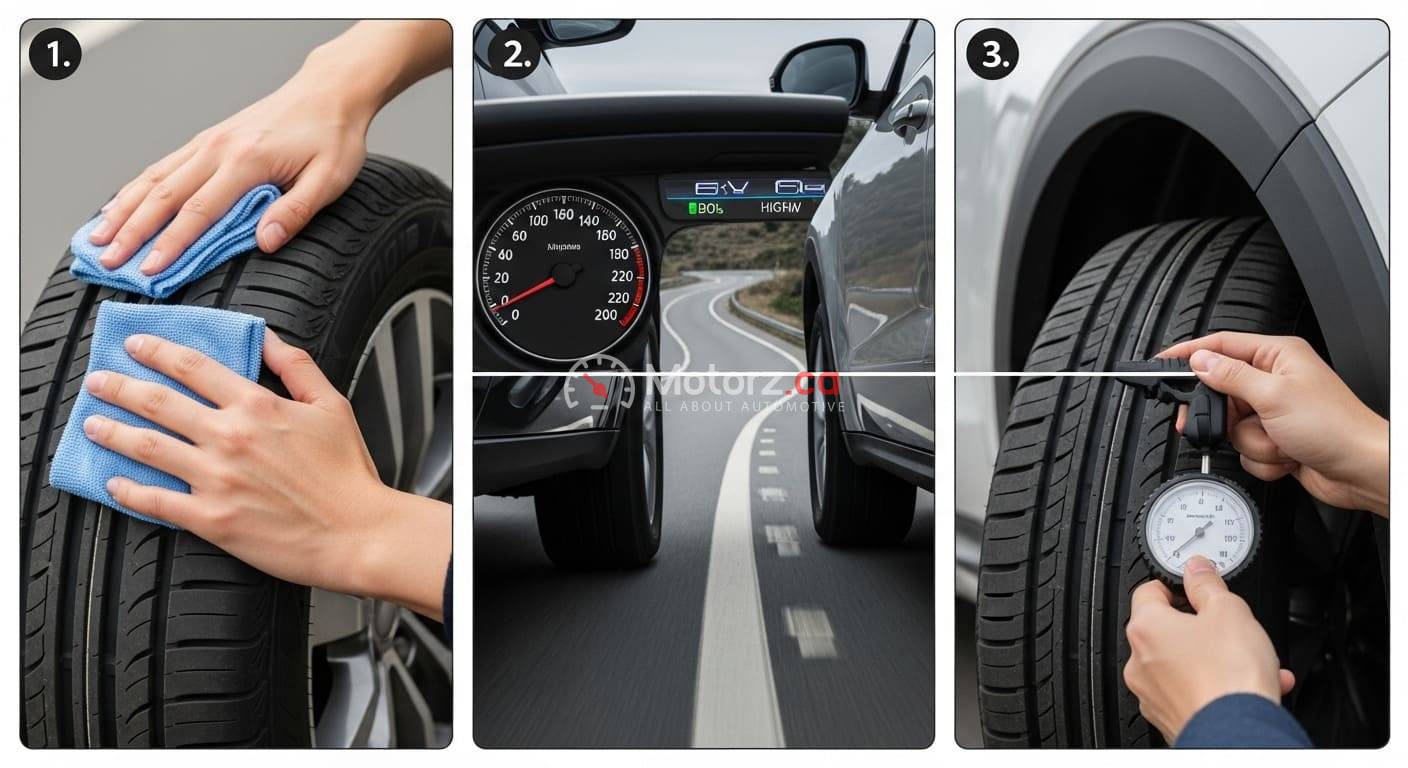
Before you even leave the tire shop, ensure your tire pressure is set correctly. Never inflate to the maximum pressure listed on the tire’s sidewall. Instead, use the recommended tire pressure found on the placard inside your driver’s side doorjamb or in your Set of Tires owner’s manual. Correct tire inflation is critical for proper component seating and minimizing excessive tread flex during the break-in. Check the pressure cold (before driving) at least once during the first 50 miles, as slight pressure drops are common as the tire materials settle.
Practice Gentle Driving Habits
The core of the tire break-in period is moderation. For the duration of the 500 miles, every driving input should be smooth and gradual.
Smooth Acceleration: Avoid rapid or hard Set of Tires. Gradual starts allow the tire tread to engage the road without excessive scrubbing or heat buildup, which can cause the tire to slip slightly on the rim, potentially causing a balance issue.
Gentle Braking: Avoid sudden, harsh stops. Brake earlier and more softly than usual. New tires may have slightly longer braking distances until the slick surface wears off, making hard stops a safety risk and a detriment to the tire’s structure.
Moderate Cornering: Take corners and turns at a reduced speed. Aggressive cornering places enormous lateral stress on the new tread blocks and Set of Tires, which are still settling. Gradually increase your cornering speed as the miles accumulate.
Maintain Moderate Speed: While there is no hard-and-fast speed limit, avoid driving at extremely high speeds for extended periods, especially during the first 100 miles. Driving at moderate highway speeds for short stretches is fine, but intense, sustained high-speed use should be avoided until the full break-in distance is completed.
Avoid Slippery and Wet Surfaces Initially
If possible, spend the first 50 to 100 miles Set of Tires on dry, clean pavement. The mold release agents make the tires more prone to slipping, which is amplified on wet roads. Sticking to dry conditions will allow the tread to abrade naturally and wear off the slick surface layers much more quickly and safely.
Post-Break-In Checks and Ongoing Maintenance
Completing the 500-mile break-in period is a great milestone, but your responsibilities don’t end there. Two critical checks are necessary after the initial period to confirm your tires are fully seated and ready for the long haul.
Retorque the Lug Nuts
This is perhaps the most important check Set of Tires new tire installation. As the tire’s components and the mounting lubricants settle, the lug nuts that secure the wheel to the vehicle can sometimes loosen slightly. Most reputable tire shops will tell you to return after 50 to 100 miles to have the lug nuts professionally retorqued to the manufacturer’s specification. Do not skip this step! Loose lug nuts are a serious safety hazard.
Check and Adjust Tire Pressure
After the break-in mileage has been completed, check your tire Set of Tires cold one last time. Adjust the pressure back to the manufacturer’s recommended setting. From this point forward, check your pressure monthly to ensure consistent tire performance and maintain proper tire longevity.
Consider a Wheel Alignment Check
While not strictly part of the tire break-in, having a wheel alignment check performed shortly after or during the installation of new tires is highly recommended. New tires cannot compensate for a vehicle that is out of alignment, which will lead to rapid and uneven tire wear, drastically shortening the lifespan of your new tires and compromising handling.
Recognizing the Difference: New vs. Worn Tires
As you drive through the tire break-in period, don’t be alarmed if your vehicle feels slightly different than it did with the old, worn set. This is completely normal and expected.
Your worn tires, with minimal tread Set of Tires, likely offered a quicker, more immediate steering response because there was very little rubber to flex. Your new tires—with their deep tread and full structure—will feel softer, sometimes described as having a slight “cushioning” effect. This is the tread squirm at work. As the tire break-in progresses, the responsiveness will sharpen, and the full, superior grip and handling the tires were engineered for will become apparent. This brief adjustment period is as much for the new car tires as it is for the driver adapting to the change.