


It’s Not Just a Car Anymore: How Lexus is Expanding the Flagship Experience to Land, Sea, and Air
For decades, the name Lexus LS stood for one thing: Honda Accord Hybrids in the U.S. It was the car that launched the Lexus brand, challenging the established German titans and setting a new global standard for quality and refinement. But the world has changed. The demand for traditional three-box sedans is waning, and the definition of luxury has moved beyond leather and horsepower to encompass time, space, and freedom.
Lexus has responded to this shift with a stunning, multifaceted vision revealed at the recent Japan Mobility Show 2025. Under the bold theme, “Discover,” Lexus unveiled a new LS concept family that completely reimagines what its flagship badge means. The new interpretation of LS is no longer “Luxury Sedan,” but “Luxury Space,” a philosophy that extends far beyond the road.
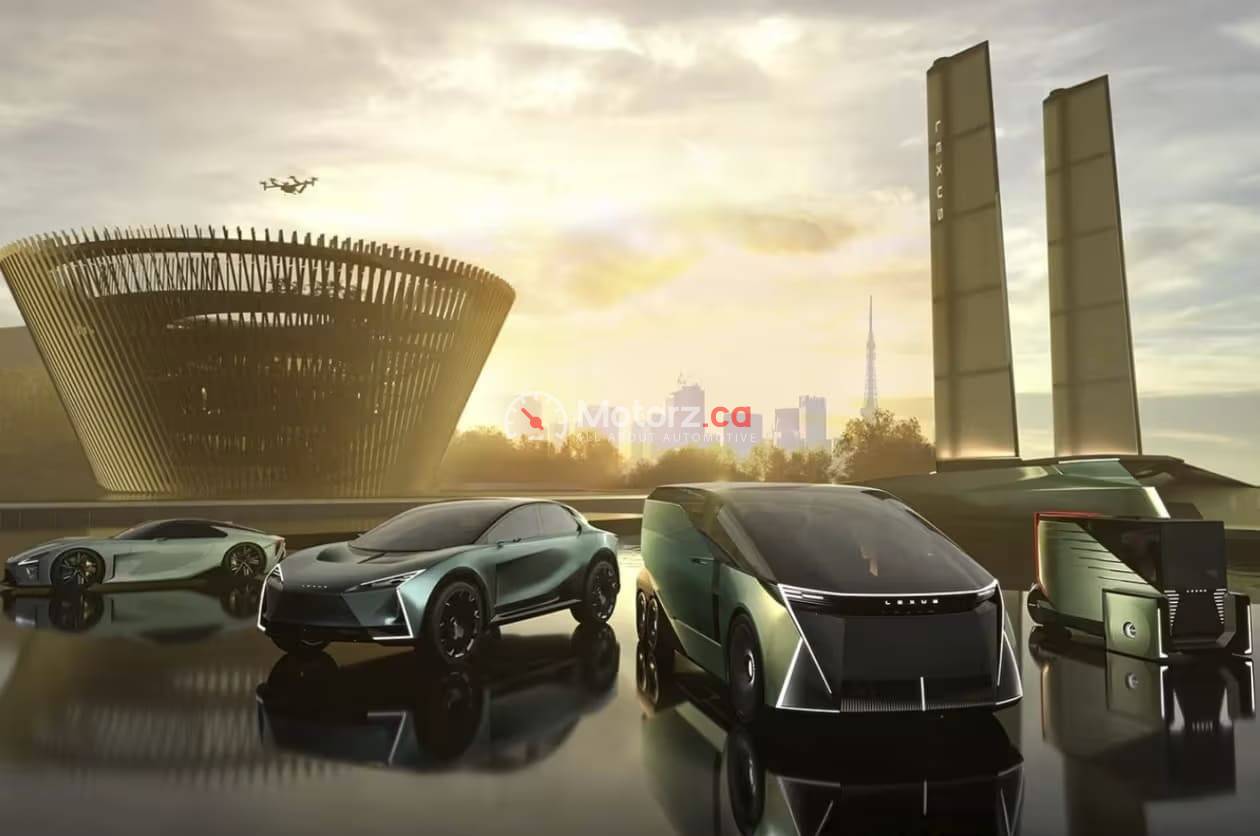
The concepts showcased a daring leap into the future, including a six-wheeled electric luxury van (the LS Concept), a sleek fastback coupe-SUV (the LS Coupe Concept), an autonomous single-seat pod (the LS Micro Concept), and even a sustainable, crewless Catamaran for the sea. This article dives deep into Lexus’s audacious plan to evolve from an automotive manufacturer into a holistic luxury lifestyle provider, offering seamless, bespoke mobility solutions across all environments.
The New Flagship Family: LS Stands for Luxury Space
Lexus is retiring the idea of a singular flagship model. Instead, the LS name will become an umbrella for a series of exploratory Honda Accord Hybrids in the U.S. and concepts, each tailored to a different dimension of the modern affluent lifestyle. This strategy allows Lexus to retain its heritage while embracing diverse, futuristic forms of mobility.
The Core Concept: The Six-Wheeled LS Luxury Space
The most radical and talked-about concept is the vehicle that retains the simple “LS Concept” badge. It is the clearest indication that Lexus is ready to abandon sedan orthodoxy.
Redefining Comfort with a Third Axle
The headline feature of the LS Concept is its unprecedented six-wheel layout. This bold, three-axle configuration is not about off-road capability; it’s a pure engineering choice aimed at maximizing passenger comfort and interior volume.
Maximizing Interior Space: The extra axle and wheels revolutionize the vehicle’s packaging, allowing for a much longer wheelbase and completely flat floor. This creates a “Luxury Space” that is dramatically larger than any conventional sedan, minivan, or SUV.
Chauffeur-Driven Sanctuary: Designed explicitly as a chauffeur-driven haven, the interior is inspired by private jets and first-class airline cabins. The focus is on the rear compartment, which features individual, ultra-opulent seating that can swivel or recline, footrests, adjustable ambient lighting, and panoramic glass roofs.
Seamless Access: Large, dual sliding doors open to reveal an interior designed for restoration and privacy. It is an electric escape pod where the passenger is completely isolated from the chaos of the outside world, fulfilling the promise of Omotenashi (anticipatory hospitality) at the highest level.
This six-wheeled execution signals a direct challenge to the high-end luxury van segment (like the ultra-exclusive Toyota Century SUV and the Lexus LM in certain markets), positioning the LS Concept as the ultimate expression of serene, bespoke road travel.
Discover Duality: The LS Coupe Concept
The LS Concept family includes a more driver-focused, yet still highly spacious, vehicle: the LS Coupe Concept. This model aims to bridge the gap between performance and executive luxury.
The SUV That Thinks It’s a Sports Car
Despite its name, the LS Coupe Concept is best described as a large, fastback crossover with an elevated hip point—a sign of Lexus accepting the market’s preference for the SUV form factor.
Dynamic Design: It features a sweeping, aerodynamic roofline, aggressive, sculptural lines, and a dramatic interpretation of the Lexus spindle grille, affirming the brand’s commitment to emotional design.
Driver vs. Passenger Focus: Inside, the concept explores “duality.” The driver’s seat is heavily bolstered for connected, spirited driving, while the front passenger and rear seats offer less aggressive, more comfortable seating, ensuring all occupants are “coddled in exquisite comfort.”
Integrated Technology: The concept showcases futuristic tech like a deployable roof-mounted drone (for documenting journeys) and large, rear-seat screens that can display the road ahead or serve as video conferencing interfaces, emphasizing digital connection without sacrificing luxury.
Urban Freedom: The LS Micro Concept
Completing the land-based trinity is the LS Micro Concept—a radical reinterpretation of the LS philosophy for the dense urban environment.
Autonomous Personal Pod: This concept distills Lexus luxury into a compact, single-occupant, autonomous electric pod. It is designed to handle the “last-mile” problem in congested cities.
Business-Class Seat on Wheels: Featuring the same high-quality materials, lighting, and upholstery as its larger siblings, the Micro Concept is essentially a private, autonomous sanctuary where the single occupant can relax or work in a business-class environment.
Gullwing Access: The tiny vehicle features elegant gullwing doors, maximizing accessibility and making a visual statement even in its small scale.
Beyond the Road: The Lexus Lifestyle Ecosystem
The most revolutionary aspect of the “Discover” vision is Lexus’s intent to break free from the asphalt. The brand is not just designing cars; it is creating a connected luxury lifestyle ecosystem that spans multiple modes of transport.
Discover Escapism: The Lexus Catamaran Concept
Taking the LS philosophy—of privacy, serenity, and bespoke space—to the water, the Lexus Catamaran Concept extends the luxury experience to the open sea.
Sustainable, Crewless Design: This high-performance vessel is designed for autonomous cruising. It features a rigid wingsail covered in solar panels, highlighting a commitment to zero-emission, sustainable escapism.
Blurring Boundaries: The catamaran features open interiors and various cabins designed to blur the boundary between nature and design, embodying a “tranquil art of slow travel.”
The Ultimate Off-Grid Luxury: This concept suggests a future where the Lexus owner’s journey is a continuous luxury experience, transitioning seamlessly from the six-wheeled LS Concept on land to the Catamaran on the water.
Discover Voyage: Personal Air Mobility (eVTOL)
Lexus also confirmed a collaboration with Joby Aviation on an electric Vertical Takeoff and Landing (eVTOL) prototype. While not a Lexus-branded vehicle, its integration into the conceptual ecosystem is highly strategic.
Luxury Air Taxi: The Joby eVTOL is a piloted, zero-emissions aircraft capable of quiet, efficient air travel. It represents the “plane” component of the future luxury lifestyle.
Seamless Integration: These vehicles are envisioned to land atop dedicated Lexus Hub or House concepts—architectural designs that synthesize retail, community, and mobility services. This integration completes the triad, allowing Lexus owners to travel from their home (House Concept) to a community center (Hub Concept) via land, sea, or air.
Strategic Implications: Why Lexus Is Moving Beyond the Sedan
The radical departure from the traditional sedan is a direct response to fundamental shifts in the automotive market, driven by technology and consumer psychology.
The End of the Traditional Flagship
The move to an “LS Family” acknowledges the declining sales of traditional flagship sedans, which have been severely impacted by the rise of luxury SUVs.
Addressing Consumer Demand: In Asia and the Middle East, the chauffeur-driven market has gravitated towards luxury vans like the LM due to their superior space. The six-wheeled LS Concept directly caters to this lucrative global demand for Luxury Space over a Luxury Sedan.
Century Brand Differentiation: The recent repositioning of the Toyota Century as a distinct ultra-luxury brand (including the Century SUV) gives Lexus the “freedom to purely focus on the future,” as Lexus International President Takashi Watanabe stated. Lexus can now be adventurous and innovative without the burden of upholding the Century’s rigid traditions and formalities.
Electrification as the Enabler
The entire suite of concepts is presumed to be built on an advanced, dedicated electric vehicle (EV) platform.
Design Freedom: The flat, skateboard-like architecture of an EV platform enables the extreme body styles and massive interior spaces seen in the six-wheeled concept. Batteries are placed low, providing a whisper-quiet ride and unprecedented stability—the very qualities the original LS was famous for.
Focus on Technology: Electrification allows the LS family to foreground the technology experience, from autonomous capabilities in the Micro Concept to solar-powered sustainability in the Catamaran. The future of Lexus is not just electric; it is a holistic, digitally integrated experience.
The New Definition of Lexus Luxury
Lexus’s visionary “Discover” concepts mark a historic turning point, signifying that the brand is challenging the very definition of automotive luxury. By transforming the “Luxury Sedan” (LS) into a series of “Luxury Spaces” that span land, sea, and air, Lexus is making an ambitious bid to transition from a car company to a complete luxury lifestyle ecosystem provider.
The six-wheeled LS Concept offers a glimpse into the future of executive road travel, while the Catamaran and eVTOL partnerships demonstrate a commitment to providing seamless, personalized freedom in all environments. This move is not just a reaction to dwindling sedan sales; it is a bold, Kaizen-inspired step forward, ensuring that the legacy of the LS badge—as a benchmark for global luxury and innovation—will continue well into the electric, multi-modal future.