


The Secret Behind the Six: A Radical Reimagining of the Lexus Legacy
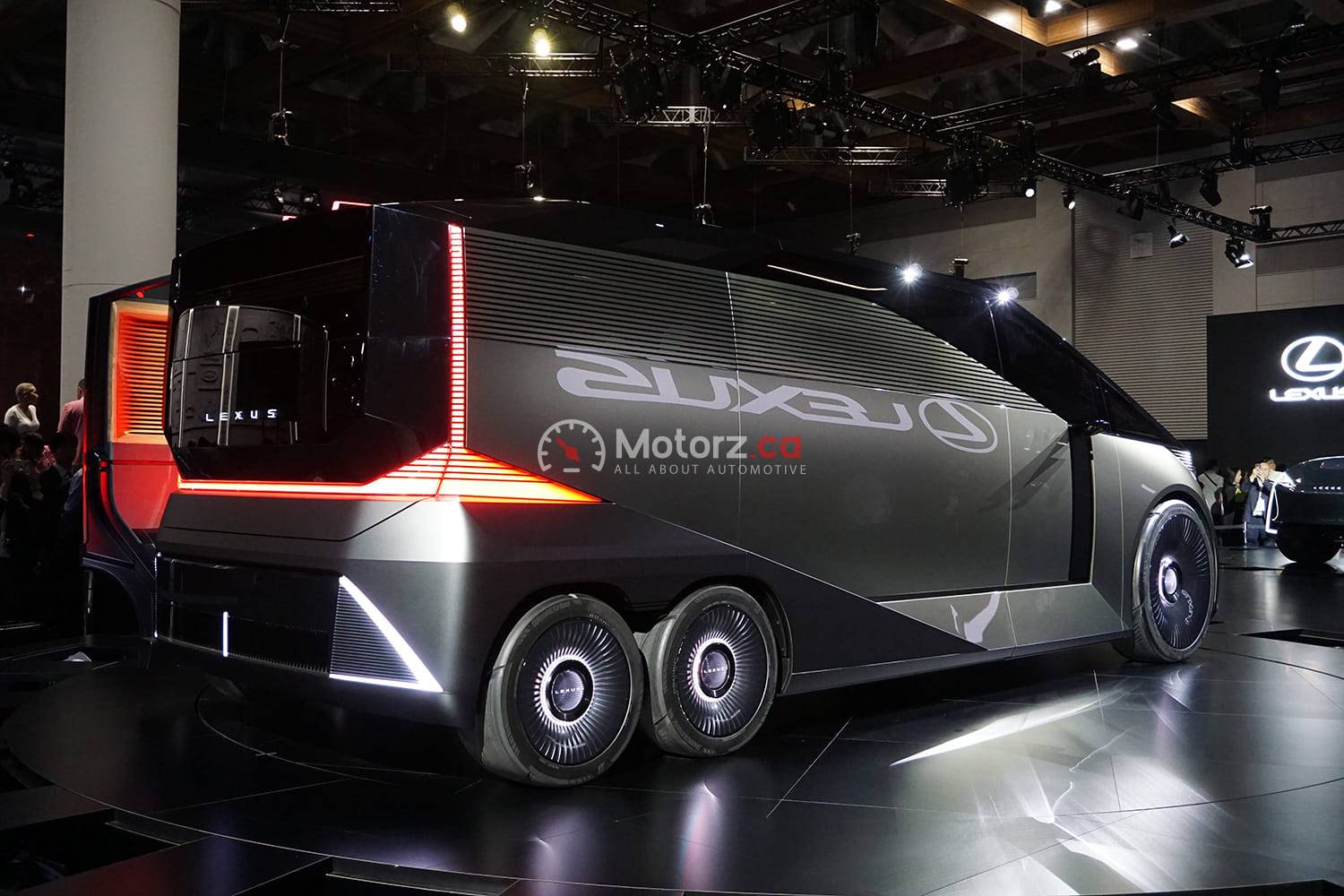
When the Lexus LS Concept rolled onto the stage at the Japan Mobility Show 2025, it stopped the automotive world dead in its tracks. Not because it was a stunning sedan or a sharp SUV, but because it was an unapologetic, ultra-luxury, three-row electric van… with six wheels.
The visual impact of the three-axle design—with two large wheels up front and four smaller wheels clustered on the rear axles—was a shock that challenged every traditional notion of the Lexus flagship. For decades, the LS stood for Six-Wheel ‘Luxury Space. Now, in a bold move guided by Toyota Chairman Akio Toyoda, the LS has been redefined as Luxury Space.
Why the extra wheels? The answer lies not in off-road capability or high performance, but in a relentless, uncompromising pursuit of passenger sanctuary, interior volume, and design freedom. This article dives into the direct mandate from Akio Toyoda and the Lexus design team’s innovative engineering solution that dictated the six-wheel layout, explaining why this “bizarre” concept is actually a brilliant, commercially viable strategy for the future of ultra-luxury.
The Toyoda Vision: Innovation Beyond Imitation
The core reason behind the LS Concept’s radical form can be traced directly to the philosophy of Akio Toyoda. As the driving force behind the company’s shift toward “making ever-better cars,” Toyoda has consistently pushed Lexus to be more adventurous and innovative.
“Luxury Space”—The New Meaning of LS
The first step in justifying the six wheels was the complete reinterpretation of the LS badge itself. Akio Toyoda questioned the very necessity of the traditional sedan:
“Who says ‘S’ can only stand for sedan?… The LS isn’t necessarily required to remain as a sedan or SUV.”
This shift in perspective paved the way for the LS to evolve beyond a mere body style into a philosophy: Luxury Space. With the establishment of the Century brand as the pinnacle of the Toyota family, Lexus was given the freedom to be more daring and push into the realm of true innovation. The goal was simple: to create a vehicle that delivers a first-class, uncompromised mobile sanctuary.
The Ultimate Challenge: Achieving Unhindered Comfort
Akio Toyoda’s mandate to the development team was clear yet demanding: the new flagship must deliver everything people expect from Lexus—quietness, comfort, and the ability to conquer any road—but within an entirely new, maximized space.
The team recognized that traditional four-wheel architecture—even on a dedicated EV platform—still imposes significant limits on interior design, particularly concerning wheel-well intrusion and floor height. To meet the Chairman’s vision of unhindered access and maximized floor space, a conventional design would not suffice. The solution had to be radical.
The Engineering Solution: Six Wheels for Rear Seat Sanctuary
The six-wheel design of the Lexus LS Concept is not an aesthetic provocation; it is a meticulously engineered solution to an interior packaging problem. The key is in the size and placement of the rear wheels.
The Geometry of Space Maximization
The single, overriding engineering advantage of the six-wheel, three-axle layout is its ability to create a truly flat, expansive interior floor for rear passengers, especially those in the critical third row.
As Koichiro Suga, General Manager of the Lexus Design Division, confirmed, the focus was entirely on the interior: “Interior space comes first… The first idea is to provide a sanctuary for the owner.” By using four smaller wheels instead of two large ones at the rear, Lexus designers mitigated the intrusion of the large wheel arches, ensuring the back seat truly feels like a business-class cabin rather than a cramped bench.
The Impact on Ride Quality and Stability
While the primary driver is space, the six-wheel configuration offers secondary engineering benefits crucial for a flagship luxury vehicle:
Enhanced Stability: The extended footprint and two rear axles provide superior stability, which is essential for maintaining the whisper-quiet refinement that Lexus promises, particularly at high speeds or on uneven surfaces.
Increased Load Capacity: The design distributes the vehicle’s considerable weight (especially as a large Battery Electric Vehicle, or BEV) over more contact points, improving ride comfort and managing the weight of the massive battery pack.
Superior Traversability: Inspired by vehicles like lunar rovers, the unconventional layout, particularly with potential six-wheel-drive capability, ensures the vehicle can handle complex or damaged urban road conditions with greater poise and less transfer of vibration to the cabin.
The design is not just a stylistic flourish; it is a functional requirement to deliver on the promise of Luxury Space.
The Production Reality: From Concept to Commerce
The six-wheeled Lexus LS Concept is not just a fantasy sketch. Akio Toyoda’s commitment and the strategic context of the automotive market suggest a production version is highly likely, especially targeting the booming Asian chauffeur-driven luxury market.
Challenging the Ultra-Luxury Segment
The rise of the ultra-luxury van, exemplified by the Toyota LM (Lexus’ existing high-end van) and other emerging models, demonstrates a clear market demand that traditional sedans simply cannot meet.
Chauffeur Focus: In key global markets, the owner is often in the rear seat. They prioritize privacy, space for meetings, the ability to recline fully, and a high seating position for better visibility—all attributes maximized by a large van or MPV (Multi-Purpose Vehicle) form factor.
The Chinese Market Precedent: China, in particular, has shown immense appetite for vehicles that offer palatial, dedicated rear-seat spaces. The six-wheeled LS Concept is perfectly positioned to dominate this top tier, offering a unique product that no European competitor can match today.
Design Statement: The distinctive six-wheel design offers an unprecedented level of visual recognition and exclusivity. For the ultra-wealthy, standing out is paramount, and the LS Concept delivers a strong, statement-making presence that is instantly recognizable and entirely unique.
The Century Separation Strategy
Akio Toyoda’s decision to elevate the Toyota Century into its own ultra-luxury sub-brand, including the new Century SUV, was a masterstroke that cleared the path for the LS Concept’s transformation.
By allowing the Century brand to occupy the pinnacle of bespoke, traditional Japanese luxury, Lexus is now free to be adventurous and innovative. This strategic separation allows the LS to target a slightly younger, more tech-forward, and globally diverse luxury consumer who prioritizes futuristic design and mobility innovation over rigid heritage.
The Future of the Lexus Flagship: An Ecosystem of Mobility
The six-wheeled concept is just one facet of the new LS philosophy. Lexus is positioning the LS badge not as a single vehicle, but as a family of luxury concepts designed to meet every mobility need—a holistic ecosystem of Luxury Space.
The Three Pillars of LS
The concepts unveiled alongside the six-wheeled van underscore the diversity of the new mandate:
LS Concept (The Land Cruiser): The six-wheeled, three-row luxury van, representing the ultimate chauffeured sanctuary and maximum space.
LS Coupe Concept (The Driver’s Choice): A sleek, fastback crossover/SUV that balances passenger comfort with driver engagement and dynamic styling.
LS Micro Concept (The Urban Pod): A single-seater, autonomous vehicle imagined as a private, last-mile solution for congested cities, encapsulating the LS spirit in a compact form.
This trifecta demonstrates Lexus’s commitment to finding a unique Luxury Space solution for every possible consumer need, ensuring the brand remains relevant in a world where luxury is defined by seamless, customized movement.
Akio Toyoda’s Legacy of Disruption
The question of “Why six wheels?” on the new Lexus LS Concept has a clear answer, rooted in the uncompromising vision of Akio Toyoda: to create the ultimate Luxury Space free from the constraints of traditional four-wheel packaging.
By challenging his own design teams to look beyond the sedan and even the traditional SUV, Toyoda forced an innovative solution that dramatically improves passenger comfort, stability, and interior volume. The six-wheeled van is a clear declaration that the Lexus flagship will no longer imitate competitors; instead, it will push into the realm of radical innovation, delivering a vehicle that is not merely luxurious, but a transformative mobile sanctuary for the next generation of affluent buyers globally. This is the Lexus way: continuous improvement through disruptive thinking.