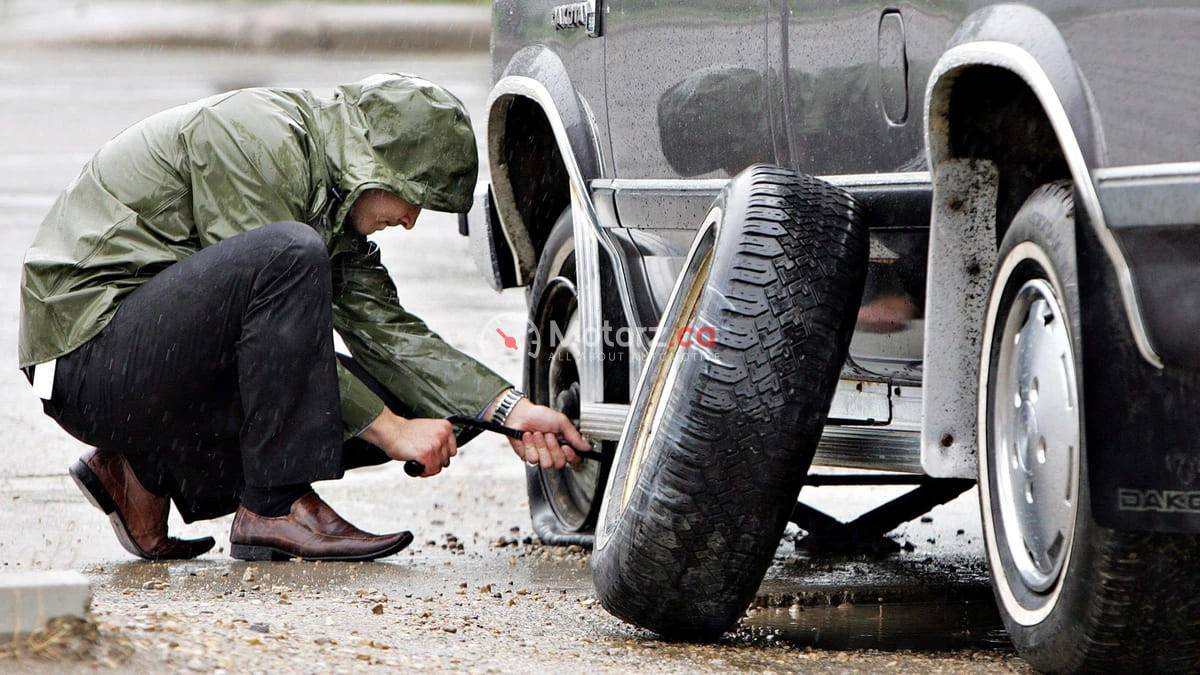



You are heading home when you hit a Mismatched Tires. A loud “pop” echoes through the cabin, and within seconds, your steering wheel begins to tug to the left. You manage to pull over and swap the flat for a spare, but the next day at the tire shop, you face a dilemma. The specific model of tire you had is out of stock. The salesperson suggests a different brand that is “exactly the same size.” It seems like an easy fix, but is it safe?
When it comes to vehicle maintenance, many drivers believe that as long as the numbers on the sidewall match, the tires are interchangeable. However, mismatched tires involve much more than just physical dimensions. Mixing different brands, tread patterns, or even wear levels can significantly alter your car’s handling, braking distance, and even damage your drivetrain.
In this Troubleshooter guide, we will dive deep into why tire uniformity is critical for modern vehicles. We will explore the hidden dangers of mismatched tread, the specific risks for All-Wheel Drive (AWD) systems, and the “matching rules” you should follow to keep your car safe and your repair bills low.
Beyond the Numbers: What Does “Mismatched” Really Mean?
To a casual observer, all tires look like black rubber circles. But every tire is a complex piece of engineering designed with a specific “personality.” When you mix these personalities, the car’s computer systems can become confused.
Tread Pattern Inconsistencies
The tread pattern isn’t just for aesthetics; it is designed to move water, provide grip in corners, and manage heat. If you have a “directional” tire on the left and a “symmetrical” tire on the right, they will react differently to a wet road. One side might clear water effectively while the other begins to hydroplane, leading to a dangerous pull or a spin.
Internal Construction and Stiffness
Different manufacturers use different amounts of steel, nylon, and polyester in their tire carcasses. A tire with a stiff sidewall paired with a tire that has a soft sidewall will result in uneven “slip angles.” During a highway lane change, the car may feel like it is “wobbling” or “swaying” because the tires are reacting at different speeds to your steering input.
The Dangers of Mismatched Wear Levels
Even if you buy the exact same brand and model of tire, you can still have a mismatch if one tire is brand new and the other three are halfway through their lifespan.
The Problem of Circumference
A tire with 10/32″ of tread has a larger circumference than a worn tire with 4/32″ of tread. While the difference seems microscopic, it means the smaller tire must spin faster to cover the same distance as the larger one.
For 2WD Vehicles: This can cause the car to pull toward the side with the worn tire and increase wear on the steering rack.
For Braking: In an emergency stop, the tire with more tread will typically have better grip, causing the car to “nose-dive” or veer to one side as the Anti-lock Braking System (ABS) tries to compensate for the uneven traction.
Why AWD Systems are Allergic to Mismatched Tires
If you drive an All-Wheel Drive (AWD) vehicle (like a Subaru, Audi Quattro, or many modern SUVs), tire matching is not just a safety recommendation—it is a mechanical necessity.
Protecting the Differential
AWD systems use a center differential or a transfer case to manage power between the front and rear wheels. These components are designed to handle slight variations in wheel speed during cornering. However, if you have mismatched tires that are constantly spinning at different speeds due to size or wear differences, the differential works overtime to compensate.
The Expensive Failure
This constant “scrubbing” inside the drivetrain generates intense heat. Over time, the internal clutches or gears in your AWD system will fail. Replacing a tire might cost 150 units, but replacing an AWD center differential can cost 2,000 to 4,000 units. This is why many manufacturers recommend replacing all four tires at once, even if only one is damaged.
Mixing Categories: Summer vs. All-Season vs. Winter
One of the most dangerous mismatches is mixing tire categories. This often happens in late autumn when a driver decides to put “just two” winter tires on the front of a front-wheel-drive car.
The “Snap-Oversteer” Risk
If you put high-grip winter tires on the front and leave all-season tires on the rear, the front of the car will turn sharply into a snowy corner, but the rear will lose grip and swing out. This is known as “snap-oversteer,” and it is much harder for an average driver to control than a simple slide.
Dry Road Handling
Conversely, mixing a “Performance” tire with a “Touring” tire creates a split personality in the car’s handling. In an emergency swerve, the performance tire will bite into the pavement while the touring tire may roll over onto its sidewall, potentially tripping the Electronic Stability Control (ESC) and causing the car to behave unpredictably.
The Golden Rules for Tire Replacement
If you find yourself needing to replace a tire, follow these professional guidelines to ensure your vehicle remains balanced.
Match the Axle: If you cannot replace all four tires, you must at least replace the pair on the same axle. Having identical tires on the front (or rear) ensures that the left and right sides react the same way to braking and steering.
The “New on Rear” Rule: If you only buy two new tires for a FWD or RWD car, most experts recommend putting the new tires on the rear. This helps prevent the rear of the car from sliding out in wet conditions, which is the most difficult type of skid to correct.
Check the Date Code: Tires age even if they aren’t driven. If your “mismatched” spare tire is ten years old, the rubber has likely hardened. It won’t have the same grip as your newer tires, even if the tread looks perfect.
Don’t Compromise Your Foundation
Your tires are the only four points of contact between your vehicle and the road. While it is tempting to save money by purchasing a single “mismatched” tire or ignoring differences in tread wear, the hidden costs—ranging from ruined AWD systems to increased stopping distances—far outweigh the initial savings.
The next time you are at the tire shop, remember: it’s not just the size that matters. Demand uniformity across your axles and, if you drive an AWD vehicle, respect the precision of your drivetrain. A matched set of tires is the best insurance policy you can buy for your car’s performance and your family’s safety.