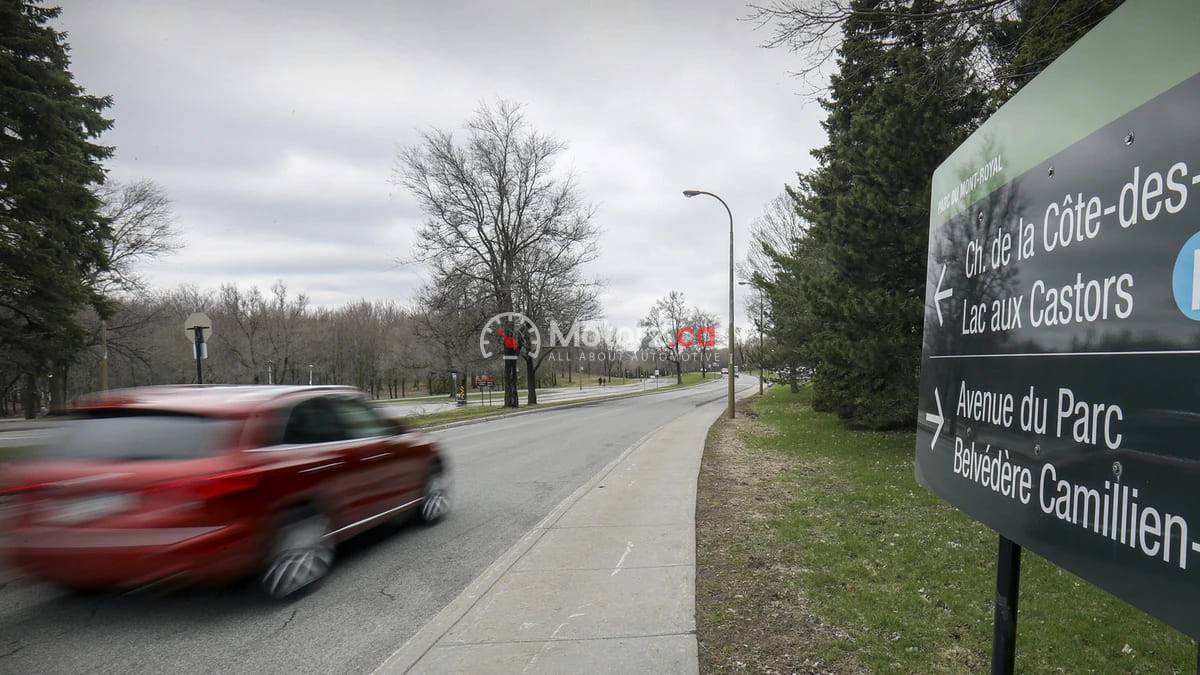
In Mount Royal’s Road Closures, few landmarks are as sacred as Mount Royal. It is the city’s namesake, its green lung, and its most iconic gathering spot. But in 2026, the mountain has become the front line of a fierce ideological war. At the heart of the conflict is the administration’s decision to ban through-traffic on Camillien-Houde Way, the winding road that carries thousands of vehicles over the “mountain” every day.
While Mayor Valérie Plante’s administration frames the move as a visionary step toward a “greener, safer, and more pedestrian-friendly” city, a significant portion of the population is seeing red. Critics argue that the closure is a direct assault on motorists, a barrier to accessibility for seniors and people with reduced mobility, and a logistical nightmare that pushes gridlock into surrounding residential neighborhoods.
In this edition of the Motorz deep dive, we are looking at the data, the drama, and the “Corner Wrench” reality of what happens when urban planning meets public outcry. Is this a necessary evolution for a modern city, or is it a case of “anti-car” grandstanding gone too far?
The Core of the Conflict: Closing Mount Royal’s Road Closures
The plan, which has been in the works for years, involves transforming the eastern access road—Camillien-Houde—into an “active mobility promenade.” In plain English, that means cars are out, and cyclists and pedestrians are in.
The Administration’s Vision
Projet Montréal’s argument is centered on safety and biodiversity. By eliminating through-traffic, the city aims to:
Protect Vulnerable Users: Following the tragic death of a cyclist in 2017, the push for a car-free summit has been relentless.
Expand Green Space: The city plans to “reclaim” the equivalent of three football fields worth of asphalt, returning it to the forest to combat erosion and protect local flora.
Reduce Pollution: Lowering the number of idling cars in a park environment is a key pillar of the city’s climate action plan.
The Commuter’s Reality
For decades, Camillien-Houde has served as a vital “shortcut” connecting the East End (Plateau/Rosemont) to the West (Côte-des-Neiges/Westmount). Commuters argue that the “12-minute delay” predicted by city models often turns into a 30-minute crawl on alternate routes like Pine Avenue or Côte-Sainte-Catherine Road, which are already buckling under the pressure of Montreal’s eternal construction season.
Accessibility: The Forgotten Fine Print
Perhaps the most heated part of the debate centers on who the mountain is actually for. If you cannot cycle up a steep incline or walk long distances, how do you reach the summit?
Seniors and People with Reduced Mobility
Advocacy groups and the opposition party, Ensemble Montréal, have pointed out that the closure disproportionately affects those who rely on vehicles. While the city promises increased bus service (the #11 and #711), taking a crowded bus during a summer heatwave is not a viable option for many seniors or families with small children and strollers.
The Cemetery Controversy
The Mount Royal Cemetery and the Notre-Dame-des-Neiges Cemetery are both directly impacted by the traffic changes. Mourners and families visiting loved ones have expressed deep frustration over the increased difficulty of accessing these sites. In late 2024, the Mount Royal Cemetery even took the city to court, arguing that the closure interferes with their historical access rights.
The “Anti-Car” Label: A Political Lightning Rod
Is the administration truly “anti-car,” or are they simply “pro-human”? The answer depends entirely on which side of the bike lane you stand on.
The 2026 Election Pivot
As we approach the fall election cycle in 2026, the rhetoric has reached a fever pitch. Interestingly, some members of the administration have recently signaled a potential “re-evaluation” of the project. This shift—sometimes called a “pre-election retreat”—suggests that the backlash has been strong enough to make even the most dedicated urbanists nervous about their poll numbers.
The Impact on Local Business
Small businesses in the Plateau and surrounding areas have reported mixed results. While some “pedestrianized” streets see high foot traffic, the difficulty for delivery vehicles and customers from outside the immediate neighborhood to find parking is a growing concern. The mountain closure is seen by many as the “final straw” in a series of measures designed to make driving in Montreal as difficult as possible.
Traffic Flow: The “Water Balloon” Effect
In the world of the “Corner Wrench,” we know that traffic behaves like a water balloon: if you squeeze it in one place, it simply bulges out somewhere else.
Induced Demand and Displacement
When Camillien-Houde closes, the 10,000-plus cars that used it daily don’t simply vanish. They move to Remembrance Road (the western access) or surrounding residential streets.
Increased Wear and Tear: Residential streets not designed for high volume are seeing faster degradation of pavement.
Emergency Services: Fire trucks and ambulances now have to navigate more congested arterial roads, leading to concerns about response times in the downtown core.
Seeking a Middle Ground
The closure of Mount Royal to through-traffic is more than just a road project; it is a symbol of Montreal’s identity crisis. Are we a world-class “bike city” like Amsterdam, or are we a sprawling North American metropolis that needs functional car infrastructure?
The solution likely lies in compromise:
Maintaining vehicle access for those with mobility passes.
Improving the frequency and comfort of shuttle buses.
Exploring “timed” closures (e.g., weekends only) rather than a permanent ban.
Montrealers are passionate about their mountain. Whether you’re a cyclist chasing a “Strava” segment or a driver just trying to get home to your family, the goal should be a mountain that is accessible, safe, and welcoming for everyone—not just those who fit a specific vision of urban life.