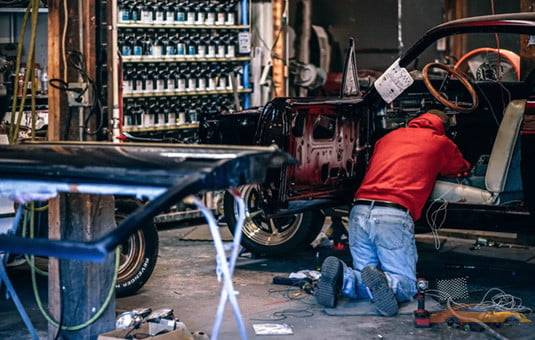

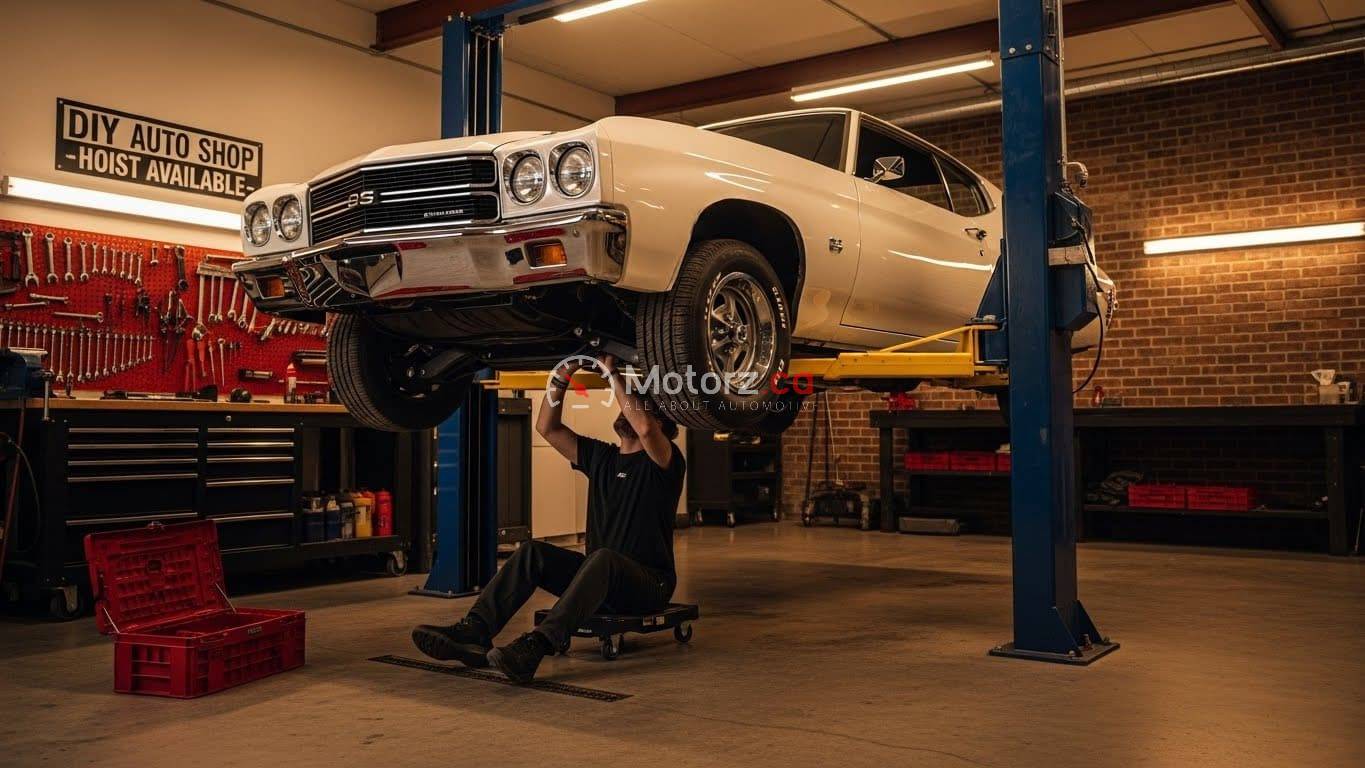

We’ve all been there: lying on a Auto Shop, oil-stained concrete driveway with just a few inches of clearance between your chest and the undercarriage of your car. You’re fumbling with a wrench, grit is falling into your eyes, and you’re praying that the jack stands hold steady. While the “driveway mechanic” lifestyle is a rite of passage, there comes a point in every DIYer’s journey where the old way just doesn’t cut it anymore.
In 2026, the rise of self-service auto repair shops has changed the game for enthusiasts and weekend warriors. These “DIY garages” provide the professional environment you need without the massive overhead of owning your own shop. But if you’re looking to book a bay, there is one feature that should be at the top of your “must-have” list: a vehicle hoist (or lift).
Renting a DIY auto shop with a hoist isn’t just about luxury; it’s about safety, speed, and precision. In this guide, we’ll explore why elevating your car is the best way to elevate your repair skills.
Auto Shop: Beyond the Jack Stand
The most compelling reason to rent a shop with a hoist is personal safety. While high-quality jack stands are generally reliable, they are still a point-of-failure system.
Mechanical Locking Systems
Professional hoists, such as those found in premium DIY shops like DIY Auto Labs or Rent A Lift, are equipped with mechanical safety locks. Once the vehicle reaches the desired height, the lift is lowered onto these steel locks. This creates a solid, stable platform that won’t budge, even if there is a hydraulic failure.
Stability During High-Torque Jobs
Have you ever had to use a breaker bar on a rusted suspension bolt while the car was on jack stands? It’s a nerve-wracking experience. On a two-post or four-post hoist, the vehicle is secured at specific lifting points or sits on a drive-on platform, providing the stability needed for heavy-duty wrenching without the risk of the car shifting or tipping.
Ergonomics: Save Your Back and Your Sanity
Car repair is physically demanding. Hours spent hunched over an engine bay or craning your neck while lying on a creeper can lead to chronic pain and fatigue.
Working at Eye Level
With a hoist, you can adjust the vehicle to the perfect height for the task at hand.
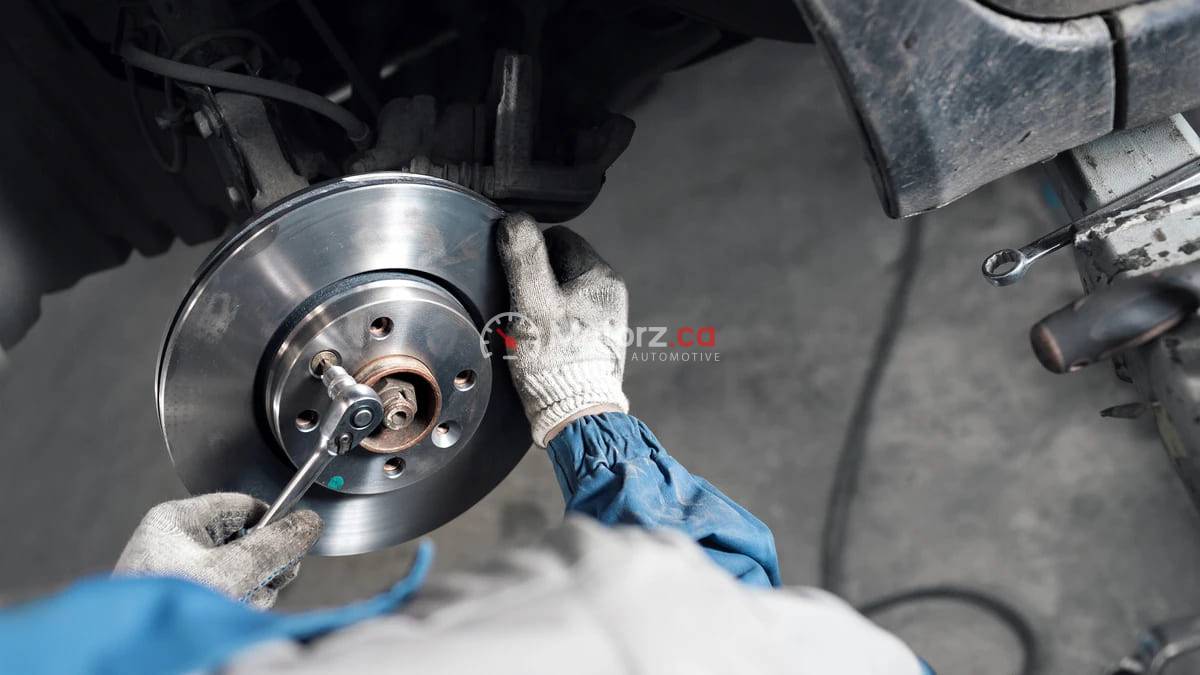
Brake and Suspension Work: Raise the car so the wheel hubs are at chest height.
Exhaust and Transmission Work: Lift the car above your head so you can walk underneath it and work with your arms at a comfortable 90-degree angle.
The Result: You stay fresher for longer, reducing the “tired mistakes” that often lead to stripped bolts or forgotten clips.
The Technical Edge: Access and Visibility
When your car is on the ground, your field of vision is limited to whatever your flashlight can hit from a few inches away. A hoist opens up the “underworld” of your vehicle in a way that jack stands never can.
360-Degree Inspections
When you rent a bay with a hoist, your first five minutes should be a “walk-around.” With the car at head height, you can spot:
Minor oil or coolant leaks that haven’t hit the driveway yet.
Frayed CV boots or cracked bushings hidden behind the control arms.
Rust spots on the floorboards or frame rails that need attention.
Better Leverage
Many repairs, like replacing an oxygen sensor or a starter motor, require specific angles of approach. Being able to move freely underneath the car allows you to find the “sweet spot” for your tools, often turning a three-hour struggle into a twenty-minute breeze.
Choosing the Right Lift for Your Project
Not all hoists are created equal. When booking your DIY shop rental, check which type of lift is in the bay.
Two-Post Lifts: The Versatile King
The two-post lift is the most common in DIY shops. It lifts the car by the frame, leaving the wheels hanging free.
Best for: Brake jobs, suspension overhauls, tire rotations, and fuel tank repairs.
Pro Tip: Make sure the shop staff helps you identify the manufacturer’s “pinch weld” or lifting points to prevent damage to your car’s bodywork.
Four-Post Lifts: The Stable Platform
A four-post lift allows you to drive the car onto two ramps. It’s essentially a “floating” piece of road.
Best for: Oil changes, exhaust installs, and alignment work.
The Insight: These are often preferred by beginners because they are incredibly easy to load and provide a massive sense of security.
What to Look for in a DIY Shop Rental
In 2026, the best self-service garages offer more than just a roof. When choosing a shop with a hoist, look for these professional amenities:
On-Site Experts: Shops that have a “floor manager” or “pro-on-duty” are invaluable. If you get stuck or aren’t sure how to engage the safety locks, having a pro nearby is a lifesaver.
Tool Access: Does the bay include a tool chest? Look for shops that provide high-torque air tools and specialty sockets as part of the rental.
Fluid Disposal: A professional shop should have dedicated drains or containers for used oil, coolant, and brake fluid, included in your hourly rate.
Lighting: Ensure the bay has high-intensity LED overhead lighting and portable magnetic work lights.
Stop Crawling, Start Lifting
Renting a DIY auto shop with a hoist is the ultimate “level up” for any car enthusiast. It turns a grueling, dirty job into a focused, professional experience. While it costs a bit more than working in your driveway, the time you save—and the physical toll you avoid—makes it one of the best investments you can make in your car’s maintenance.
Next time you have a weekend project, skip the floor jack. Find a local self-service garage, book a bay with a lift, and see how much faster (and safer) your repairs can be when you aren’t fighting for space on the ground.