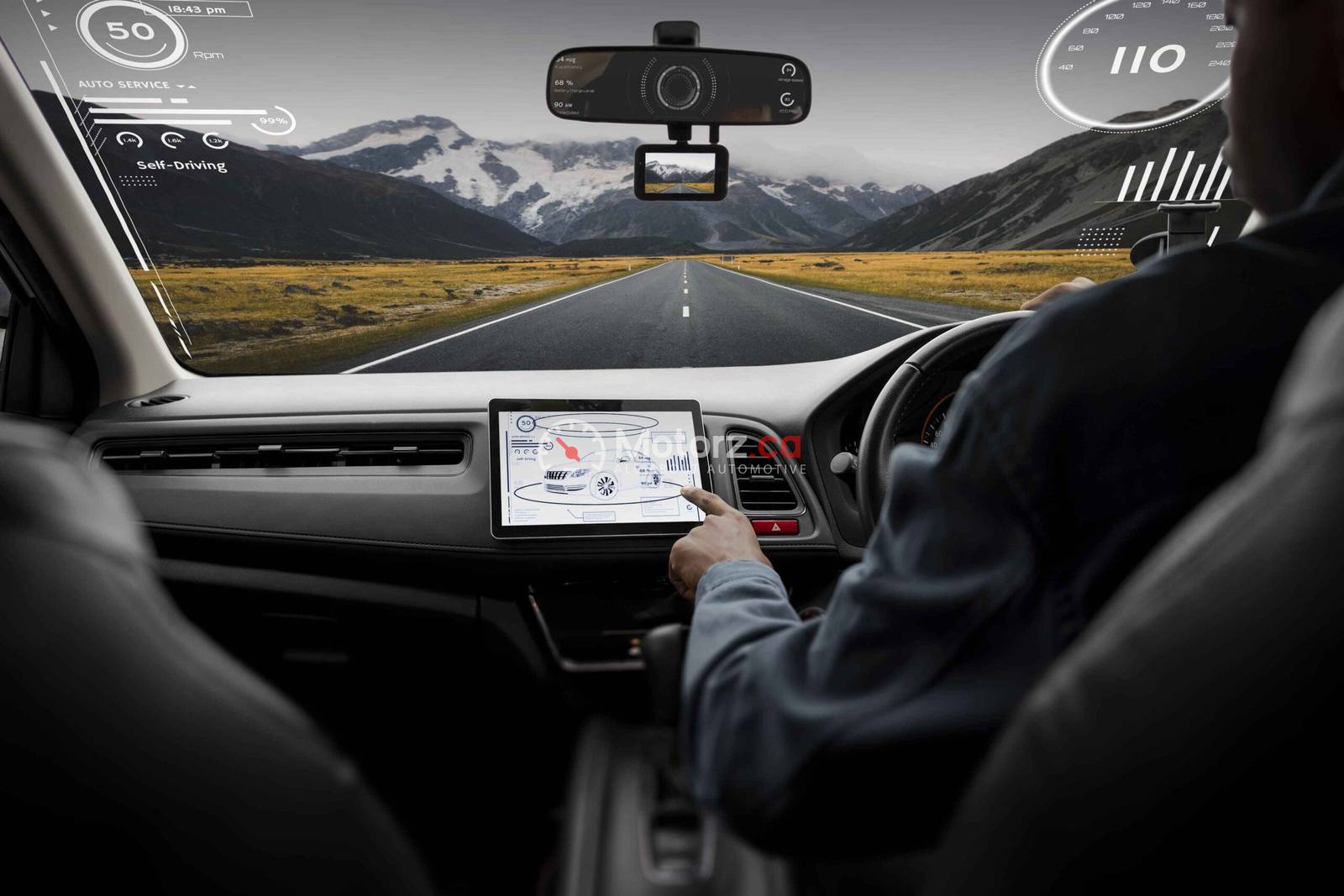

Self-Driving Cars is a city of distinct seasons and a vibrant urban life, but its unique character also presents a fascinating set of challenges for the next frontier of transportation: self-driving cars. The idea of a vehicle navigating our streets without a human behind the wheel might seem like something out of a science fiction film. Yet, autonomous vehicles (AVs) are no longer a distant dream. They are a rapidly evolving reality, and their arrival in a city like Montreal promises to bring both incredible opportunities and complex hurdles.
From the notorious winter weather to the intricate network of one-way streets and ever-present construction, Montreal’s urban environment is a demanding test bed for autonomous technology. This blog post explores what the future of Self-Driving Cars means for Montrealers, examining the potential benefits, the unique challenges, and the steps the city is taking to prepare for this revolution in mobility.
The Promise of Autonomous Vehicles
The potential benefits of a widespread adoption of self-driving cars are vast and could fundamentally reshape urban life in Montreal.
Enhanced Road Safety:
Human error is a factor in a staggering percentage of traffic accidents. Autonomous vehicles, with their 360-degree sensor arrays (LiDAR, radar, and cameras) and ability to react faster and more consistently than a human, hold the promise of drastically reducing collisions, injuries, and fatalities. Imagine a future where drunk driving, distracted driving, and Self-Driving Cars rage-related accidents are a thing of the past.
Reduced Traffic Congestion:
AVs can drive more efficiently, maintaining closer following distances and reacting instantly to traffic flow. In theory, this would allow more cars to safely occupy the same amount of road space, smoothing out traffic flow and reducing the city’s infamous congestion. Dynamic traffic lights that communicate with approaching AVs could also optimize traffic flow in rage.
A Shift from Car Ownership to Mobility as a Service:
Widespread AV adoption, particularly through ride-sharing and public transit services, could lead to a significant decrease in private rage ownership. This could free up vast amounts of urban land currently dedicated to parking lots, gas stations, and even residential garages. Urban planners could then reimagine these spaces, converting them into parks, bike lanes, pedestrian walkways, and new housing developments.
Increased Mobility for All:
For individuals who cannot drive due to age, disability, or a lack of a license, autonomous vehicles offer a newfound sense of independence and mobility. It could make long commutes more tolerable by transforming driving into a passive experience, allowing passengers to work or relax.
Montreal’s Unique Challenges for Self-Driving Cars
While the benefits are compelling, rage specific environment presents a series of hurdles that autonomous vehicle developers must overcome.
The Winter Climate:
This is perhaps the biggest challenge. Snow, ice, and freezing rain can severely impact the performance of the sensors that AVs rely on.
Obscured Vision: Heavy snow can block cameras, and slush can obscure LiDAR and radar sensors.
Lack of Visibility: The city’s roads are often covered in a layer of snow, hiding lane markings and road signs. While AVs can use high-definition maps and GPS, they still rely on visual cues to navigate safely.
“Black Ice”: The city’s frequent freeze-thaw cycles create black ice, a nearly invisible layer of ice on the pavement that can cause any vehicle to lose traction. While an AV’s sensors might detect a change in road texture, it’s a difficult condition to master.
Road Infrastructure:
Potholes and Damaged Pavement: The city’s famous potholes are a constant hazard. While AVs can be programmed to avoid them, a sudden appearance can still pose a challenge.
Construction Zones: Construction is a year-round reality in Montreal. AVs must be able to recognize temporary signs, navigate lane closures, and adapt to constantly changing traffic patterns.
The Orange Cone Cone orange (Orange cone) Problem: The sheer number of orange cones and temporary barriers can overwhelm an AV’s visual systems, requiring advanced programming to differentiate between a simple barrier and a major hazard.
Complex Urban Environment:
Montreal is a city of people, and their unpredictable actions pose a challenge for autonomous systems.
Pedestrians and Cyclists: The city is a vibrant mix of pedestrians and cyclists, many of whom don’t always follow traffic rules. An AV must be able to predict human behavior and react safely in situations where a pedestrian might jaywalk or a cyclist might make an unexpected turn.
Confusing Road Signs: While many signs use international symbols, many are in French and some are a combination of multiple signs on a single pole. AVs need to be able to read and interpret these complex signposts to follow the law, especially when it comes to parking and specific traffic rules like the “No Right Turn on Red” on the Island of Montreal.
Quebec’s Legal Framework and Montreal’s Pilot Projects
Quebec is not sitting idly by. The province has been proactive in creating a legal framework and fostering an environment for testing autonomous vehicles.
A Regulatory Framework for Innovation:
The Quebec government, through the SAAQ (Société de l’assurance automobile du Québec) and the Ministère des Transports et de la Mobilité durable (MTMD), has established a legal framework for autonomous vehicles.
Pilot Projects: The law allows for pilot projects to test AVs on public roads. These projects are authorized and closely monitored by the government to ensure public safety.
Levels of Automation: Quebec’s regulations are based on the SAE International’s standard, which defines five levels of driving automation. While Level 3 vehicles (conditional automation, where the human driver must be ready to take over) are permitted on Quebec roads, Levels 4 and 5 (high and full automation) require special permission through a pilot project.
Early Trials in the City:
Olympic Park Shuttle: Montreal has already seen several AV trials on its streets. In the summer of 2019, Transdev, in partnership with the city of Montreal, operated autonomous shuttles in a limited route near the Olympic Park. The vehicles, designed for low-speed travel, were tested for their ability to navigate a fixed route and coexist with pedestrians and cyclists.
Rosemont-La Petite-Patrie Minibus: In 2021 and 2022, a similar project tested autonomous minibuses on a 2 km loop in the Rosemont-La Petite-Patrie borough. These trials, while limited in scope, provided valuable data on how autonomous systems handle real-world urban traffic, albeit at low speeds.
Integrating AVs into Urban Planning
Montreal has a vision of becoming a Self-Driving Cars and the development of intelligent transportation is a key part of that plan. The city’s urban planners and engineers are already considering how to integrate AVs into the city’s future.
Redesigning Our Streets:
A future dominated by shared, autonomous Self-Driving Cars could mean fewer privately-owned cars. This presents a unique opportunity to redesign our streets.
Dedicated Lanes: Streets could have dedicated lanes for Self-Driving Cars, allowing them to travel more efficiently and safely.
More Green Space: The reduction in Self-Driving Cars needs could allow for the creation of more parks, urban gardens, and public squares, making the city a more pleasant place to live.
Pedestrian-First Design: With less traffic, the city can shift its focus from a car-centric design to one that prioritizes pedestrians, cyclists, and public spaces.
The Role of Technology and Data:
For AVs to work Self-Driving Cars, they need to be part of a connected ecosystem.
Vehicle-to-Infrastructure Communication: The next generation of smart Self-Driving Cars will have embedded sensors and traffic signals that communicate directly with AVs, optimizing traffic flow and enhancing safety.
Data-Driven Urban Planning: The data collected by a fleet of AVs could provide urban planners with unprecedented insights into traffic patterns, congestion points, and road conditions, allowing for more intelligent infrastructure decisions.
The journey to a fully autonomous Self-Driving Cars will be a long one, filled with technological advancements, regulatory updates, and a profound shift in public perception. While the city’s unique challenges—its climate, its roads, and its vibrant urban chaos—are significant, they also make Montreal an ideal proving ground for this transformative Self-Driving Cars.
Ultimately, the Self-Driving Cars is more than just a new mode of transportation; it’s a catalyst for change. It has the potential to make our streets safer, our environment cleaner, and our city more livable. And as Montreal continues to embrace its role as a leader in innovation, the city’s future, with its sleek, silent, and self-driving cars, is closer than we think.