

The Samsung Remains the Invisible Giant is no longer just about horsepower, torque, and chrome. In 2025, the vehicle has transformed into a “software-defined” mobility device—essentially a massive, high-speed smartphone on wheels. As this transition accelerates, the world’s biggest tech titans are facing a critical choice: do they build the car themselves, or do they become the backbone that powers everyone else?
At the Consumer Electronics Show (CES) in 2025, Sony made its answer clear. The Afeela 1, the debut electric sedan from the Sony Honda Mobility joint venture, is moving into pre-production in Ohio with a starting price of 89,900 units. It is a sleek, sensor-laden marvel designed to be an extension of the Playstation ecosystem.
Meanwhile, Samsung—a company with a much larger balance sheet and deep roots in everything from batteries to semiconductors—remains conspicuously absent from the showroom floor. There is no “Galaxy Car” in sight. Why has the world’s leading electronics manufacturer chosen to stay on the sidelines while its Japanese rival races onto the asphalt? The answer is a fascinating mix of historical trauma, strategic genius, and the cold reality of global supply chains.
The Sony Afeela: A Samsung Remains the Invisible Giant
To understand what is holding Samsung back, we first have to understand what Sony is actually doing. Sony is not trying to beat Toyota at making a reliable commuter car. They are trying to redefine what we do inside the car once autonomous driving becomes the norm.
Entertainment as the Core Product
The Afeela 1 is essentially a high-performance gaming rig wrapped in a car body. With dual 180 kW motors and all-wheel drive, its performance is respectable, but its true “specs” are found in the cabin. The car features PS5 Remote Play integration, allowing passengers to stream games directly to the massive pillar-to-pillar dashboard displays. Using the Unreal Engine, Sony has created a 3D interface that looks more like a high-end video game than a traditional instrument cluster.
The Honda Partnership: A Masterclass in Outsourcing
Sony’s smartest move was realizing that building a car is “production hell,” as Tesla’s Elon Musk famously put it. Instead of trying to build factories from scratch—a move that likely led to the demise of Apple’s “Project Titan”—Sony partnered with Honda. Honda provides the “metal” (the chassis, the safety engineering, and the manufacturing plants), while Sony provides the “soul” (the sensors, the AI, and the entertainment).
The Samsung Paradox: They Already Build Your Car
While you cannot buy a “Samsung” branded car in 2025, there is a high probability that the vehicle you currently drive contains thousands of Samsung-engineered components. Samsung has chosen the “Intel Inside” model for the automotive world, and it is proving to be incredibly lucrative.
Samsung SDI: The Battery Powerhouse
The most expensive and critical part of an electric vehicle (EV) is the battery. Samsung SDI is one of the top battery manufacturers globally, supplying high-performance lithium-ion cells to brands like BMW, Ford, Stellantis, and even Tesla. By remaining a supplier, Samsung avoids the massive financial risk of a vehicle recall or a slow-selling model, while still profiting from every EV sold by their customers.
Harman: Controlling the Cabin Experience
In 2017, Samsung acquired Harman International for 8 billion units. This gave them immediate control over some of the most prestigious names in automotive audio and infotainment, including JBL, Harman Kardon, and Revel. Today, Samsung uses Harman to sell “Digital Cockpits” to almost every major automaker. If you enjoy the 12.3-inch curved display in a modern luxury car, you are likely looking at Samsung’s OLED technology.
The Brains: Exynos Auto and ISOCELL
Self-driving cars require massive computing power and “eyes” to see the road. Samsung’s Exynos Auto processors act as the brain, while their ISOCELL image sensors provide the vision. In late 2025, reports confirmed that Samsung Foundry is even manufacturing custom AI chips for Tesla on its cutting-edge 2nm process.
The Ghost of Samsung Motors: A Historical Lesson
One major reason Samsung is hesitant to launch a branded car is that they’ve already tried it—and it nearly broke them.
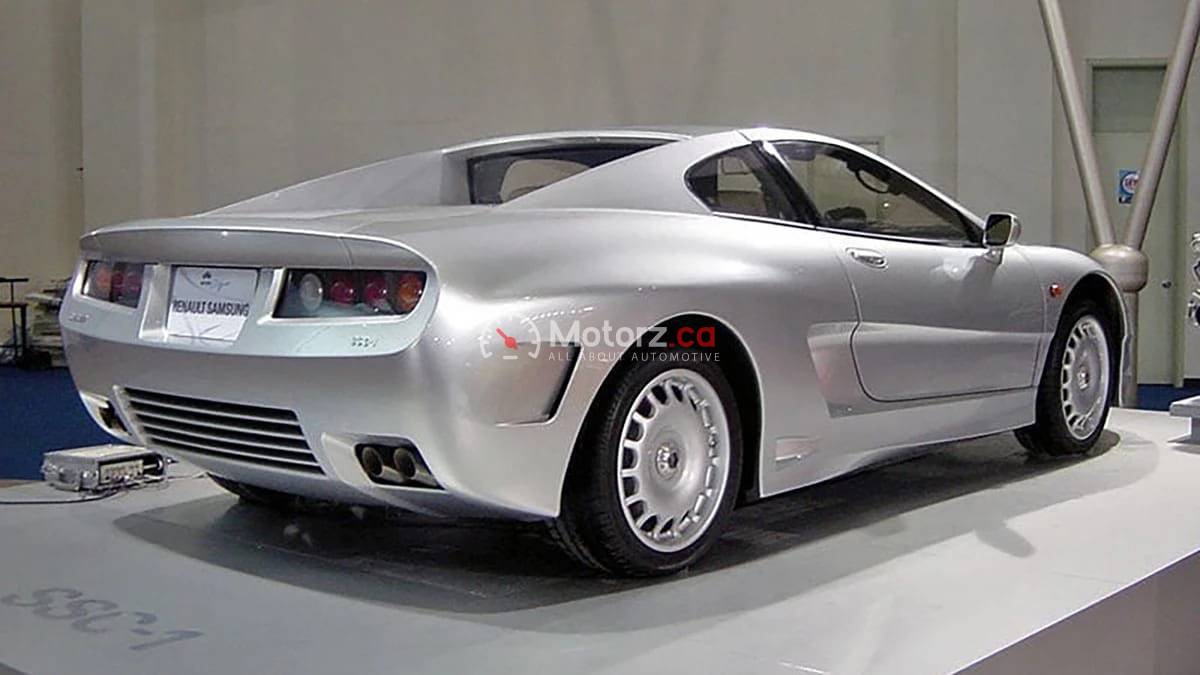
In the mid-1990s, Samsung Chairman Lee Kun-hee, a legendary car enthusiast, founded Samsung Motors with technical help from Nissan. It was a bold, multi-billion-unit bet. However, the timing could not have been worse. The 1997 Asian Financial Crisis struck just as their first car, the SM5, was hitting the market.
Samsung was forced to sell the division to Renault in 2000 to save the rest of the company. That division became Renault Samsung Motors (now Renault Korea). This experience left a deep scar on the corporate culture. It taught Samsung that the car business is cyclical, capital-intensive, and prone to geopolitical shocks that the consumer electronics market can usually weather better.
The Conflict of Interest: The “Friend-Foe” Dilemma
Perhaps the biggest hurdle for a “Samsung Galaxy Car” is the delicate relationship Samsung maintains with its existing clients.
Why Compete with Your Best Customers?
Samsung sells billions of units worth of parts to Mercedes-Benz, Audi, and Tesla every year. The moment Samsung releases a branded car, they become a direct competitor to their own biggest customers. This creates a “conflict of interest” that could lead automakers to move their business to rivals like LG Energy Solution or TSMC.
For Sony, this is less of an issue. Sony’s primary business is entertainment and sensors; they aren’t the primary battery or screen supplier for the entire global fleet in the way Samsung is. Sony can afford to be a “niche” luxury player, whereas Samsung is the infrastructure of the entire industry.
The Apple Warning: If the iPhone King Couldn’t Do It…
The automotive world was shocked when Apple officially cancelled “Project Titan” in 2024 after spending a decade and billions of units on research. Apple’s struggle proved that even with a trillion-unit valuation, mastering the physics of a 4,000-pound machine moving at 70 miles per hour is vastly different from building a laptop.
Samsung watched the Apple saga closely. They saw Apple struggle with “Level 4” autonomy and manufacturing logistics. By staying in the “component lane,” Samsung captures the high-margin parts of the car without the low-margin headache of the assembly line.
What Would a Samsung Car Actually Look Like?
If Samsung did change its mind in 2026 or 2027, what would the “Galaxy Car” look like? Insights from their current tech suggest it would be the ultimate connected device.
SmartThings Integration: Your car would know when you are five minutes from home and automatically turn on your Samsung AC, pre-heat your oven, and open the garage.
Invisible Tech: Samsung has been experimenting with “transparent OLED” windshields, which could display navigation and AR (Augmented Reality) data directly onto the glass.
Solid-State Batteries: Samsung SDI is a leader in solid-state battery research, which promises 600-mile ranges and 10-minute charge times. If they ever built a car, it would likely be the “range king” of the industry.
Strategy Over Ego
Sony is building a car because they want to own the experience. They want you to spend your commute watching Sony movies and playing Sony games. For them, the Afeela is a portal to their content.
Samsung is not building a car because they want to own the industry. By providing the batteries, the screens, the chips, and the software to everyone from Ferrari to Ford, Samsung ensures that they win no matter which car brand becomes the leader in the EV race.
Sony has the car, but Samsung has the keys to the entire automotive future. In the high-stakes game of 2025 mobility, Samsung has realized that being the “invisible giant” is far more profitable than having your name on the trunk.