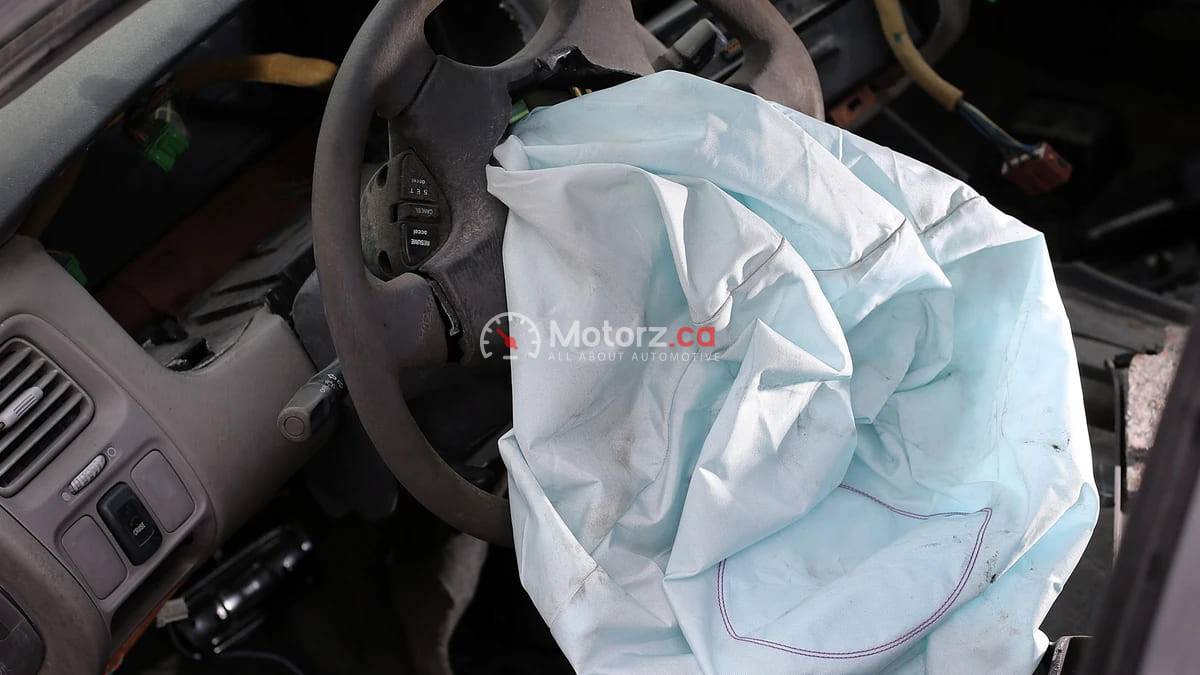
Just when the automotive world thought the largest Safety Crisis recall in history was finally winding down, the ghost of Takata has returned. In a massive new development for 2026, federal safety regulators have announced that another 10 million vehicles across the United States are being recalled due to defective airbag inflators.
For over a decade, the Takata name has been synonymous with a lethal manufacturing flaw. What was supposed to be a life-saving device—the airbag—became a potential source of shrapnel-loaded explosions. This latest “surge” in recalls proves that the industry is still grappling with the long-tail consequences of using volatile chemicals in safety equipment.
In this “Corner Wrench” investigation, we explore why these recalls are still happening, which manufacturers are currently under the microscope, and how you can determine if your vehicle is essentially a “ticking time bomb” in your driveway.
Why is the Takata Safety Crisis Growing in 2026?
Many drivers assume that if their car was part of the “big” Takata recall years ago, they are safe. However, the 10 million units added in this latest 2026 wave highlight a fundamental problem with the original repair strategy.
The “Like-for-Like” Replacement Failure
During the initial rush to fix millions of cars, there simply weren’t enough Safety Crisis (moisture-protected) inflators available. In some cases, shops installed “interim” replacements—new versions of the same non-desiccated inflators—just to get cars back on the road. These were always intended to be temporary. Now, those “temporary” fixes have reached the end of their safe lifespan and must be replaced with permanent, non-ammonium nitrate versions.
The Problem with Phase-Based Recalls
The National Highway Traffic Safety Administration (NHTSA) manages these recalls in “zones” based on age and humidity levels. As older vehicles move into new regions or simply age past their safety threshold, they trigger new recall waves. The 2026 expansion focuses on vehicles that were previously considered “low risk” but have now reached a critical age where the chemical propellant has become unstable.
The Science of the Danger: Ammonium Nitrate and Humidity
To understand the risk, you have to understand the chemistry. Takata used ammonium nitrate as the propellant to inflate their airbags. While effective and cheap, this chemical has a fatal flaw: it is highly sensitive to moisture and temperature fluctuations.
The “Shrapnel” Effect
Over time, exposure to high humidity causes the ammonium nitrate tablets to break down into a fine powder. When the airbag is triggered during a crash, this powder burns much faster than intended. Instead of a controlled inflation, the metal housing of the inflator explodes like a small pipe bomb, spraying metal shards through the airbag and into the cabin.
Why “High Humidity” Zones Matter
While the 10 million new recalls cover the entire U.S., owners in the “Gulf Coast” regions (Zone A) are at the highest risk. However, even in drier climates, the simple passage of time—specifically 10 to 15 years—is enough for the chemical bonds to weaken to a dangerous point.
Is Your Vehicle Affected? The 2026 Manufacturer List
The latest 10 million unit expansion hits a broad cross-section of the American car market. While many of these are older models, they remain popular on the used car market.
Major Brands Under the New Recall
Ford and Lincoln: Specifically targeting older Ranger pickups, Edge SUVs, and Mustang models.
Honda and Acura: Despite being the first to catch the defect years ago, Honda still has a significant number of “interim” inflators that need permanent replacement.
Toyota and Lexus: Including the Corolla, Matrix, and several Lexus luxury sedans.
General Motors: Focusing on older trucks and SUVs that were previously excluded based on interior climate control theories that have since been disproven.
Volkswagen and Audi: Specifically models from the 2010 to 2016 range that were sold or registered in humid states.
How to Check and Fix Your Airbag for Free
Dealing with a recall can be a hassle, but with the Takata issue, there is zero room for procrastination. This is a “Do Not Ignore” safety event.
Step 1: The VIN Lookup
The only way to know for sure is to check your 17-digit Vehicle Identification Number (VIN). You can find this on your registration, your insurance card, or at the base of the driver’s side windshield.
Go to NHTSA.gov/recalls.
Enter your VIN.
If you see an “Open” recall for an “Airbag Inflator,” call a dealer immediately.
Step 2: Scheduling the Free Repair
By law, all safety recalls must be performed free of charge. The dealer will replace the defective inflator with a new, safe version. The process typically takes about one to two hours.
Rental Cars: In some high-risk cases (specifically “Do Not Drive” warnings), manufacturers may provide a free loaner car or tow your vehicle to the shop if parts are on backorder.
Buying or Selling a Used Car? The Takata “Red Flag”
In 2026, the used car market is more active than ever. However, it is currently legal in many states for a private seller (and in some cases, a dealer) to sell a used car with an open safety recall.
The “Corner Wrench” Advice for Buyers
Never buy a used vehicle without running the VIN through the NHTSA database yourself. If a seller tells you “the recall was done,” ask for the service record. An open Takata recall is a major liability that can affect your ability to insure the car or, more importantly, your survival in a minor fender-bender.
The Responsibility of Sellers
If you are selling a car with an open Takata recall, do the right thing: get it fixed before listing it. It costs you nothing but time, and it ensures you aren’t passing a life-threatening defect on to the next owner.
Vigilance is the Only Defense
The 10 million vehicle expansion in 2026 is a sobering reminder that the Takata crisis is a multi-generational problem. We cannot assume that “the problem was fixed years ago.” As vehicles age, the risk increases. By taking fifteen minutes to check your VIN and an hour to visit a dealership, you can turn a potential tragedy into a non-event.