




In the span of a few weeks, Tesla’s Aggressive European have rocked global industries, demonstrating the ruthless pace of modern corporate disruption. On one front, Tesla escalated the electric vehicle (EV) price wars in Europe by introducing significantly cheaper, de-contented versions of the Model 3 and Model Y to defend its critical market share. On the other, the entertainment world exploded in controversy following the monumental, multibillion acquisition of Warner Bros. studios and streaming business by Netflix, a deal that has provoked a rare, unified backlash from Hollywood guilds and US lawmakers.
These two events, though seemingly disparate—one concerning electric cars and the other streaming media—are fundamentally linked by a common theme: The relentless pursuit of market dominance through disruption and price control.
Tesla’s move is a defensive strategy against affordable Chinese rivals and legacy European brands, trading premium features for volume sales. Conversely, the Netflix-Warner Bros. deal is an offensive play for content control, consolidation, and the creation of an entertainment behemoth with unparalleled market power. This article dives deep into the strategic motives behind both mega-moves, the features Tesla sacrificed for affordability, and the terrifying implications of media consolidation that have united Hollywood’s biggest players against Netflix.
Tesla’s Aggressive European Gambit: Trading Luxury for Volume
The European electric vehicle market is no longer Tesla’s easy playground. Facing stiff competition and shrinking market share, particularly against Chinese giants like BYD and cost-efficient offerings from Volkswagen, Tesla has launched a new, aggressive pricing strategy.
The New Entry-Level Model 3 and Model Y Standard
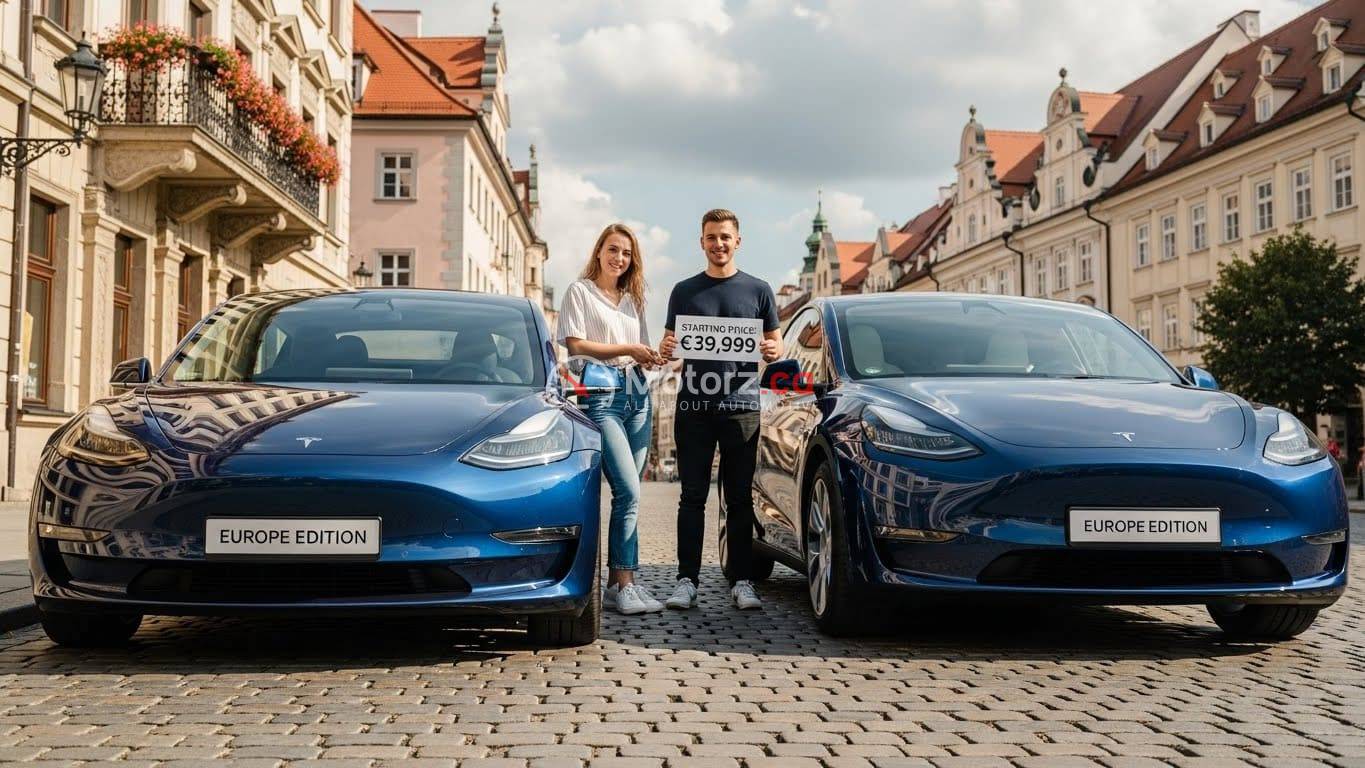
Tesla’s response to the market pressure is the introduction of the Model 3 Standard and Model Y Standard variants across key European markets. These models are priced significantly lower than their ‘Premium’ counterparts, often dipping below the 40,000 euro psychological barrier to appeal to a wider, more price-sensitive consumer base.
Model 3 Standard Pricing: In countries like Germany and France, the Model 3 Standard starts around 36,990 to 37,970 euros, positioning it as a direct and aggressive alternative to the entry-level Volkswagen ID.3 or the popular BYD Atto 3.
Model Y Standard Pricing: The Model Y Standard follows a similar strategy, offering a lower entry point for the popular crossover SUV, though its exact price cut varies by country.
The De-Contenting Strategy: What Features Were Sacrificed?
To achieve these ultra-competitive price points, Tesla has applied a strategy of de-contenting, carefully removing non-essential luxury and convenience features to reduce the Bill of Materials (BOM) cost without compromising core performance, range, or safety.
The crucial strategic insight is that while these features are removed, the vehicles retain their competitive WLTP range (often over 300 miles or 480 km), their access to the Supercharger network, and Tesla’s acclaimed software. This trade-off is aimed at capturing the high volume of buyers for whom price is the single most important factor.
SEO Insight: Tesla’s strategy is a direct response to Chinese EV competition and European sales slump. By focusing content on affordability, the company aims to broaden its addressable market and maintain volume, even at the cost of lower profit margins per vehicle.
Hollywood in Uproar: The Netflix-Warner Bros. Acquisition Backlash
Shifting from the automotive to the entertainment arena, the proposed acquisition of Warner Bros. Discovery’s studios and streaming business by Netflix for an enterprise value estimated in the tens of billions of dollars has triggered a massive, cross-industry revolt.
A Deal that Shakes the Foundations of Hollywood
Warner Bros. is more than just a studio; it is the home of iconic intellectual property (IP), including:
DC Comics (Batman, Superman, Wonder Woman)
Harry Potter and the Wizarding World
The Lord of the Rings (via New Line Cinema)
The premium prestige content of HBO Max and HBO itself (e.g., Game of Thrones, The White Lotus)
The acquisition would give Netflix, already the world’s largest streaming service, control over nearly half the entire streaming content market and a legacy library that rivals Disney’s.
Unprecedented Union of Opposition: Antitrust Concerns
The sheer scale of the merger has caused an extremely rare, unified opposition from political figures, major Hollywood unions, and rival executives who warn of an anti-monopoly nightmare.
Writers Guild of America (WGA): The WGA has called for the merger to be blocked by regulators, stating the deal would “eliminate jobs, push down wages, worsen conditions for all entertainment workers, raise prices for consumers, and reduce the volume and diversity of content.”
Directors Guild of America (DGA): Led by president and legendary filmmaker Christopher Nolan, the DGA voiced “significant concerns,” arguing that a competitive industry is essential for safeguarding the creative rights and careers of filmmakers. Nolan himself has been a vocal critic of streaming-first strategies and the devaluing of the theatrical experience.
U.S. Politicians: High-profile figures, including Senator Elizabeth Warren, have branded the deal an “anti-monopoly nightmare” that threatens to increase subscription costs and limit consumer choice.
Cinema Owners: The exhibition industry has expressed alarm, citing Netflix’s historical reluctance to commit to traditional theatrical releases. They fear the merger will lead to fewer big-screen releases for Warner Bros.’ prestigious films, directly harming theaters and related jobs.
The Threat of IP Commodification and Creative Control
For creatives and fans, the core fear is the Netflixification of Warner Bros.’ prized IP. Critics worry that Netflix’s model, which prioritizes volume and subscriber retention over singular prestige filmmaking, will lead to:
Reduced Theatrical Window: A shorter or non-existent gap between a film’s cinema release and its streaming debut, devaluing the movie-going experience.
Creative Standardization: A push for content that fits Netflix’s proprietary algorithms, potentially leading to less diverse and less artistically ambitious projects—the very kind of prestige content HBO is famous for.
Woke Ideology Concerns: A segment of the fan base fears that Netflix will inject overly progressive or polarizing themes into cherished franchises like DC Comics and Harry Potter.
The Common Thread: Disruption and the Race for Scale
Despite the differences between electric cars and entertainment, both Tesla’s European pricing and the Netflix-Warner Bros. deal reflect the modern corporate imperative: achieving maximum scale and crushing competition.
The Quest for the Mass Market
Tesla’s move is about transitioning from a high-tech niche brand to a true mass-market automobile manufacturer. To do this, they must confront the reality that the majority of global consumers prioritize price. The stripped-down Model 3 and Y are stop-gap solutions until the rumored, fully dedicated lower-cost platform (often called the Model 2) can be built. If they fail to secure this volume now, they risk being permanently overtaken by Chinese manufacturers who are already optimizing for sub-40,000 euro pricing.
The Quest for Content Hegemony
Netflix’s acquisition is a move toward content hegemony. In the “streaming wars,” the battle is won not just by having some content, but by owning the most indispensable content. Acquiring Warner Bros. gives Netflix a legacy library, filmography, and IP arsenal that no other competitor (besides perhaps Disney) can match, making a subscription to Netflix essentially non-negotiable for consumers who want access to major pop-culture franchises. The backlash highlights the concern that this level of consolidation eliminates the competition necessary to ensure fair pricing and creative freedom across the industry.
New Rules for a Disrupted World
The recent actions of Tesla and Netflix are more than just business decisions; they are defining moments in the new economic landscape. Tesla’s price cuts underscore the ferocity of the global EV transition and the power of cost-advantaged newcomers, forcing an innovator to retreat to a cost-driven strategy. The Netflix-Warner Bros. deal represents the terminal consolidation of the media industry, where the lines between content creator and distributor are permanently erased, raising serious questions about consumer choice and the future of artistic independence.
For the consumer, the immediate impact is a cheaper Tesla Model 3 or Y in Europe—a win for the budget-conscious EV buyer. However, the long-term cost could be a less innovative EV market and a more consolidated, homogenous entertainment landscape where the diversity and prestige of Hollywood’s greatest stories are controlled by a single, all-powerful streaming giant. The coming months will determine if regulators heed the loud, unified call from Hollywood to block the Netflix-Warner Bros. deal and if Tesla’s strategic price cuts can restore its reign in Europe.