
The future of transportation just got a lot closer, and Wall Street is taking notice. In a move that sent Tesla (TSLA) shares soaring by over 15 percent in intraday trading this week, CEO Elon Musk officially confirmed that the company has begun driverless Robotaxi testing with no human safety monitors in Austin, Texas. This announcement marks a monumental shift in Tesla’s long-held promise of autonomous ride-hailing and a pivotal moment for the entire self-driving industry.
For years, the concept of a Tesla Robotaxi network has been a speculative vision, a key driver behind the company’s valuation, but one that has often faced skepticism regarding its feasibility. By removing the safety driver from the equation, Tesla is not only validating its “Vision Only” approach to autonomy but is also signaling that its Full Self-Driving (Unsupervised) software has achieved a critical internal level of confidence. This direct confirmation from Musk ignited investor enthusiasm, propelling TSLA stock to new highs and reinforcing the company’s position as a leader in AI and robotics.
This comprehensive analysis delves into the implications of this driverless testing, the immediate and long-term impact on Tesla’s stock performance, the technological breakthroughs enabling this milestone, and what it means for the company’s ambitious Cybercab production plans and the future of urban mobility.
The Confirmation: Unsupervised Robotaxis Hit Austin Streets
The spark that lit the market’s fire wasn’t a rumor, but concrete evidence. Social media reports, quickly validated by Elon Musk, confirmed the active deployment of genuinely driverless Teslas.
From Speculation to Reality: “No Occupants in the Car”
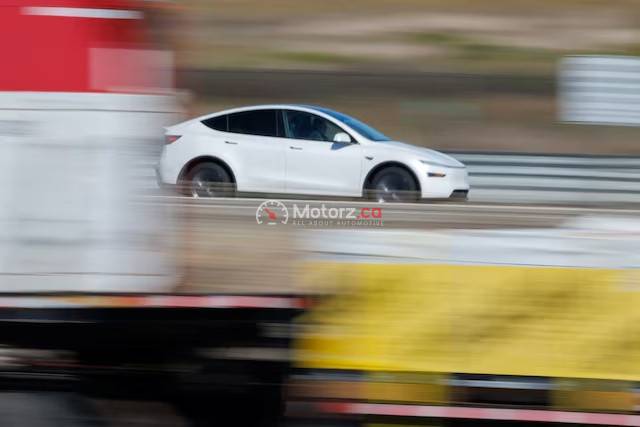
Over the past weekend, videos and images proliferated across platforms like X, showing Tesla Model Y Robotaxis navigating Austin streets without anyone in the driver’s seat or even the passenger seat. These vehicles were identifiable by specific markings and license plates associated with Tesla’s autonomous testing fleet in Texas.
Musk’s Explicit Validation: Elon Musk, true to form, took to X (formerly Twitter) to unequivocally confirm the sightings. His succinct post, “Testing is underway with no occupants in the car,” left no room for doubt and immediately amplified the market’s reaction.
A Critical Milestone: This transition from FSD (Supervised)—where a human safety driver is always present and ready to intervene—to FSD (Unsupervised) for testing purposes is a colossal leap. It signifies that Tesla’s internal simulations and real-world data have convinced the company’s engineers that the software is robust enough to handle complex scenarios without immediate human oversight.
The “Vision Only” Triumph: Hardware and AI
Tesla’s autonomous strategy has famously diverged from competitors like Waymo and Cruise, which heavily rely on expensive LiDAR and radar sensors. Tesla’s approach, focused on “Vision Only” through cameras and powerful onboard AI, is now seemingly being validated in this driverless phase.
Hardware 4 (HW4): The Robotaxis currently being tested are equipped with Tesla’s latest Hardware 4 (HW4) suite, which features more powerful computing, enhanced camera resolution, and improved redundancy. This hardware, coupled with the vast amount of real-world data collected from millions of Tesla vehicles globally, feeds the neural networks that power the Full Self-Driving system.
The Data Advantage: Tesla’s unique position of having millions of consumer vehicles gathering real-world driving data provides an unparalleled advantage in training its AI. This “fleet learning” approach allows the system to rapidly identify and learn from edge cases, a critical factor in achieving true autonomy.
The Market’s Verdict: TSLA Stock Soars to New Heights
The confirmation of driverless Robotaxi testing immediately translated into a significant surge in Tesla’s stock price, reflecting renewed investor confidence in the company’s long-term vision.
A 15 Percent Jump and Multi-Trillion Dollar Valuation
Following Musk’s confirmation, TSLA stock experienced a dramatic climb, peaking with an intraday gain of over 15 percent. This upward trajectory pushed Tesla’s market capitalization towards unprecedented levels, solidifying its position as one of the world’s most valuable companies.
Re-rating Catalyst: This event is a clear re-rating catalyst for the stock. Investors are now more willing to price in the future revenue potential of a fully autonomous ride-hailing network, shifting the narrative from a mere automaker to an AI and robotics powerhouse.
High-Margin Services: The core of the excitement lies in the anticipated high-margin revenue from a Robotaxi service. Unlike selling vehicles (which have manufacturing costs), a driverless ride-hailing service operates with minimal overhead per ride, promising significantly higher profit margins that could transform Tesla’s financial profile.
Analyst Optimism and Price Target Revisions
Leading Wall Street analysts have quickly reacted to the news, issuing bullish notes and revising their price targets for TSLA.
Morgan Stanley’s Bullish Stance: Analysts at Morgan Stanley, for instance, have long highlighted the Robotaxi business as the most significant upside for Tesla. The driverless testing “de-risks” this projection, making their scenarios of millions of Tesla Robotaxis on the road by 2035 seem more plausible.
Wedbush’s “Apple Moment”: Dan Ives of Wedbush Securities, a long-time Tesla bull, has famously likened the Robotaxi rollout to Apple’s iPhone moment, predicting a massive wave of innovation and revenue generation that could be a “game-changer” for the company.
The Road Ahead: Cybercab, Unboxed Manufacturing, and Regulatory Hurdles
The current driverless Model Ys are merely the vanguard for Tesla’s dedicated autonomous vehicle: the Cybercab.
The Cybercab: Purpose-Built for Autonomy
While current tests utilize modified consumer vehicles, the ultimate goal is a purpose-built Robotaxi.
2026 Production Target: Elon Musk has consistently pointed to 2026 as the target for volume production of the Cybercab. This vehicle is expected to be a radical departure from current car design.
Wheel-and-Pedal-Free Design: The Cybercab is envisioned as a two-seater vehicle without a steering wheel or pedals, optimized for urban ride-hailing. This design prioritizes interior space for passengers and simplifies maintenance in a high-utilization fleet environment.
“Unboxed” Manufacturing: To achieve the low production costs necessary for an economically viable Robotaxi service, Tesla is developing its revolutionary “Unboxed” manufacturing process. This method involves building vehicle sub-assemblies in parallel before a final assembly, aiming to significantly reduce manufacturing time and expenses.
Navigating the Regulatory Landscape
While internal testing is a crucial step, bringing Robotaxis to full commercial operation requires overcoming substantial regulatory hurdles.
State-Level Approvals: The path to widespread deployment involves securing approval from individual state departments of motor vehicles (DMVs) and transportation authorities. States like Texas, California, and Arizona have specific frameworks for autonomous vehicle testing and deployment.
Public Trust: Beyond regulatory greenlights, Tesla will need to foster public trust. Transparent safety data and a proven track record of incident-free operation will be paramount to gaining widespread acceptance from consumers and policymakers alike.
Safety, Scrutiny, and the Path to Ubiquity
The move to driverless testing will intensify scrutiny on Tesla’s safety performance, a topic that has often been at the center of public debate.
Addressing Safety Concerns and Data Transparency
Tesla’s FSD system has faced criticism regarding its crash rates and the terminology used to describe its capabilities. With the removal of safety drivers, the onus is on Tesla to provide compelling evidence of its system’s safety.
Statistical Superiority: To truly achieve ubiquity, Robotaxis must demonstrate a statistically superior safety record compared to human-driven vehicles. This requires collecting and transparently reporting vast amounts of data on miles driven, disengagements (where human intervention was required in supervised testing), and incident rates in driverless operation.
The “Human Error” Factor: Proponents of autonomous vehicles argue that eliminating human error, which accounts for the vast majority of accidents, will ultimately make roads safer. Tesla’s driverless tests are a real-world attempt to prove this hypothesis.
Competition and the Race for Scale
While Tesla has made a significant leap, it is not alone in the autonomous race.
Waymo’s Head Start: Waymo (Alphabet) has been operating fully driverless ride-hailing services in Phoenix and San Francisco for some time, albeit with a smaller fleet and a different technological stack (LiDAR). Tesla’s challenge is to not just match Waymo’s current capabilities but to achieve vastly superior scale due to its vision-only approach.
Cruise’s Setbacks: The recent operational pause of GM’s Cruise autonomous vehicle service after a major incident highlights the extreme challenges and high stakes involved in deploying driverless technology. Tesla’s successful progression without human monitors is a stark contrast and a significant advantage in perception.
Tesla’s Autonomous Future Accelerates
Elon Musk’s confirmation of driverless Robotaxi testing without human safety monitors marks a watershed moment for Tesla and the entire autonomous vehicle industry. This isn’t just about selling more cars; it’s about fundamentally transforming the trillion-dollar transportation industry.
For investors, the long-term Robotaxi vision, once relegated to distant speculation, has now shifted firmly into the realm of near-term possibility. While regulatory hurdles and public acceptance remain, Tesla’s commitment to its “Vision Only” strategy, backed by a massive data engine and the ambitious Cybercab production plan, positions it to potentially dominate the future of autonomous ride-hailing. The journey to a fully driverless world just picked up considerable speed.