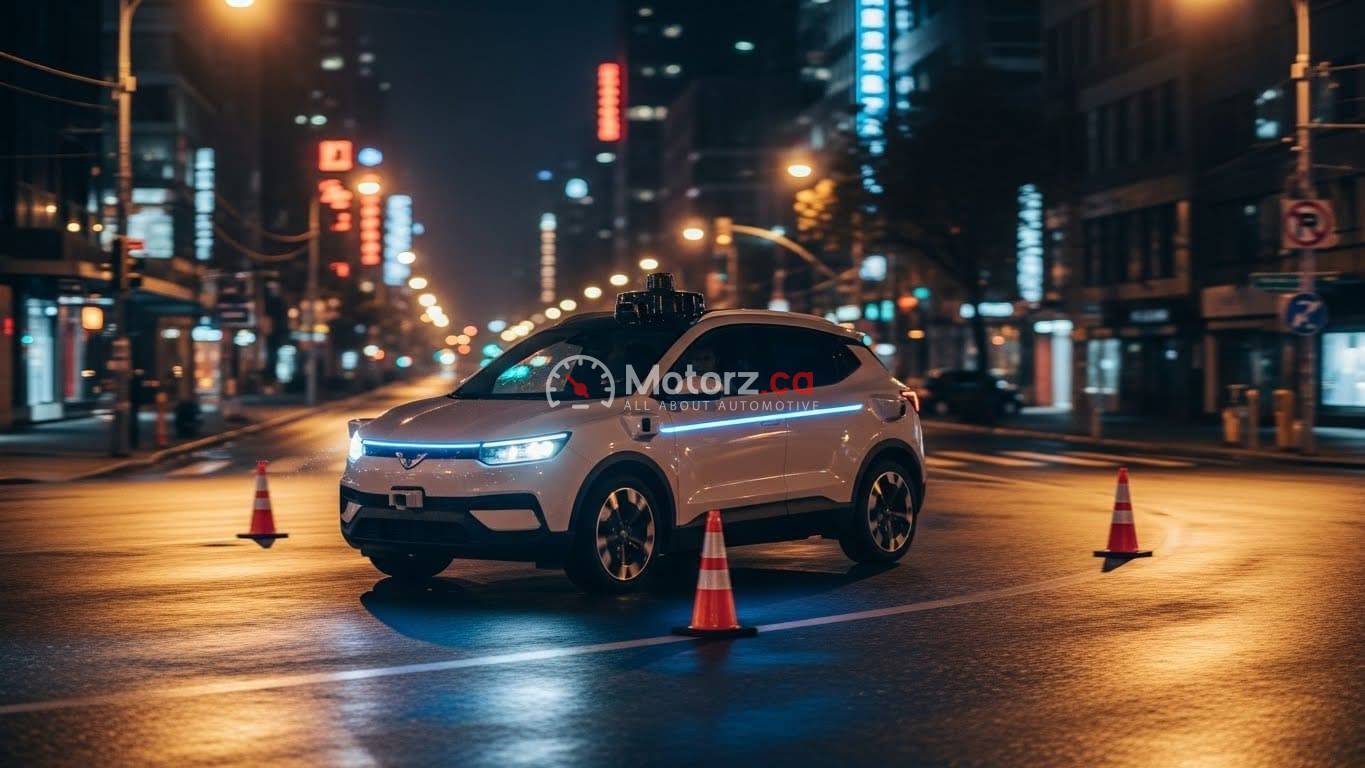

The Driverless Robotaxi Testing just shifted into high gear. In a move that has sent shockwaves through both Wall Street and the automotive industry, Tesla (TSLA) shares surged to a new intraday all-time high of 491.50 this week. The catalyst? Official confirmation from CEO Elon Musk that Tesla has officially begun testing its Robotaxi fleet without human safety monitors in Austin, Texas.
For years, the promise of a driverless Tesla fleet has been the cornerstone of the company’s massive valuation. While competitors like Waymo have been operating driverless vehicles for some time, Tesla’s approach—relying purely on vision and a scalable fleet of millions of consumer cars—has always been the higher-stakes bet. By removing the safety driver from the equation, Tesla is signaling to the world that its Full Self-Driving (Unsupervised) software has reached a critical internal milestone of confidence.
This definitive guide breaks down the details of the Austin driverless pilot, the impact on Tesla’s stock price and market capitalization, and what this means for the upcoming Cybercab production and the future of autonomous ride-hailing.
Inside the Austin Pilot: Removing the “Safety Monitor”
The recent surge in Tesla stock wasn’t sparked by a simple tweet, but by real-world sightings of unmanned Teslas navigating the complex urban environment of Austin.
Testing Underway with “No Occupants”
Over the weekend of December 14, 2025, social media was flooded with videos of a black Model Y Robotaxi—distinguishable by its specific branding and Texas plates—navigating city streets with no one in the driver or passenger seats. Elon Musk quickly confirmed the milestone on X, stating, “Testing is underway with no occupants in the car.”
From Supervised to Unsupervised: Previously, Tesla’s Robotaxi pilot in Austin included a “safety monitor” in the front passenger seat with a kill switch. The transition to an empty cabin marks the shift from FSD (Supervised) to a trial phase of FSD (Unsupervised).
Expansion Plans: While the current driverless tests are localized in Austin, reports indicate that Tesla is preparing to expand this “monitor-free” testing to other major markets, including Phoenix, Las Vegas, and the San Francisco Bay Area, as regulatory approvals fall into place.
The Hardware Behind the Milestone
Unlike competitors who use expensive LiDAR and radar suites, these Robotaxis are running on the AI4 (Hardware 4) suite found in many of Tesla’s newer consumer vehicles. This validates the “Vision Only” approach that Musk has championed, suggesting that the massive data engine fueled by millions of Tesla owners has finally “solved” enough edge cases to permit driverless operation in controlled test environments.
Wall Street Reaction: Why TSLA Stock Scaled a New Peak
Tesla’s market cap has officially crossed the 1.63 trillion threshold, cementing its status as the world’s most valuable automaker and a top-tier AI powerhouse.
The Morgan Stanley “Million Unit” Projection
Coinciding with the driverless testing news, Morgan Stanley released a bullish note projecting that Tesla’s robotaxi fleet could reach one million units by 2035. Analysts argue that the ability to remove the safety monitor is the single most important “derisking” event for the stock.
High-Margin Revenue: Investors are no longer looking at Tesla as just a car manufacturer. A driverless ride-hailing network offers software-like margins (potentially 70 percent or higher), far outpacing the 17-19 percent margins typically seen in hardware sales.
The “Trump Tailwind”: Market sentiment is also being buoyed by expectations of a more favorable federal regulatory environment for autonomous vehicles under the current administration, potentially streamlining the path for a national Robotaxi rollout.
A Stark Contrast to Driverless Robotaxi Testing
While Tesla hits record highs, the “Big Three” are facing significant headwinds. The market responded positively to Tesla’s autonomy news partly as a contrast to Ford’s 19.5 billion writedown on its own electric vehicle and autonomous programs. The narrative in late 2025 is clear: the market is rewarding companies that can successfully bridge the gap from “assisted driving” to “true autonomy.”
The Roadmap to 2026: Cybercab and the “Unboxed” Process
The current testing with Model Y vehicles is widely seen as a bridge to Tesla’s dedicated autonomous vehicle: the Cybercab.
Cybercab Production Timeline
Elon Musk and bull analysts like Dan Ives of Wedbush have pointed toward 2026 as the “Game Changer” year.
April 2026 Target: Volume production of the Cybercab is currently targeted for the April/May 2026 timeframe.
Purpose-Built Design: Unlike the Model Y, the Cybercab is a two-seater with no steering wheel or pedals, designed specifically to be cleaned and maintained in a high-utilization fleet environment.
The Unboxed Manufacturing Process
To make the Robotaxi network profitable, the vehicles themselves must be inexpensive to build. Tesla is leveraging its “Unboxed” manufacturing process, which builds sub-assemblies in parallel rather than on a traditional linear line. This is expected to cut production costs significantly, potentially allowing for a vehicle price point that enables ultra-low-cost ride-hailing rates.
Safety Metrics and the “Supervisor Paradox”
Despite the stock market euphoria, the transition to driverless testing remains controversial, particularly regarding safety data.
The Crash Rate Debate: Critics and safety advocates have pointed to NHTSA filings suggesting that previous versions of FSD experienced incidents more frequently than human drivers.
Proving Safety Without the Monitor: The current testing phase in Austin is critical because it removes the “Safety Monitor” who previously prevented potential accidents. To satisfy regulators and the public, Tesla will need to release transparent, granular data proving that unsupervised miles are statistically safer than human-driven miles.
Regulatory Hurdles: While testing is underway, a full commercial launch (where the general public can hail an empty Tesla) still requires significant state-level certifications in Texas, California, and Arizona.
The Transformation of Tesla
The confirmation of driverless Robotaxi testing in Austin marks the end of Tesla’s “EV-only” era and the beginning of its life as a Robotics and AI platform. By removing the human safety monitor, Tesla has crossed a Rubicon that few believed possible just twelve months ago.