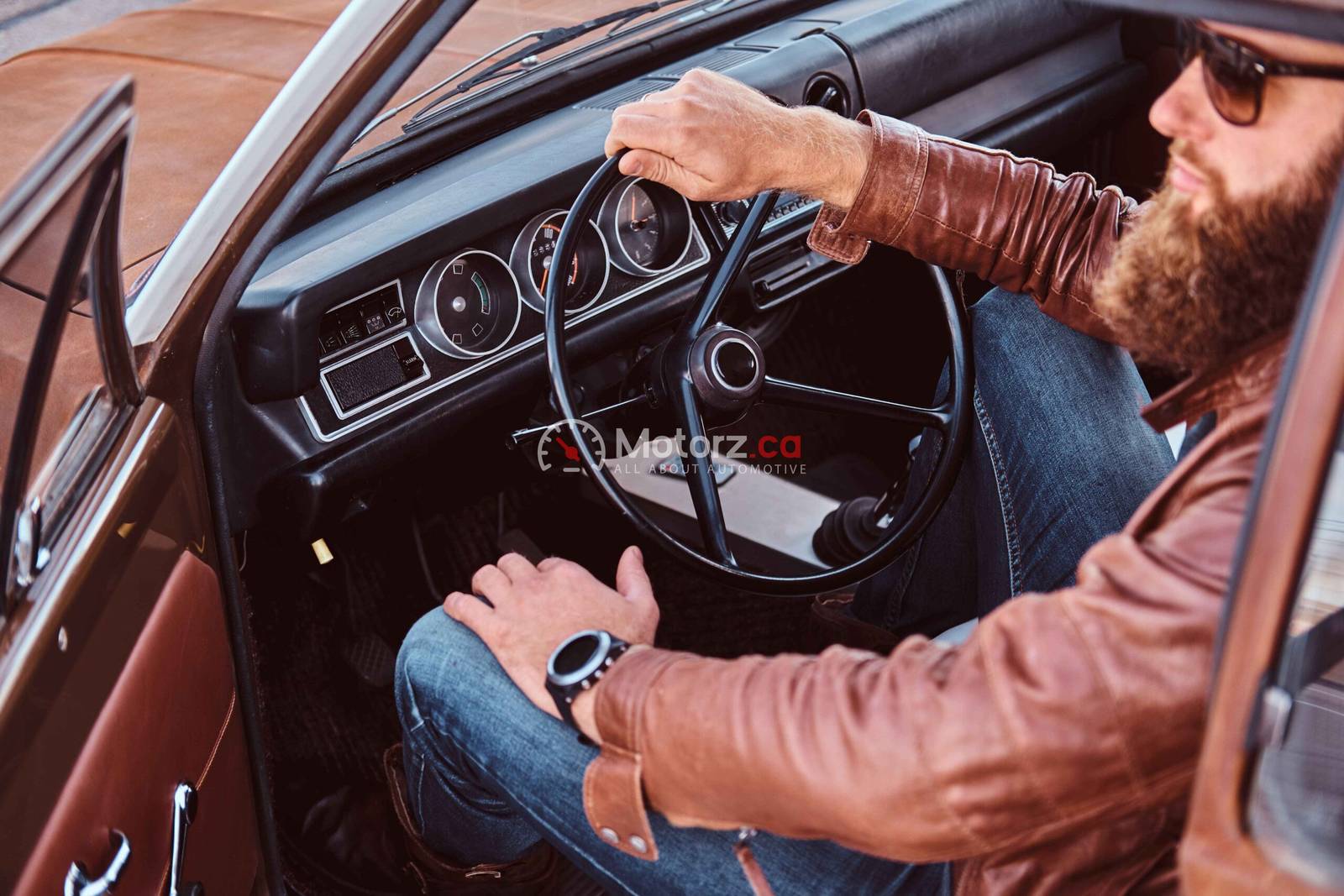

Driving a manual transmission car, affectionately known as a “stick shift” or “standard,” is a dying art, but one that offers an unparalleled connection between the driver and the machine. It’s a dance of coordination, a rhythm of clutch and throttle, that, once mastered, elevates the driving experience from a chore to an engaging sport.
This comprehensive guide is designed to take you from a nervous beginner to a confident driver, capable of executing the perfect shift every time. We’ll cover the basics, the mechanics, the techniques, and the common pitfalls to avoid. Get ready to embrace the control, the efficiency, and the sheer fun of driving stick.
Understanding the Manual Transmission (H1)
Before you can execute the perfect shift, you must understand the components at play. The manual transmission requires the driver to manage the connection between the engine and the wheels using three key Driving Stick: the clutch, the gear shifter, and the accelerator (gas pedal).
1.1 The Crucial Role of the Clutch (H2)
The clutch pedal (always the leftmost pedal) is your key to shifting. It’s a mechanism that engages and disengages the engine from the transmission.
Clutch Pressed In (Disengaged): The connection is Driving Stick. Power does not flow from the engine to the wheels. This is when you can change gears without grinding the cogs.
Clutch Released (Engaged): The connection is made. Power flows from the engine to the wheels.
The Bite Point: This is the Driving Stick zone as you lift the clutch where the friction plates begin to touch and transfer power. Finding and controlling the bite point is the foundation of smooth manual driving.
The Gear Shifter (H2)
The gear shifter operates within a pattern—often an “H” pattern—to select the desired gear ratio. Each gear dictates how much power is delivered to the wheels for a given engine speed (RPM).
First Gear: High power, low speed. Used only to get the car moving from a stop.
Higher Gears (2nd, 3rd, 4th, 5th/6th): Lower Driving Stick, higher speed. Used for cruising and maintaining momentum at higher velocities.
Neutral (N): The gear is disengaged from the transmission. The engine is running, but no power is sent to the wheels.
The Accelerator and Engine Speed (RPM) (H2)
The accelerator Driving Stick the engine’s revolutions per minute (RPM). A smooth shift requires the engine’s RPM to match the necessary RPM for the gear you are shifting into. A loud engine drone or a sudden jerk is a sign that your RPMs were mismatched. Learning to listen to your engine is an essential part of driving stick.
The Fundamentals: Getting Started and Moving (H1)
The first hurdle for any new manual driver is the simple act of moving the car without stalling. The fear of stalling is real, but a gentle touch is the key.
Starting the Engine Safely (H2)
Ensure the gear shifter is in Neutral (it should wiggle freely).
Depress the clutch pedal fully. (Many modern cars won’t start otherwise.)
Turn the ignition or press the start Driving Stick.
Keep your foot off the accelerator.
Finding the Bite Point (H2)
This exercise is vital for developing muscle memory. Park on a flat surface with no traffic.
Press the clutch in and shift into First Driving Stick.
Slowly, and without touching the accelerator, lift your left foot off the clutch.
You will feel a slight drop in the engine’s RPM and a subtle vibration—that’s the bite point! The car will begin to creep forward.
Push the clutch back in to stop. Repeat this process until you can find the bite point consistently. The goal here is control, not speed.
The Perfect Take-Off (H2)
This is the ultimate test of clutch-throttle coordination.
Clutch in, select First Driving Stick.
Gently press the accelerator to bring the RPM up slightly, perhaps to 1200-1500 RPM. This pre-loads the engine with a little power.
Slowly, slowly release the clutch to the bite point. Hold it there.
As the car starts to move, smoothly increase the pressure on the accelerator while simultaneously easing your foot completely off the clutch.
Stalling happens when you Driving Stick the clutch too fast without enough throttle. Revving the engine happens when you use too much throttle and release the clutch too slowly (also known as riding the clutch). Smoothness is the measure of success.
Mastering the Upshift (H1)
Once you’re moving, the next step is shifting through the gears as you accelerate. Upshifting is generally easier than downshifting, but precision is what separates a smooth driver from a jerky one.
Timing is Everything (H2)
When to shift up depends on the Driving Stick, but a good general rule for normal driving is to upshift when the engine’s RPM reaches about 2500–3000 RPM. Listen for the sound of the engine becoming strained or overly loud.
The Standard Upshift Technique (H2)
The goal is one fluid, coordinated sequence:
Off the Gas: Lift your right foot completely off the accelerator.
Clutch In: Depress the clutch pedal quickly and fully with your left foot.
Shift: Move the gear shifter Driving Stick and smoothly into the next gear (e.g., from 1st to 2nd). Do not force the shifter—it should slide easily.
Clutch Out & Gas On: This is the critical moment. As you slowly release the clutch pedal to the bite point, simultaneously apply the accelerator. This matches the engine’s RPM to the new gear speed.
Full Engagement: Once the shift is complete and the car is accelerating smoothly, remove your left foot entirely from the clutch pedal and continue to apply the accelerator with your right foot.
Keyword Tip: Smoothness is your synchronizer’s best Driving Stick. Fast clutch-in, quick shift, and a smooth clutch-out paired with gas is the rhythm.
The Art of Short-Shifting (H2)
For better fuel efficiency in city driving, you can short-shift by changing gears at a lower RPM (e.g., 2000 RPM). This keeps the engine in its most efficient range but provides less rapid acceleration.
The Advanced Techniques:
Downshifting and Rev-Matching (H1)Downshifting—moving to a lower gear—is essential for maintaining power before accelerating, for engine braking, and for slowing the car down smoothly. This is where rev-matching comes into Driving Stick.
Understanding Rev-Matching (H2)
When you downshift, you are moving from a gear that needs a lower engine speed to a gear that needs a higher engine speed for the same road speed. If you simply release the clutch, the engine will be forced to spin up suddenly, causing a jolt, stressing the transmission, and potentially wearing out your clutch prematurely.
Rev-Matching is the technique of briefly “Driving Stick” the accelerator while the clutch is pressed and the car is in neutral (or just before engaging the lower gear) to bring the engine’s RPM up to match the rotational speed of the lower gear.
The Standard Downshift with Rev-Match (H2)
Brake (If Needed): Apply the brake pedal with your right foot.
Clutch In: Depress the clutch pedal fully.
Shift to Lower Gear: Move the gear shifter to the desired lower gear (e.g., 4th to 3rd).
Blip the Throttle: While the clutch is Driving Stick in, give the accelerator a quick, sharp tap (a “blip”) to raise the RPM. The amount of “blip” depends on the magnitude of the downshift (a 5th to 2nd shift needs a big blip; a 5th to 4th needs a small blip).
Clutch Out: Release the clutch smoothly. If the rev-match was successful, the shift will be seamless, and there will be no jerk.
Heel-and-Toe Downshifting (H2)
For performance driving, especially into a corner, you need to brake, downshift, and rev-match simultaneously. This is achieved through the heel-and-toe technique.
Brake: Use the ball of your right foot to apply the brake.
Clutch In & Shift: Depress the clutch fully and select the lower gear.
Blip: While maintaining brake Driving Stick, pivot your right foot to use the side or “heel” of your foot to quickly “blip” the accelerator, performing the rev-match.
Clutch Out: Smoothly release the clutch.
This is an advanced technique that requires practice and proper pedal spacing in your vehicle, but it allows for maximum vehicle control under aggressive braking.
Driving Situations and Advanced Tips (H1)
The world outside the parking lot presents real challenges that require specific manual techniques.
Conquering the Hill Start (H2)
Starting on an incline is daunting, but manageable.
Stop: Use the brake and engage the parking brake (handbrake). Put the car in First Gear with the clutch in.
Find the Bite: Slowly release the clutch until you feel the bite point—the car’s nose will dip slightly, and the engine note will change.
Apply Gas: Gently apply the accelerator to raise the RPM slightly (around 1500–2000 RPM).
Release Brakes: As you feel the engine pull against the parking brake, release the parking brake and continue to ease the clutch out while adding more gas. The car should move forward smoothly, not roll back.
Export to Sheets
Why Drive a Stick? The Benefits of Manual Driving (H1)
In an age dominated by automatics, why bother with the difficulty of a manual? The rewards extend beyond bragging rights.
Unmatched Driver Engagement and Control (H2)
A manual transmission puts you in absolute command. You decide when to shift to maximize power for an overtake or maintain momentum through a corner. This level of involvement makes driving an active, rewarding experience, not a passive one. This is the essence of true driving engagement.
Enhanced Vehicle Knowledge and Awareness (H2)
Learning to drive stick forces you to pay closer attention to your speed, engine sounds (RPM), and the road ahead. This heightened awareness inherently reduces distracted driving and makes you a better, more predictive driver.
Cost and Efficiency Advantages (H2)
Historically, manual cars offered better fuel efficiency and were cheaper to purchase and maintain. While modern automatics have closed the fuel efficiency gap, manual transmissions still tend to have simpler mechanics, leading to lower potential maintenance costs over the long term. They also have a unique appeal to car enthusiasts, sometimes helping to maintain a strong resale value for niche models.