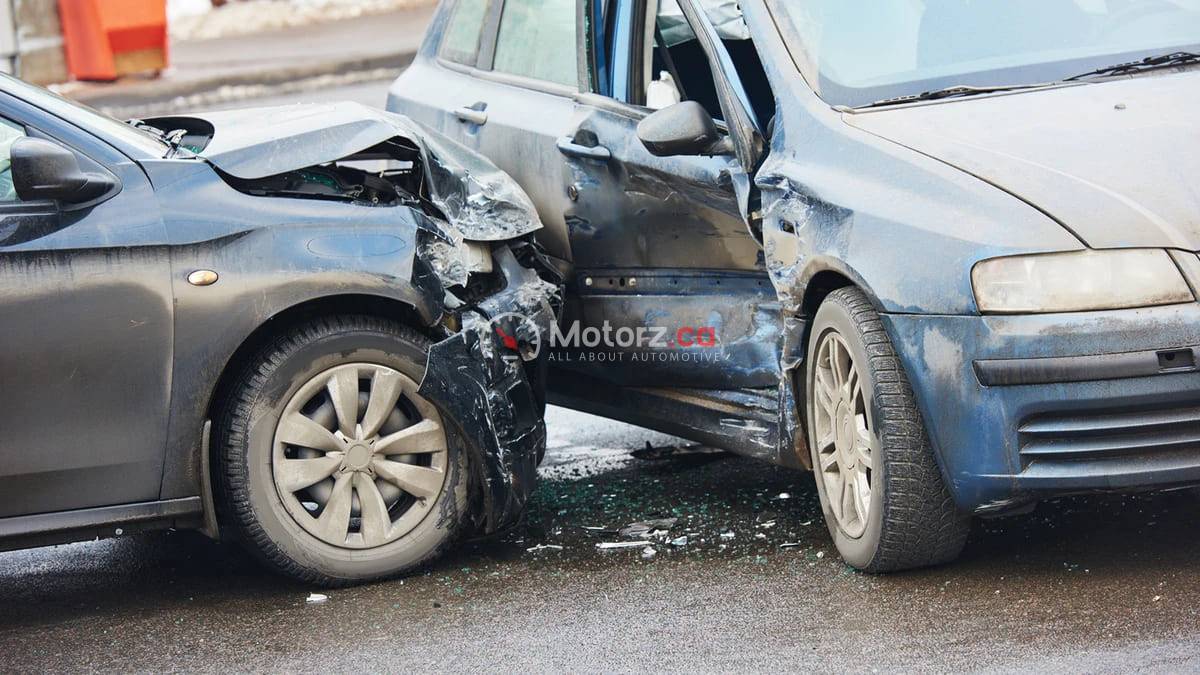
You’re driving through a busy intersection in Toronto, and suddenly, another vehicle clips your rear bumper. You’re shaken but certain it wasn’t your fault. However, when the insurance adjusters and police arrive, the narrative shifts. You aren’t just relying on your memory or a dashcam anymore. In 2026, your car has become a high-tech “digital witness,” and its testimony is legally resilient.
For years, we at “The Corner Wrench” have seen vehicles evolve from mechanical tools into rolling data centers. Today, Lorraine Explains the reality of automotive data collection. From “Black Boxes” to real-time telematics, your car is recording your every move—and that data can either be your best defense or your biggest liability in a post-collision world.
The EDR: Your Vehicle’s “Black Box”
The most critical piece of equipment in a crash investigation is the Event Data Recorder (EDR). While it’s often compared to an airplane’s black box, its function is more specific to the moments surrounding an impact.
How the EDR Works
Embedded within the Airbag Control Module (ACM), the EDR records a continuous loop of data. When a “trigger event” occurs—such as an airbag deployment or a sudden, massive deceleration—the loop stops, and the data from roughly five seconds before to a few seconds after the crash is permanently stored.
What is Being Recorded?
In 2026, standard EDRs in North America and the EU capture an incredibly detailed snapshot of your driving behavior:
Vehicle Speed: Your exact velocity leading up to the impact.
Braking and Throttle: Whether you hit the brakes or were accelerating at the moment of truth.
Steering Input: The angle of your steering wheel, showing if you tried to swerve.
Safety Systems: Whether seatbelts were buckled and if ABS or Traction Control was activated.
Telematics: The Real-Time Informant
While the EDR is a “silent” recorder that only saves data during a crash, Digital Witness systems are the active informants of the modern road. These systems use GPS and cellular connections to send real-time data back to insurers or fleet managers.
The Rise of Usage-Based Insurance (UBI)
By 2026, telematics has moved from an “experimental add-on” to an industry standard. Many drivers in Ontario and across Canada opt into programs that track:
Harsh Braking and Cornering: Aggressive maneuvers that signal high-risk driving.
Time of Day: Using your car late at night, which is statistically more dangerous.
GPS Location: Your exact route and speed relative to local limits.
The Catch: If you are in an accident and your telematics data shows a history of “harsh braking” or speeding, your insurer may use that data to justify a higher fault percentage or even deny a claim based on reckless behavior.
Law Enforcement and Data Ownership: Who Can See It?
This is where the “ratting you out” part becomes a legal reality. In Canada and the US, the question of “who owns the data” is a battleground of privacy law.
Police Investigations
Police departments can—and frequently do—use EDR data to reconstruct accidents. In serious collisions involving fatalities or criminal charges, law enforcement can obtain a warrant to download the “Forensic Digital Twin” of the crash. This digital replica shows exactly where every vehicle was and what every driver was doing, removing the ambiguity of “he-said, she-said” testimony.
The 2026 Privacy Shift
Regulators, including the FTC and Canadian privacy authorities, have intensified their scrutiny of automakers in 2026. Recent settlements, such as the 2026 agreement with General Motors, now require manufacturers to obtain explicit consent before sharing your sensitive geolocation or driving behavior data with third-party consumer reporting agencies. However, this privacy shield often vanishes once a legal subpoena or a “public interest” clause is invoked during a criminal investigation.
Tips for the Data-Conscious Driver
At Motorz, we want you to be in control of your vehicle’s digital footprint. Here is how to navigate the world of automotive data:
Read the Manual: Federal law requires all cars built after 2012 to include a notice in the owner’s manual if they have an EDR. Know where yours is and what it tracks.
Check Telematics Permissions: If you use an insurance app or a built-in “connected car” service, review your privacy settings in 2026. You may have the ability to disable certain tracking features, though this could affect your insurance discounts.
Be a Defensive Driver: The best way to prevent your car from “ratting you out” is to give it nothing bad to say. Smooth acceleration and consistent braking don’t just save fuel; they create a “low-risk” digital profile that protects you in a dispute.
The Era of the Digital Witness
The days of relying solely on witness statements are over. In 2026, your car’s computer is the most objective witness at the scene. While this tech helps catch insurance fraudsters and clears innocent drivers, it also means your driving habits are under a constant, digital microscope.
By staying informed and maintaining safe driving habits, you can ensure that when your car speaks to investigators, it’s only saying good things about you.