

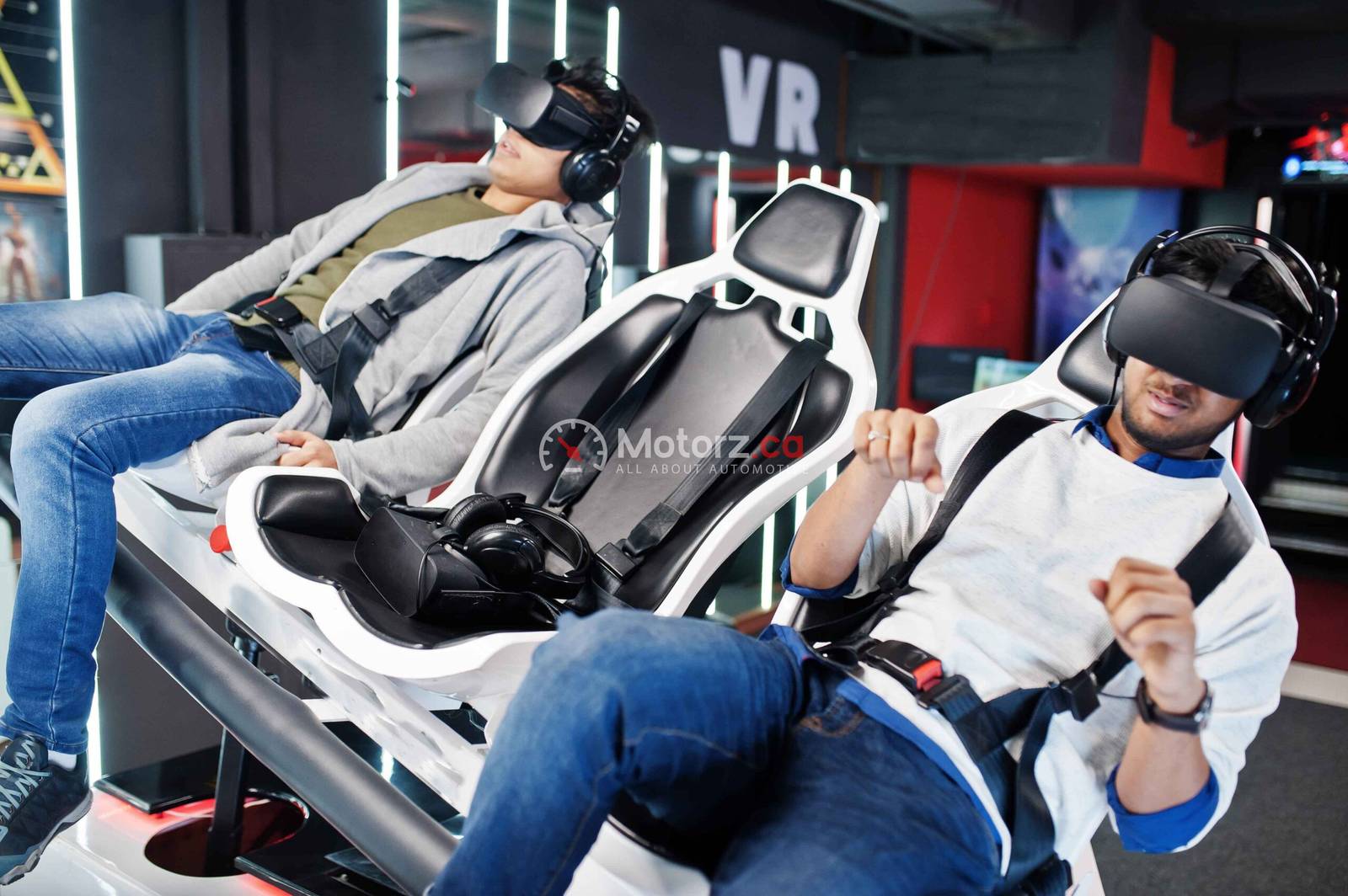

For decades, the path to a professional Rise of Simulation Racing career was a predictable, and incredibly expensive, one. It involved years of karting, followed by a progression through various junior series, all of which required vast sums of money for track time, tires, and mechanical support. While that path still exists, a new, far more accessible gateway has emerged, one that starts not on a tarmac circuit but in front of a computer screen. Simulation racing, or sim racing, has evolved from a niche hobby into a crucial training tool that is fundamentally changing how real-world drivers prepare, practice, and even get discovered.
This blog post explores the symbiotic Rise of Simulation Racing between the virtual and real worlds of racing, and how sim racing has become a game-changer for drivers at every level, from aspiring rookies to Formula 1 world champions.
The Ultimate Practice Tool
The single biggest advantage of sim racing for real-world drivers is the ability to practice without the astronomical costs and Rise of Simulation Racing headaches of traditional track time.
Rise of Simulation Racing and Unlimited Laps
A single day of testing at a race track can cost tens of thousands of dollars, covering everything from track rental and fuel to tire wear and team Rise of Simulation Racing. A high-end racing simulator setup, while not cheap, is a one-time investment that allows for virtually unlimited practice. Drivers can log thousands of laps, day or night, rain or shine, from the comfort of their own home. This is especially vital for young drivers from non-affluent backgrounds who may not have the budget for a full-time testing program.
Mastering Tracks Before Arrival
Professional racing series visit circuits all over the world, many of which drivers may not have seen before. Simulators provide a perfect solution. Thanks to laser-scanning technology, tracks in top-tier sims like iRacing and Assetto Corsa are recreated with millimeter-perfect accuracy, capturing every bump, curb, and elevation change. This allows a driver to learn a new circuit, memorize braking points, and find the optimal racing line long before they ever step foot in the real car. For Formula 1 drivers like Max Verstappen and Lando Norris, who are avid sim Rise of Simulation Racing, this preparation is an essential part of their race weekend ritual.
A Safe Environment for Experimentation
In a real race car, pushing the car’s limits too far can result in a crash, an injury, or a costly repair bill. A simulator offers a risk-free environment to Rise of Simulation Racing. Drivers can try different driving techniques, push the car into an oversteer or understeer situation, and practice recovering from a spin, all without consequence. This allows for a much steeper and safer learning curve, teaching drivers how to handle the car at the very edge of its performance envelope.
Sharpening Skills and Racecraft
Sim racing is more than just learning tracks; it’s a powerful tool for developing and maintaining a driver’s core skills.
Improved Reflexes and Hand-Eye Coordination
The intensity of a high-level sim Rise of Simulation Racing, with its demands for split-second decisions and precise inputs, is an excellent way to train a driver’s reflexes and hand-eye coordination. It teaches them to react to the car’s behavior, make corrections, and manage all the inputs—steering, braking, and throttle—in a seamless, fluid motion. The competitive nature of online racing, with real people vying for position, further hones a driver’s racecraft, including overtaking, defending, and spatial awareness.
The Mental Game and Concentration
Motorsports is as much a mental game as a Rise of Simulation Racing one. Maintaining focus for a long race stint, managing pressure, and making strategic decisions are all skills that can be honed in a simulator. Sim racing requires a high level of concentration, and engaging in long virtual endurance races can help a driver build the mental stamina required for a real-world event. This is particularly important for young drivers, who may not have the experience of managing a full-length race.
A New Path to the Podium: From Gamer to Pro
Perhaps the most significant impact of sim racing is its ability to democratize motorsports and provide a legitimate pathway for talented Rise of Simulation Racing to enter the professional ranks.
The Gran Turismo Academy and Beyond
The story of Jann Rise of Simulation Racing, a gamer who won the Nissan-sponsored GT Academy and went on to have a successful career in real-world racing, is no longer a unique anomaly. It’s the blueprint. The success of the program proved that the skills developed in a high-fidelity racing simulator are directly transferable to a real car. Mardenborough’s journey was even the subject of the major motion picture Gran Turismo, further highlighting the validity of this new career path.
Pro Sim Racers in Real Cars
Today, many professional racing teams actively scout for talent in the world of sim racing. High-level sim racers are often more than just gamers; they are strategic thinkers, data analysts, and car setup experts. The same skills that make them quick on the screen—a feel for a car’s dynamics and an ability to analyze telemetry data—are what make them successful in a real cockpit. Sim racing champions like Rudy Van Buren and James Baldwin have made successful transitions to real-world racing, proving that the digital track is a viable breeding ground for future champions.
The Integration of Simulation into Team Operations
For top-tier motorsports teams, a factory simulator is now as essential as a wind tunnel or a dynamometer.
Car Development and Setup
Modern Formula 1 teams use multi-million-dollar simulators to test new car parts and setups before they are even manufactured. A team’s simulator driver can “test drive” a new front wing or a suspension geometry in a virtual world, providing valuable feedback on its effect on the car’s handling. This allows teams to refine their designs and arrive at the track with a solid baseline setup, saving both time and money.
Race Weekend Preparation
During a live race weekend, simulator drivers play a crucial, often unseen, role. They are often back at the team’s headquarters, driving a virtual version of the car with real-time data from the track. They can test different setup changes and race strategies based on the live data, providing the trackside engineers with critical information and helping them make data-driven decisions on the fly.
Sim racing has broken down the barriers to Rise of Simulation Racing, making it more accessible, more data-driven, and more meritocratic. It has created a world where a driver’s talent can be discovered regardless of their financial background, and it has given even the most elite professionals a powerful new tool to stay at the top of their game. The line between the virtual and real worlds of racing is blurring, and the future of motorsports will be defined by the drivers who can master both.