
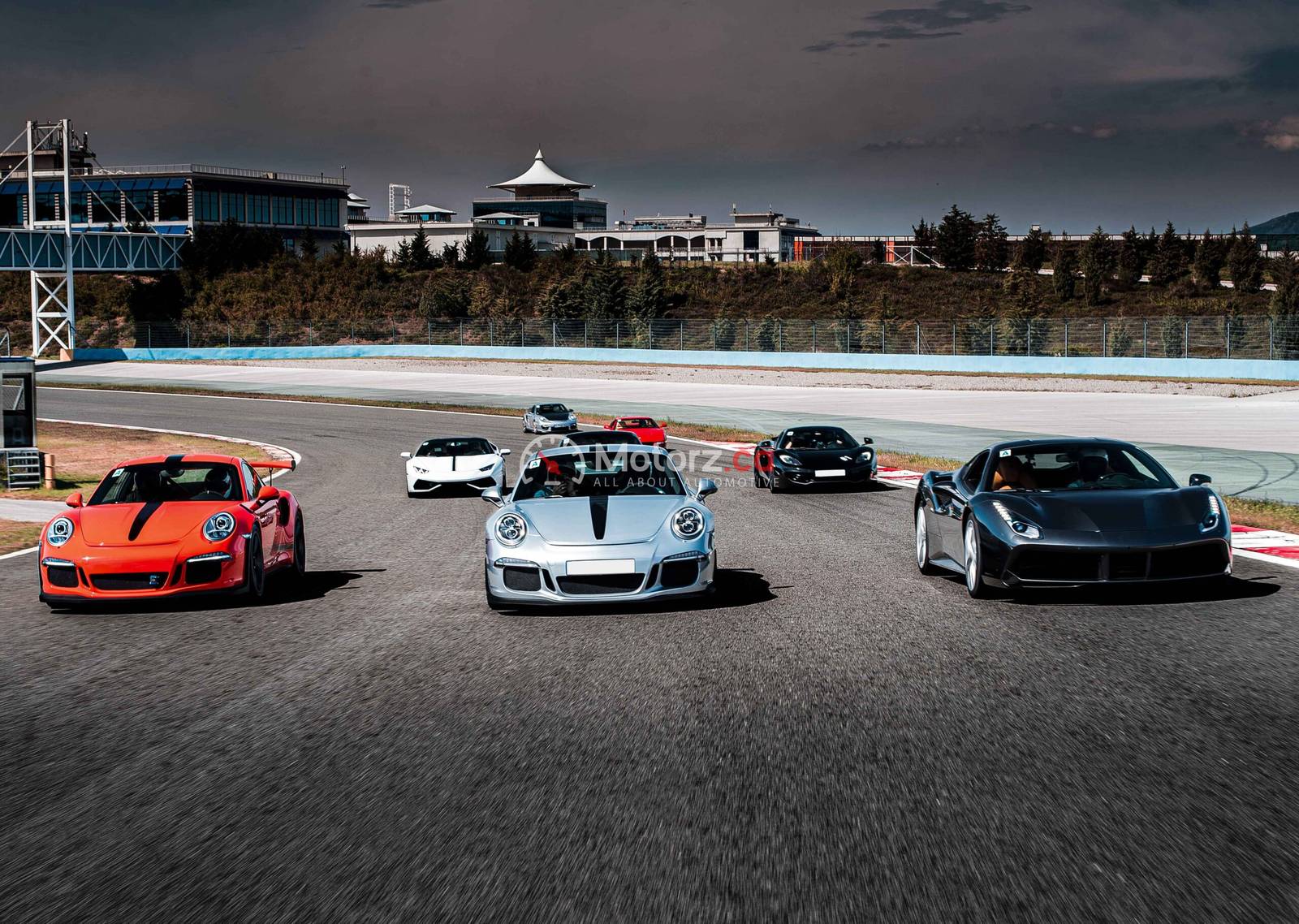

The world of high-performance supercars has never been more electrifying. Two titans of the mid-engine segment, the British purist McLaren and the Italian maestro Ferrari, have unleashed their latest masterpieces, setting a new benchmark for speed, agility, and driver engagement. In one corner, we have the McLaren 750S, an evolution of a modern legend, prioritizing lightweight, analogue feel, and pure V8 power. In the other, the Ferrari 296 GTB, a revolutionary plug-in hybrid that marries a thrilling V6 engine with electric torque, pushing the boundaries of Mid-Engine Faceoff and efficiency. This isn’t just a comparison; it’s a philosophical debate played out at over 200 miles per hour. Which one reigns supreme in this ultimate mid-engine faceoff?
Hitting the Scales: Mid-Engine Faceoff
The foundation of any great supercar lies in its Mid-Engine Faceoff, and here, the philosophies of Woking and Maranello diverge significantly.
McLaren’s Lightweight Obsession
McLaren’s guiding principle has always been “add lightness,” and the 750S is a testament to this unwavering focus. Built around the Carbon Fibre Monocage II chassis, the 750S is astonishingly light. At a dry weight of just 1,277 kilograms (2,815 lbs), it is 30 kilograms lighter than its predecessor, the already featherweight 720S. This is achieved through obsessive weight-saving measures, from the standard carbon fibre seats to the lightest-in-class wheels. The McLaren 750S lightweight architecture is the key to its agility, creating a visceral connection between car and driver. It’s an old-school approach: less weight equals more speed and better Mid-Engine Faceoff.
Ferrari’s Hybrid Balance
The Ferrari 296 GTB introduces a crucial variable: hybridisation. While the battery pack, electric motor, and associated hardware add inevitable mass, Ferrari’s engineers have worked wonders to minimize the penalty. The Ferrari 296 GTB hybrid system, while adding weight, is also integral to its power output. The car has a dry weight of 1,470 kilograms (3,241 lbs) – a substantial difference from the McLaren. However, this weight is positioned low, enhancing stability and providing a superb platform for the advanced electronic and mechanical systems. The 296 GTB sacrifices a measure of the McLaren’s lightness for a technological advantage.
The Heart of the Beast: Powertrain and Performance
This is the most direct clash of ideologies: pure twin-turbo V8 versus V6 twin-turbo plug-in hybrid.
The Pure Power of the McLaren V8
The McLaren 750S retains the core of the brand’s identity: the powerful 4.0-litre twin-turbo V8 engine. With refinements to the engine management, pistons, and twin-scroll turbos, this engine delivers a ferocious 750 PS (740 hp) and 800 Nm (590 lb-ft) of torque. The power delivery is brutal and linear, characteristic of the great McLaren V8 performance.

Paired with a seven-speed Seamless Shift Gearbox (SSG) with a shorter final drive ratio, the 750S launches from 0 to 100 km/h (62 mph) in a blistering 2.8 seconds and hits 200 km/h (124 mph) in just 7.2 seconds. The sensation is one of unadulterated, explosive force—a direct mechanical connection that enthusiasts crave. The soundtrack is a deep, throaty howl, amplified by the new central exhaust system.
Ferrari’s Hybrid Revolution: The V6 Masterpiece
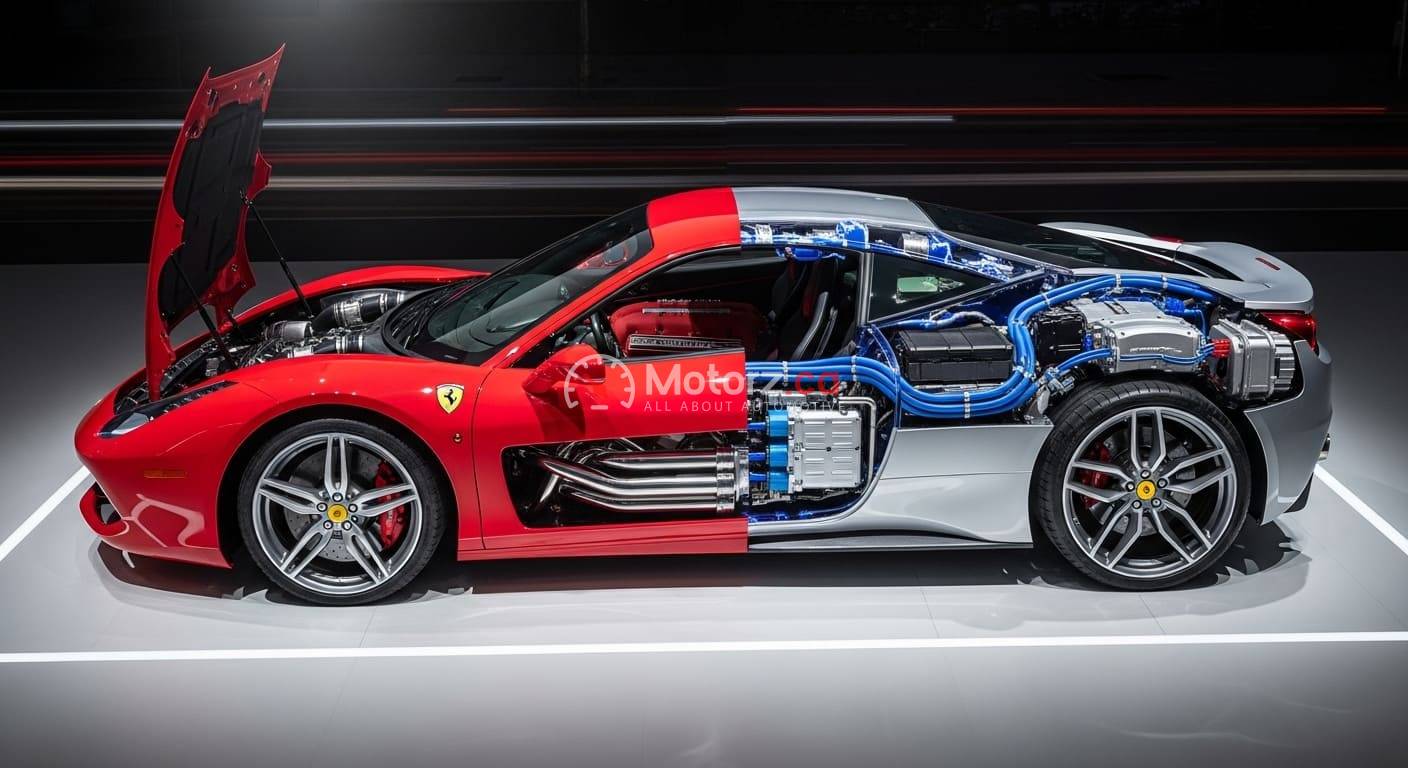
The Ferrari 296 GTB, in contrast, pioneers Maranello’s new V6 era. Its Ferrari V6 hybrid powertrain consists of a 3.0-litre twin-turbo V6 (nicknamed the piccolo V12 for its sound) combined with an electric motor. The combustion engine alone produces 663 hp, while the electric motor adds an extra 167 hp, resulting in a phenomenal combined system output of 830 PS (819 hp) and 740 Nm (546 lb-ft) of torque. This is a significant power advantage on paper.
The electric motor, situated between the engine and the eight-speed dual-clutch transmission (DCT), provides instant torque fill, eliminating any hint of turbo lag. The 296 GTB rockets from 0 to 100 km/h in 2.9 seconds (marginally slower than the lighter McLaren) but closes the gap quickly, hitting 200 km/h in a jaw-dropping 7.3 seconds. The experience is one of high-revving theatricality, coupled with the silent, instant surge of electric power. It also boasts a small electric-only range for silent urban driving, an impossibility for the McLaren
The Handling Duel: Steering and Chassis Control
Power is nothing without control. Both supercars employ cutting-edge technology to translate colossal power into track-day supremacy, but their methods are distinctly different.
McLaren’s Hydraulic Prowess
McLaren continues to champion hydraulic steering, providing the McLaren 750S handling with a level of feedback and feel that many purists believe modern electric power steering (EPS) systems cannot match. The 750S features the Proactive Chassis Control III (PCC III) system, which replaces traditional anti-roll bars with sophisticated interconnected hydraulic dampers.
This allows the car to maintain incredible body control on the track while offering a surprisingly compliant ride on the road. The 750S is telepathic, darting precisely where the driver looks, and its shorter final drive ratio makes it feel even more eager to accelerate out of corners. The driving experience is raw, engaging, and demands the driver’s full attention.
Ferrari’s Digital Choreography
The 296 GTB is a masterclass in integrating digital controls with mechanical precision. The steering is quicker and more direct than the McLaren’s, a Ferrari trademark. Its brilliance lies in the suite of electronic dynamic controls, particularly the ‘Tricolore’ eManettino and the ABS Evo system, which uses a six-way chassis dynamic sensor. This suite allows for unprecedented control of yaw, grip, and slip angle, making the immense 830 hp relatively accessible.
The Ferrari 296 GTB driving dynamics are incredibly refined, managing the torque and grip with sublime sophistication. For the driver, it’s a supremely confidence-inspiring machine that flatters talent, allowing more people to exploit its phenomenal speed.
Design and Aerodynamics: Form Follows Function
Both vehicles are aesthetic marvels, yet their designs reflect their engineering priorities.
The Sculpted Aggression of the 750S
The McLaren 750S refines the aggressive, minimalist design language established by the 720S. Key design features include a larger front splitter, a new front bumper that channels air to a redesigned radiator, and, most distinctively, a redesigned active rear wing that is larger and deploys faster, generating serious downforce.
The famous dihedral doors remain, adding theatre and functionality. The design is one of relentless efficiency; every scoop and curve is there for a functional, aerodynamic reason. It’s a look that screams “speed” and is an evolution rather than a revolution of the McLaren supercar design.
Ferrari’s Modern Elegance and FTD
The Ferrari 296 GTB marks a return to elegant, flowing supercar lines reminiscent of the 250 LM. It’s a beautifully compact car with a less overtly aggressive stance than the McLaren, yet it hides immense aerodynamic sophistication. The key innovation is the active rear spoiler integrated into the back bumper, a design element first seen on the LaFerrari, which works to create high downforce when needed.
The FTD (Fun To Drive) philosophy is embodied in a design that is both historically reverent and technologically forward-looking. The V6’s high-mounted, central exhaust and the transparent engine cover add flair, confirming the Ferrari 296 GTB aesthetics are designed to be as emotionally captivating as its drive.
Interior and Technology: Comfort Meets Command Center
The cockpit is where the driver interacts with the machine, and here, the digital age has fully arrived for both brands.
McLaren’s Focused Cockpit
The 750S interior is ruthlessly focused on the driver. The steering wheel is uncluttered, retaining an analogue purity, while the instrument binnacle moves with the steering column. New to the 750S is the McLaren Control Launcher (MCL), which allows the driver to save their preferred aero, handling, and powertrain settings and activate them with a single button press. The McLaren 750S interior is high-tech but minimalist, with liberal use of Alcantara and exposed carbon fibre, reinforcing the driver engagement ethos.
Ferrari’s Digitalized Luxury
The 296 GTB features a highly digitalized cockpit that mirrors the rest of the current Ferrari lineup. Virtually all controls, including the famed Manettino switch, are clustered on the steering wheel. The digital instrument cluster is comprehensive and highly configurable. The use of premium leather and high-end trim materials emphasizes a sense of Ferrari luxury and sophistication. The 296 GTB technology feels more deeply integrated, presenting a more futuristic and complex user experience compared to the McLaren’s comparatively simpler setup.
The Verdict: The Philosophical Divide
After this head-to-head, the real winner isn’t measured in lap times alone but in the driving experience they offer. Both represent the pinnacle of mid-engine supercar engineering, yet they cater to slightly different desires.
The McLaren 750S is the undisputed champion of pure driving experience. Its focus on lightness, hydraulic steering feedback, and the raw, unadulterated power of the V8 makes it the visceral choice. It’s the supercar for the traditionalist who wants to feel every input, every vibration, and master a machine that is relentlessly demanding and gloriously rewarding. It is the spiritual successor to the great analogue racers. For those who prioritize a raw, direct connection and lightweight agility, the 750S is arguably the more addictive machine.
The Ferrari 296 GTB is the technological marvel, a true glimpse into the future of high performance. It boasts a higher system power output and a sophisticated electronic brain that makes its immense power more manageable. Its V6 soundtrack is unique, its hybrid system is seamless, and its chassis dynamics are peerless in their refinement. It’s the better all-rounder, offering the capability of silent, electric-only cruising alongside crushing track performance. For the driver who appreciates cutting-edge technology, astonishing versatility, and a refined, yet breathtakingly fast, driving experience, the 296 GTB is the choice.
The ultimate supercar comparison shows no wrong answer. The 750S is the ultimate expression of the analogue supercar perfected for the modern age, a final, stunning love letter to the pure V8. The 296 GTB is the confident, electrified future, a showcase of how hybrid technology can enhance, rather than detract from, the emotional supercar experience. Choosing between them is choosing between a perfectly honed weapon of old and a brilliant, technologically advanced new instrument of speed. Your choice reveals your driving soul.