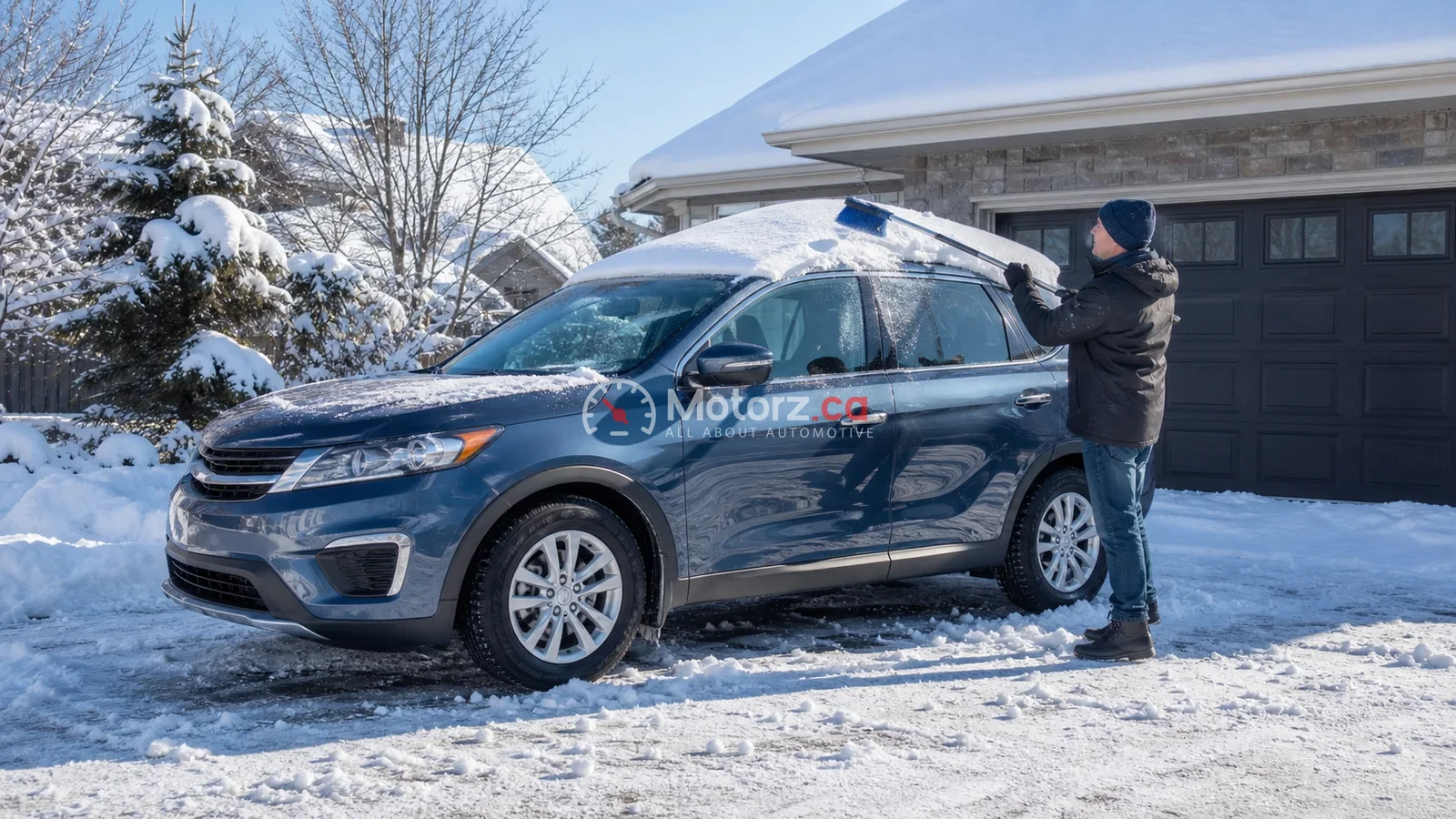
Before driving, clear the whole vehicle—not just a small opening in the windshield—and wait until frost and fog no longer obstruct your view.
The direct answer
Transport Canada advises removing snow from the hood, roof, windows and lights and clearing frost and fog from all windows. Use an automotive snow brush and ice scraper, follow the owner’s manual for sensors and delay departure if safe visibility cannot be established.
A safe clearing order
- Assess the surface and gather a proper brush and scraper.
- Clear loose snow from the roof and upper surfaces first.
- Clear the windshield, side windows, rear glass and mirrors fully.
- Confirm wipers are free before operating them.
- Clear lights, the licence plate and manufacturer-identified cameras or sensors.
- Defog the interior and make a final walk-around.
Why the roof and hood matter
Snow left on the roof can slide forward or shed toward other road users. Snow on the hood can blow into the driver’s view. Provincial rules vary, but the Canada-wide safety principle is simple: loose snow and blocked visibility should be dealt with before moving.
Avoid improvised ice-removal methods
Do not use metal tools, strike the glass or rely on unsourced chemical mixtures. This guide does not recommend hot water or a universal de-icer because glass, coatings, seals and sensors vary. Use the approved defrosting process and allow more time when hard ice will not release safely.
Sensors and wipers need vehicle-specific care
Snow and ice can affect driver-assistance systems. Clean only the areas and surfaces identified in the owner’s manual. If a wiper, door or control remains frozen, see what not to do with a frozen vehicle rather than forcing it.
Before you leave
Check weather and road conditions, establish a clear view in every direction and keep a Canadian winter emergency kit. For the separate cold-start question, read our winter warm-up guidance.