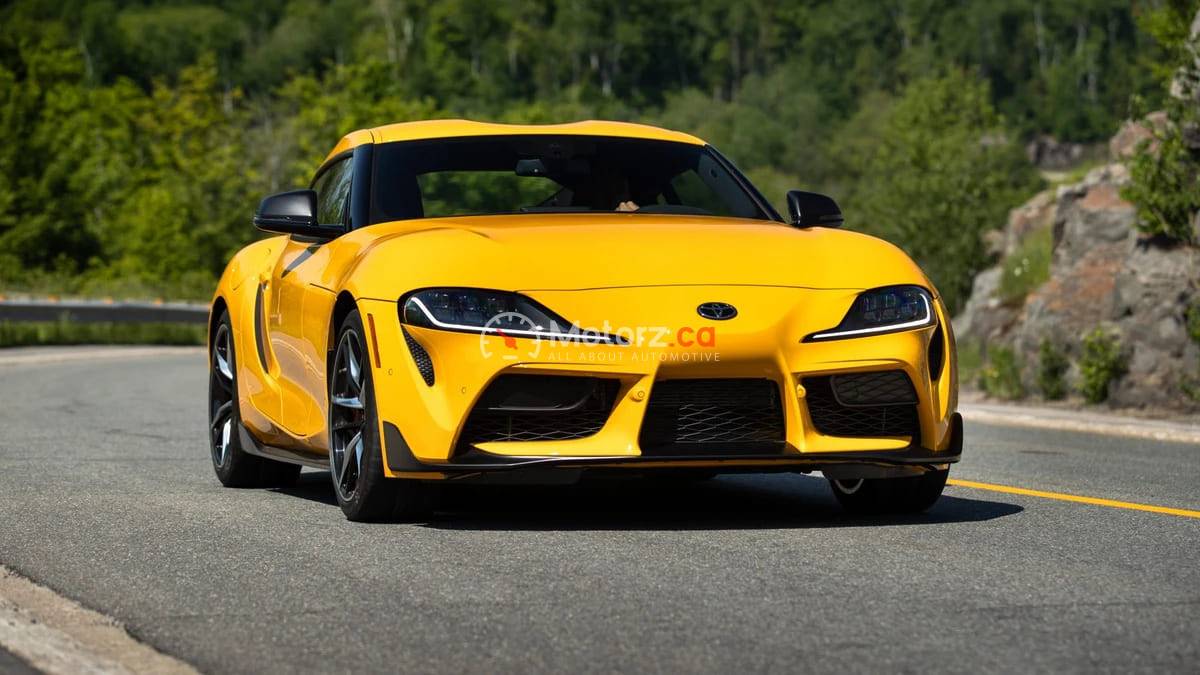
In the automotive world, a recall is usually a routine New Cars. You get a letter in the mail, you drive to the dealership, they swap a sensor or update some software, and you are back on the road in time for lunch. But every once in a long while, a recall comes along that is so severe that a simple repair is impossible.
For a select group of Toyota GR Supra owners, the unthinkable has happened: Toyota is not offering a “fix.” Instead, they are offering to replace the entire vehicle with a brand-new car.
This isn’t a marketing stunt or a lucky draw. It is the result of a critical manufacturing defect that strikes at the very core of the car’s structural integrity. If you are an enthusiast or an owner of a modern Supra, understanding the “why” behind this extreme measure is essential. In this “Corner Wrench” special report, we explore the defect that turned a high-performance sports car into a candidate for a full-scale replacement.
The Critical New Cars: When a Weld Becomes a Liability
The modern New Cars is a masterpiece of collaboration between Toyota and BMW. However, even with world-class engineering, the manufacturing process can occasionally suffer a catastrophic lapse. The core of this rare “full car replacement” recall is a faulty weld.
The Seat Belt Guide Loop Mount
The specific issue involves the driver’s seat belt guide loop mount. On a handful of early production units, this mount was improperly welded to the vehicle’s frame. Because the seat belt is the primary safety restraint, the mount must be able to withstand immense forces during a collision.
Why It Can’t Be “Fixed”
Usually, a faulty part can be unbolted and replaced. But when the fault is a structural weld on the car’s unibody frame, the situation changes. To “fix” the weld, a technician would have to strip the interior, cut into the structural pillars, and perform precision welding on-site at a dealership.
Toyota and the National Highway Traffic Safety Administration (NHTSA) determined that a dealership-level repair could not guarantee the original factory-spec safety and structural rigidity. In the interest of absolute safety, Toyota decided that if the weld is found to be defective during inspection, the entire car must be retired.
Which Supras Are Affected?
While the idea of getting a “new car for old” sounds exciting, it is important to note that this is an extremely targeted recall.
The Model Year: This specific “replacement” remedy primarily affected a small batch of 2020 model-year Toyota GR Supras.
The Scale: While Toyota has issued other recalls for thousands of vehicles (such as the 2026 engine starter recall), the “seat belt weld” issue only affected a tiny fraction of total production—literally a handful of cars.
The Location: Most of the affected units were identified early in their life cycle in the North American market.
Other Major Supra Recalls to Watch in 2026
While the “full car replacement” is the most dramatic story, Supras have faced other technical challenges that require a visit to the “Corner Wrench.“
The 2026 Engine Starter Recall
In early 2026, Toyota issued a recall for roughly 800 Supra models (2021–2023) due to unexpected wear on an internal starter component. In extreme cases, attempting to start the car could lead to a “thermal event” or fire. Unlike the weld issue, this is a standard mechanical fix: dealers simply swap the starter for an improved unit.
Fuel Tank Weld Failures
Some 2021 Supras were recalled because of insufficiently welded fuel tanks. Much like the seat belt mount, a faulty weld on a fuel tank can lead to leaks and fire risks. In these cases, Toyota replaces the entire fuel tank assembly rather than the whole car.
What Happens During a “Buyback” or Replacement?
If your vehicle is flagged for a “non-repairable” recall, the process is a bit different than a standard service appointment.
The Inspection: A specialized technician uses borescope cameras and structural measuring tools to verify the defect.
The Offer: If the defect is confirmed, Toyota corporate reaches out with a formal offer. This usually involves a “buyback” (where they pay you the value of the car) or a direct swap for a current model year vehicle of equal or greater value.
The Disposal: The defective car is not sold at auction or sent to a used car lot. Because it is a safety liability that cannot be legally repaired, these vehicles are typically crushed and recycled.
The “Corner Wrench” Advice for Supra Buyers
If you are in the market for a used GR Supra, especially a 2020 or 2021 model, due diligence is your best friend.
Run the VIN: Use the tool. If a car had a structural recall that wasn’t addressed, it should be a total deal-breaker.
Check Service Records: Look for “Recall K0R” (the seat belt weld recall) or “Recall 26TB01” (the starter recall). Seeing that these were performed by an authorized dealer gives you peace of mind that the car is safe.
Avoid “Modified” Safety Gear: Be wary of cars where the owner has modified the seat belt mounts or added roll cages that interfere with factory safety points.
A Commitment to Zero Risk
The fact that Toyota would rather replace an entire sports car than risk a faulty weld tells you everything you need to know about modern safety standards. While it is rare to see a “full car replacement” in the news, it serves as a reminder that your vehicle is a complex system where the smallest weld can be the difference between life and death.