



Every single time you get into your Tire Sidewall Numbers, the only thing connecting thousands of pounds of steel, glass, and rubber to the road are four small patches of tread. That’s a serious responsibility, and it’s why knowing everything about those four critical components is the first secret to safe, efficient, and reliable driving. You see the numbers on the side of your tires—a complex-looking jumble of letters and digits that might as well be hieroglyphics. But to a Kingston mechanic like me, that sidewall is an open book, a complete ID badge telling the tire’s life story, its capabilities, and its limitations.
This isn’t just about sounding smart at the auto parts counter. It’s about safety, saving money, and ensuring your vehicle performs the way its manufacturer intended. Putting the wrong size, speed-rated, or load-bearing tire on your car can compromise everything from your fuel economy to your braking distance. Over the years, I’ve seen countless drivers in Kingston and beyond make simple, costly mistakes because they didn’t know how to read these critical markings.
Are you ready to stop Tire Sidewall Numbers and start understanding? Let’s crack the Kingston Mechanic’s Secret and turn that sidewall jargon into plain English. We’re going to walk through every single number and letter, what it means for your car, and, most importantly, how this knowledge will make you a smarter, safer driver.
The Foundation of Tire Sidewall Numbers
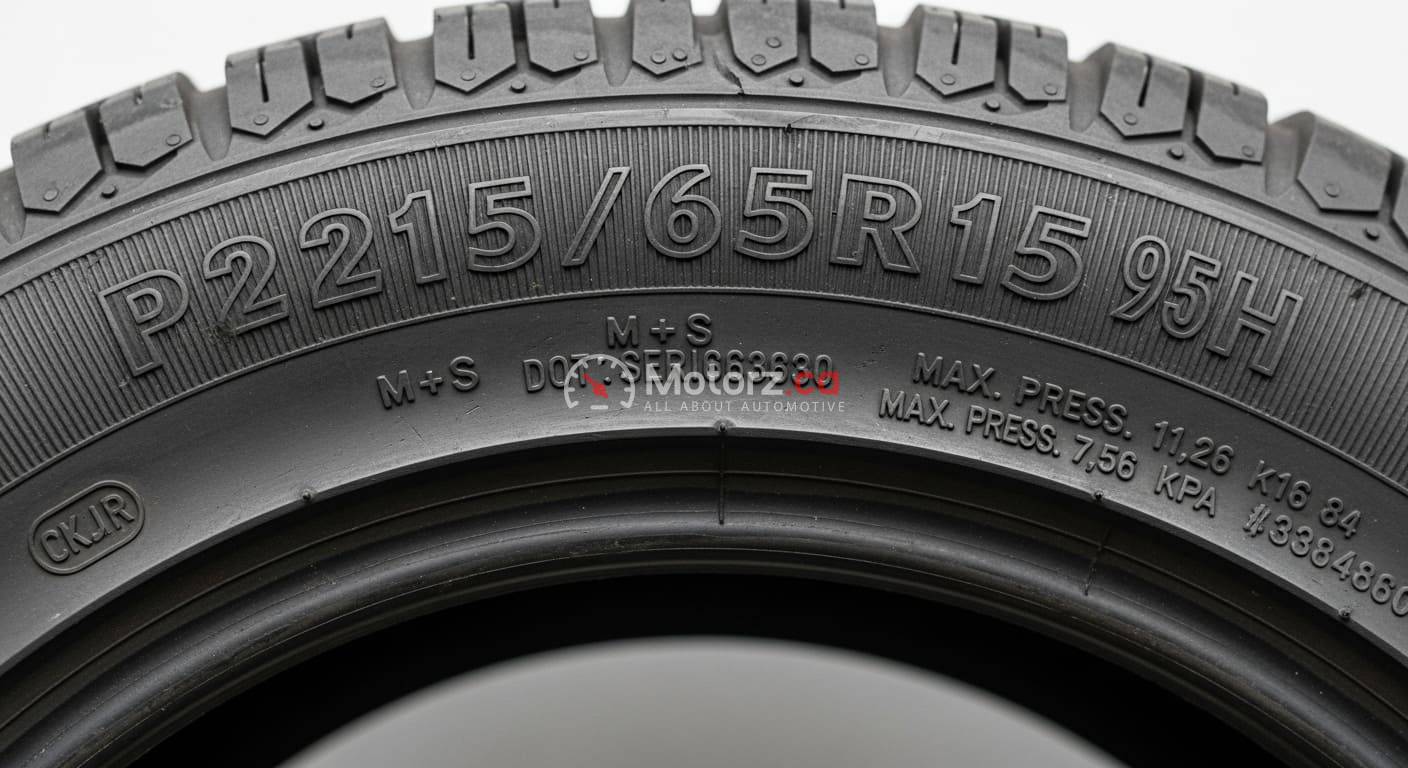
The most prominent Tire Sidewall Numbers of numbers and letters on your tire sidewall is the tire’s size designation. This is the critical starting point for any tire replacement or maintenance. Let’s take a common example, say: P235/55R17 99V. We’ll break this down piece by piece.
Service Type: The Initial Letter (P, LT, T)
The first character often dictates the type of vehicle the tire is intended for. This letter isn’t always present, but when it is, it’s vital.
P (Passenger Car): This stands for “P-Metric” and signifies the tire is designed for passenger vehicles, including cars, SUVs, minivans, and some light-duty pickup trucks. This is the most common designation.
LT (Light Truck): This means the tire is “LT-Tire Sidewall Numbers” and is built for light-duty pickup trucks, SUVs, and vans that carry heavy cargo or pull trailers. These tires often have a more robust construction and higher load capacity.
T (Temporary): This is typically found on your “donut” spare tire. It means the tire is for temporary use only and has strict limitations on speed and mileage.
ST (Special Trailer): Reserved for trailer use and should never be used on the drive or steer axles of a tow vehicle.
Why this matters in Kingston: If you’re driving a light Tire Sidewall Numbers or hauling a boat on Lake Ontario, ensuring you have the correct LT tires is paramount for safety and preventing premature wear. A P-Metric tire won’t handle a heavy load like an LT-Metric one will.
Section Width (235): How Fat is Your Tire?
The very first number in the sequence—235 in our example—tells you the tire’s nominal section width.
Measurement: This width is measured in millimeters from the widest point of the outer sidewall to the widest point of the inner sidewall.
In our example: A 235 means the tire is 235 millimeters wide.
This number is crucial for finding replacement Tire Sidewall Numbers. Changing this number impacts how the tire fits on the rim, how it handles, and whether it rubs against your wheel well or suspension components. When buying new tires in Kingston, stick strictly to the width recommended by your vehicle manufacturer, which you can usually find on a sticker inside the driver’s side door jamb.
Aspect Ratio (55): The Sidewall’s Profile
The number immediately following the slash mark—55 in our example—is the tire’s aspect ratio or profile. This is a percentage that expresses the height of the sidewall in relation to the tire’s width.
Calculation: It is the ratio of the sidewall height divided by the section width.
In our example: A 55 aspect ratio means the tire’s sidewall height is 55% of its 235mm width. The math is simple: 235×0.55=129.25 mm sidewall height.
Performance Impact: A higher aspect ratio (like 75) means a taller Tire Sidewall Numbers, which generally translates to a softer, more comfortable ride. A lower aspect ratio (like 40 or 35) means a shorter sidewall, which provides better handling, cornering stability, and a “sportier” feel—but at the cost of a slightly rougher ride. Many Kingston drivers choose lower profile tires for a sporty aesthetic, but it’s important to know you’re sacrificing some comfort and increasing the risk of rim damage from potholes.
Construction Type (R): The Internal Anatomy
The letter following the aspect ratio—R in our example—identifies the tire’s internal construction.
R (Radial): This stands for Radial construction. This is the industry standard today, meaning the tire’s internal ply cords run radially across the Tire Sidewall Numbers (at 90 degrees to the direction of travel). Radial tires are known for superior ride quality, tread life, and handling, which is why they dominate the market.
D (Diagonal/Bias Ply): Less common today, this construction has ply cords crisscrossing diagonally. These are mainly seen on older Tire Sidewall Numbers or certain light truck applications.
B (Belted Bias): Another less common construction type.
Rim Diameter (17): The Wheel Size
The final number in the main sequence—17 in our example—is the rim diameter.
Measurement: This number is measured in inches and indicates the diameter of the wheel that the tire is designed to fit.
In our example: A 17 means this tire fits a 17-inch diameter rim.
Kingston Mechanic Tip: This number is non-negotiable! A tire designed for a 17-inch rim simply will not fit on an 18-inch rim. If you upgrade your Tire Sidewall Numbers (rims), you must change your tires to match the new rim diameter.
The Critical Service Description: Load and Speed
Immediately following the tire size code is a separate set of numbers and letters known as the Service Description—99V in our example. These markings are arguably the most important for vehicle safety, as they govern how much weight the tire can carry and how fast it can safely travel.
Load Index (99): Maximum Weight Capacity
The two or three-digit number—99—is the Load Index. This is a numerical code that corresponds to the maximum weight capacity (in kilograms or pounds) that a single tire can safely carry when properly inflated.
The Code: The number 99, for instance, corresponds to a specific maximum load (you would need a Load Index Chart to find the exact Tire Sidewall Numbers, but it’s typically around 1,709 pounds or 775 kilograms).
Key Rule: When replacing tires, the new tire’s Load Index must be equal to or greater than the one specified by your vehicle manufacturer. Choosing a tire with a lower Load Index dramatically increases the risk of tire failure and a dangerous blowout, especially when the vehicle is fully loaded with passengers or cargo.
Ply Rating vs. Load Index: You might also see an old term like “Ply Rating” or “Load Range” (e.g., Load Range C, D, or E) on light truck or trailer tires. Historically, ply rating referred to the actual number of internal cord layers. Today, it’s a strength classification (e.g., a 10-ply rated tire might not have 10 plies, but it has the equivalent strength). The Load Index is the Tire Sidewall Numbers, more specific numerical measurement of maximum carrying capacity, directly related to the load range/ply rating. For passenger vehicles, the Load Index is the primary metric to follow.
Speed Rating (V): Maximum Safe Velocity
The final letter—V—is the Speed Rating. This letter code indicates the maximum speed at which the tire can safely carry its designated maximum load.
The Code: A V rating, for example, corresponds to a maximum speed of 149 mph (or 240 km/h). Common ratings include S (112 mph), T (118 mph), H (130 mph), and W (168 mph).
Key Rule: Just like the Load Index, your replacement tire’s Speed Rating should meet or exceed the rating of your Original Equipment (OE) tires. Even if you never plan to drive at the tire’s maximum speed, this rating is an indicator of the tire’s ability to handle high temperatures and stresses—a crucial safety factor even at normal highway Tire Sidewall Numbers.
The DOT Code and Tire Age: The Hidden Safety Info
Tires don’t last forever, even if they have plenty of tread. Rubber compounds degrade over time due to exposure to UV light, heat, and oxygen. This is why knowing your tire’s age is a vital, often-overlooked secret of tire maintenance. This information is found in the DOT Code.
DOT (Department of Transportation) Serial
The letters DOT indicate that the tire complies with all applicable U.S. Department of Transportation safety standards. Following the DOT designation is the Tire Identification Number (TIN), which is a series of up to 13 numbers and letters. This code reveals the manufacturer’s plant code, tire size code, and, most importantly, the manufacturing date.
The Manufacturing Date Code: Checking Your Tire’s Birthday
The final four Tire Sidewall Numbers of the DOT code (often in an oval or separate from the rest of the TIN) represent the tire’s date of manufacture or tire age.
Format (Post-2000): A code of 4724 means the tire was manufactured in the 47th week of the year 2024.
Format (Pre-2000): Tires made before 2000 used a three-digit code, which makes them much harder to date precisely. If you see a three-digit code, replace the tire immediately, as it is over 25 years old!
Tire Age Safety Rule: As a Kingston mechanic, I highly recommend replacing tires that are six years old or older, regardless of how much tread they have left. The rubber’s internal components weaken and become brittle over time, increasing the risk of a dangerous sudden failure. Check your spare tire, too!
UTQG and Other Key Markings
Beyond the primary size and safety information, a tire sidewall contains several other pieces of data that help you evaluate its performance and construction.
UTQG Ratings (Uniform Tire Quality Grading)
The UTQG is a government-mandated rating system designed to give consumers a basis for comparison, though it is not a direct measure of actual performance. This rating consists of three parts:
Treadwear: A comparative numerical Tire Sidewall Numbers, usually between 100 and 800. A rating of 400 means the tire should last twice as long as a tire with a rating of 200, based on controlled government testing. Higher number = longer projected life.
Traction (A, B, C): Rates the tire’s ability to stop on wet pavement. The grades range from AA (highest) to C (lowest). This is a vital rating for safe driving on the wet roads we often see in Kingston.
Temperature (A, B, C): Rates the tire’s resistance to heat generation and its ability to dissipate heat. Grades range from A (highest resistance) to C (lowest resistance). Heat is a tire’s enemy and can lead to breakdown. Higher grade = better heat resistance.
Maximum Inflation and Load
Look for the bold lettering that says MAX. PRESS. and MAX. LOAD.
Maximum Pressure: This is the maximum cold pressure the tire can hold. IMPORTANT: This is NOT the pressure you should inflate your Tire Sidewall Numbers to. Always use the pressure recommended by your vehicle manufacturer, which is found on the sticker in the driver’s side door jamb or in the owner’s manual. Over-inflating to the maximum pressure listed on the tire can lead to reduced traction and premature center wear.
Maximum Load: This simply lists the actual maximum load, usually in kilograms (kg) and pounds (lbs), that corresponds to the Load Index.
M+S and Winter Symbols
These markings are critical for drivers who encounter snow and ice.
M+S (Mud and Snow): Indicates the tire meets minimum industry requirements for use in mud and light snow. Most All-Season tires carry this marking.
Three-Peak Mountain Snowflake (3PMSF): This symbol is found on dedicated Winter/Snow Tires and indicates the tire has met a specific and stringent performance test for use in severe snow conditions. For true Canadian winter driving safety, you need the 3PMSF symbol.
Proactive Tire Maintenance: The Mechanic’s Next Steps
Understanding the numbers is only half the battle. The other half is using that knowledge to practice proper tire care and tire maintenance. Even the best-rated tire will fail prematurely without proper attention.
The Golden Rule: Air Pressure Checks
As a Kingston mechanic, the single biggest issue I see that shortens tire life is improper inflation.
Check Monthly (Cold): Check your Tire Sidewall Numbers pressure at least once a month, and always before a long trip. Check them when they are “cold,” meaning before you’ve driven more than a couple of miles.
Find the Right PSI: NEVER use the MAX. PRESS. number on the sidewall. Use the PSI specified on your vehicle’s doorjamb sticker.
Why It Matters: Under-inflated tires lead to Tire Sidewall Numbers heat buildup (increasing blowout risk), uneven wear on the outer edges, poor handling, and reduced fuel efficiency. Over-inflated tires lead to a harsh ride and excessive wear down the center of the tread.
The Tread Depth Test: The Quarter Secret
Your tire’s tread is your grip on the road. The minimum legal tread depth in many places is 2/32nds of an inch, but your tire’s performance, especially in wet conditions, severely degrades long before that.
The Quarter Test (Safety Threshold): Find the area of the tire with the lowest tread. Insert a quarter into the tread groove, headfirst.
If you can see all of Tire Sidewall Numbers head, your tread is at or below 4/32nds of an inch, and your tires need replacement soon.
Treadwear Indicators (Legal Limit): All modern Tire Sidewall Numbers have small rubber bars molded into the main grooves. When the tread is worn down to the same Tire Sidewall Numbers as these Treadwear Indicators (TWI), the tire is at the legal minimum and must be replaced immediately.
The Importance of Regular Tire Rotation and Alignment
Even tire size and correct pressure won’t guarantee even wear if you neglect the vehicle’s mechanics.
Tire Rotation: I recommend a tire rotation every 5,000 to 8,000 miles (or every other oil change). Tire Sidewall Numbers to different wheel positions ensures they wear more uniformly, maximizing their lifespan.
Wheel Alignment: If your car pulls to one side, or you Tire Sidewall Numbers the tires wearing unevenly (like only on the inner or outer edge), you need a wheel alignment. This adjusts the angle of the wheels to ensure they are parallel to each other and perpendicular to the road, optimizing the tire contact patch for safe driving.
Wheel Balancing: If you feel a vibration or steering Tire Sidewall Numbers wobble at high speeds, your wheels may be out of balance. This is a common service that prevents choppy, uneven tire wear.