
For anyone who wrenches on cars, tractors, or anything that lives outdoors—especially in the rust belt—the sight of a seized, corroded fastener is a familiar source of dread. The traditional solution, the trusty oxy-acetylene torch, brings with it a host of hazards: open flame, fire risk near fuel lines and wiring, scorched paint, and the sheer volatility of pressurized gas.
But what if you could transfer powerful, pinpoint heat directly into the core of a rusty bolt, causing the corrosion bonds to instantly crack and release, all without a single visible flame?
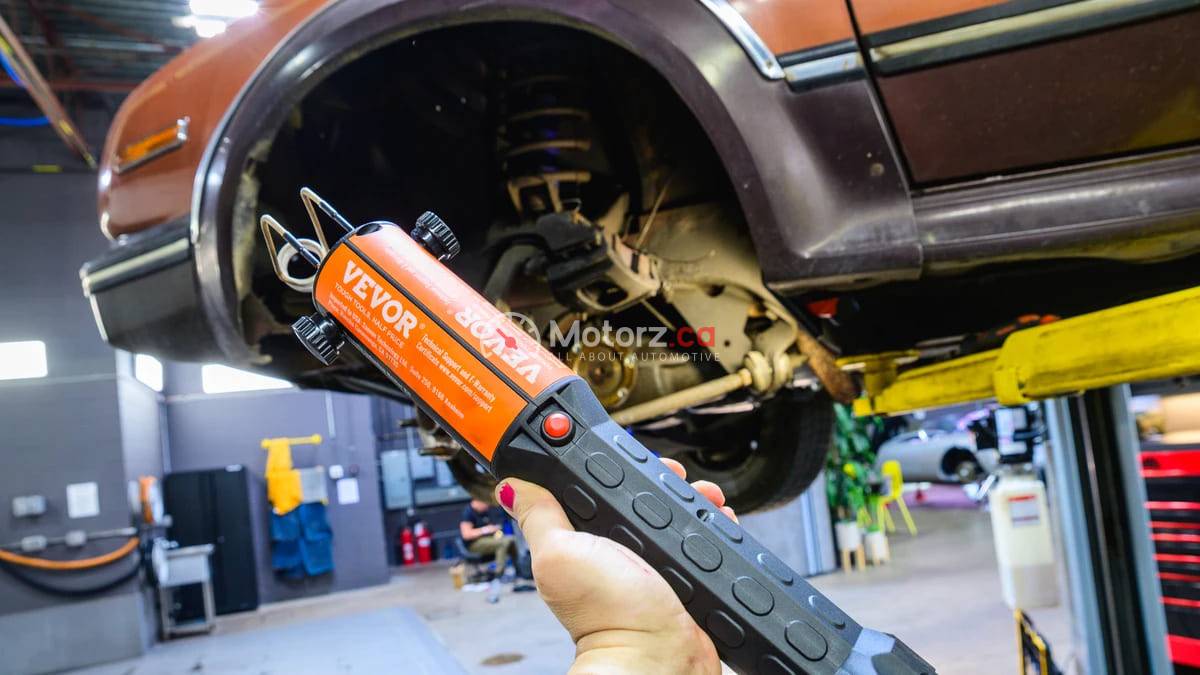
Enter the Magnetic Induction Heater. Once a costly piece of professional shop equipment, this technology has finally become accessible to the serious DIY mechanic. Today, we are putting the VEVOR 1kW (1000 Watt) Handheld Induction Heater through its paces. This tool promises a flameless, precise, and highly efficient solution to bust through years of rust, thread-locker, and seized hardware, replacing the dangerous torch for most common automotive repairs. We’ll break down exactly how this 1kW “bolt buster” performs in real-world scenarios, how the technology works, and whether it truly earns a permanent spot in your toolbox.
The Science of Seized Bolts: Why Magnetic Induction Heater
To understand the VEVOR heater’s effectiveness, you must first understand why bolts seize and how induction technology solves the problem better than an open flame.
Breaking the Corrosion Bond with Differential Heat
Rusted fasteners are seized because the corrosion (iron oxide) has expanded, effectively welding the threads of the nut and the bolt together. The key to freeing them is rapid, targeted heat application.
Thermal Expansion Principle: The VEVOR induction heater works by applying heat only to the exterior component—the nut or the immediate surrounding metal—causing it to expand faster than the inner bolt. This differential expansion creates microscopic gaps in the rust and thread-locker, breaking the seal and allowing penetrating oil (or simply the twisting action of a wrench) to work.
The Flameless Advantage: The VEVOR 1kW unit generates a high-frequency alternating current (AC) in the attached coil. When placed around a conductive metal (ferrous steel like a bolt), this magnetic field induces eddy currents within the metal. These currents meet electrical resistance, resulting in rapid, localized heat via the Joule heating effect.
No Fire Risk: Because there is no open flame, you can safely work close to flammable components like rubber bushings, plastic trim, electrical wiring, and fuel lines—situations where a torch would be catastrophic.
Precision: The heat is concentrated only within the magnetic field, preventing damage to surrounding components and paint finishes.
Key Insight: Unlike a torch which heats the entire area, the induction heater is safer and more efficient because it focuses nearly all 1,000 watts of energy into the nut or bolt head itself, often causing the threads to break free before the heat has time to soak into the surrounding casting.
VEVOR 1kW Induction Heater: Specifications and First Impressions
The VEVOR model is a popular entry point into the world of professional magnetic heating. Its handheld design and comprehensive kit make it appealing for garage and field work.
Unboxing and Key Features
The VEVOR unit typically arrives in a sturdy carrying case, crucial for protecting the sensitive electronics and organizing the various coils.
First Impressions: The VEVOR unit is lightweight (around 5.5 to 7 pounds depending on model) and features an ergonomic, non-slip handle. The built-in cooling fan starts automatically upon plugging in, and an integrated LED light is a thoughtful touch for illuminating tight, dark working areas under a car.
Coil Versatility: The Heart of the System
The coil selection determines the tool’s versatility. The VEVOR kit typically includes:
Pre-formed Coils (Nut Removal): These coils fit snugly around standard hex nuts and bolts, maximizing heat transfer efficiency. Sizes typically range from 18mm up to 45mm.
Flexible Copper Wire: This is arguably the most valuable accessory. It is a long, flexible wire that the user can bend and shape into custom coils to wrap around oddly shaped fasteners, mufflers, bearings, or into tight, restricted areas where a rigid coil cannot fit.
Pad-Style Coils: Used for applying heat to flat surfaces, often for releasing adhesives, stickers, or for minor dent removal (though this requires practice and care).
Real-World Tool Test: Putting the VEVOR to the Bolt
Testing the VEVOR 1kW unit on genuinely stubborn, rusty hardware reveals its strengths and limitations. The goal is always to achieve the desired result—a freed bolt—with minimum time and collateral damage.
Exhaust Flange Nuts
Exhaust fasteners are notorious for seizing due to extreme heat cycling and constant exposure to road salt and moisture.
Method: A pre-formed coil is slipped around a heavily rusted exhaust manifold stud nut. Power is applied for 30 to 45 seconds.
Result: Within 15 seconds, smoke begins to boil off the rusted threads and the nut begins to glow a dull red. At the 45-second mark, the VEVOR is removed. Applying an impact wrench results in the nut turning smoothly, cracking the rust and allowing the fastener to be removed without shearing the stud.
Verdict: Success. This is a perfect application. The precision heating protects the nearby catalytic converter, oxygen sensor wires, and heat shields—a scenario too risky for a torch.
Suspension Component Bolt
Working on control arm or shock mount bolts often involves heating a fastener that is threaded into a large, cold, cast iron or aluminum component, which acts as a massive heat sink.
Method: A large coil is placed around a 19mm bolt head set into a thick cast aluminum knuckle. Power is applied for up to two minutes (the duty cycle limit for heavy heating).
Result: The bolt head begins to sizzle and smoke, but the surrounding casting remains warm, not glowing hot. While the bolt does not turn cherry red quickly, the rapid, focused heat on the small mass of the bolt head is often enough to break the immediate thread seizure. The bolt requires significant torque but ultimately comes loose.
Verdict: Challenging, but Effective. The 1kW power is stretched against large components. For very large, stubborn bolts in heavy castings, you may need multiple heating cycles separated by the necessary cooling period.
Removing Stuck Vehicle Badges and Trim
This is a non-fastener test of the VEVOR’s ability to soften adhesives without damaging paint.
Method: The flat pad-style coil is gently placed over an adhesive-backed emblem for 15 seconds.
Result: The heat precisely softens the adhesive glue under the badge, allowing a plastic trim tool to easily lift the emblem off the paint surface with zero scorching or heat damage.
Verdict: Excellent Secondary Use. Highly effective for non-fastener heat applications.
Safety, Limitations, and Essential User Tips
While the VEVOR induction heater is significantly safer than an open flame, it is a high-powered tool that demands respect and proper technique.
Critical Safety Procedures
The key risk with induction heating is not fire, but heat transfer and electromagnetic fields (EMF).
Wear Gloves: The heated metal will reach temperatures of 500 to 800 degrees Celsius quickly. Always wear high-quality heat-resistant gloves, even when handling the coil immediately after use.
Mind the EMF: Induction heaters generate strong electromagnetic fields. If you wear a pacemaker, defibrillator, or other electronic medical implant, do not use this tool. Maintain a minimum safe distance (typically 3 to 6 feet) from the running unit.
Ensure Proper Ventilation: When heating rusty, oily, or grease-soaked parts, the smoke generated can be noxious. Always ensure adequate ventilation in your workspace.
Avoid Non-Ferrous Metals: The VEVOR 1kW unit is designed for ferrous (magnetic) metals like steel and iron. Using it on non-ferrous metals like aluminum or stainless steel will still generate some heat but will be significantly less efficient and may damage the coil or the internal electronics if used improperly.
Tips for Maximizing the 1kW Power
Use the Right Coil: Ensure the coil size is as tight as possible around the fastener. The closer the coil, the more concentrated and effective the magnetic field will be.
Target the Nut: Whenever possible, heat the nut or the outer part of the assembly, not the bolt shank itself. The goal is expansion, which is maximized by heating the exterior.
The Smoke Test: You do not need to make the metal glow cherry red. As seasoned mechanics note, heating the fastener until you see wisps of smoke coming from the threads is often sufficient to break the rust bond. Overheating wastes time and increases the risk of component damage.
The Quench Trick: For maximum effect on highly seized components, heat the area with the VEVOR, then immediately quench the hot spot with a blast of penetrating oil or water. The rapid contraction can help break the rust seal further.
A Must-Have Flameless Solution
The VEVOR 1kW Magnetic Induction Heater stands as a powerful, affordable, and essential alternative to the traditional torch for the vast majority of automotive, fabrication, and heavy maintenance tasks. It democratizes a professional technology, bringing precision and unparalleled safety to the DIY garage.
While a 1kW unit may struggle slightly with the largest bolts set in heavy castings, its ability to quickly, flamelessly, and precisely heat small and medium-sized fasteners—especially in high-risk areas near plastic and wiring—is a game-changer. For anyone tired of shearing bolts, damaging surrounding components, or risking fire with an open flame, the VEVOR 1kW Magnetic Induction Heater is an investment that will save countless hours, frustration, and money in preventable collateral damage.