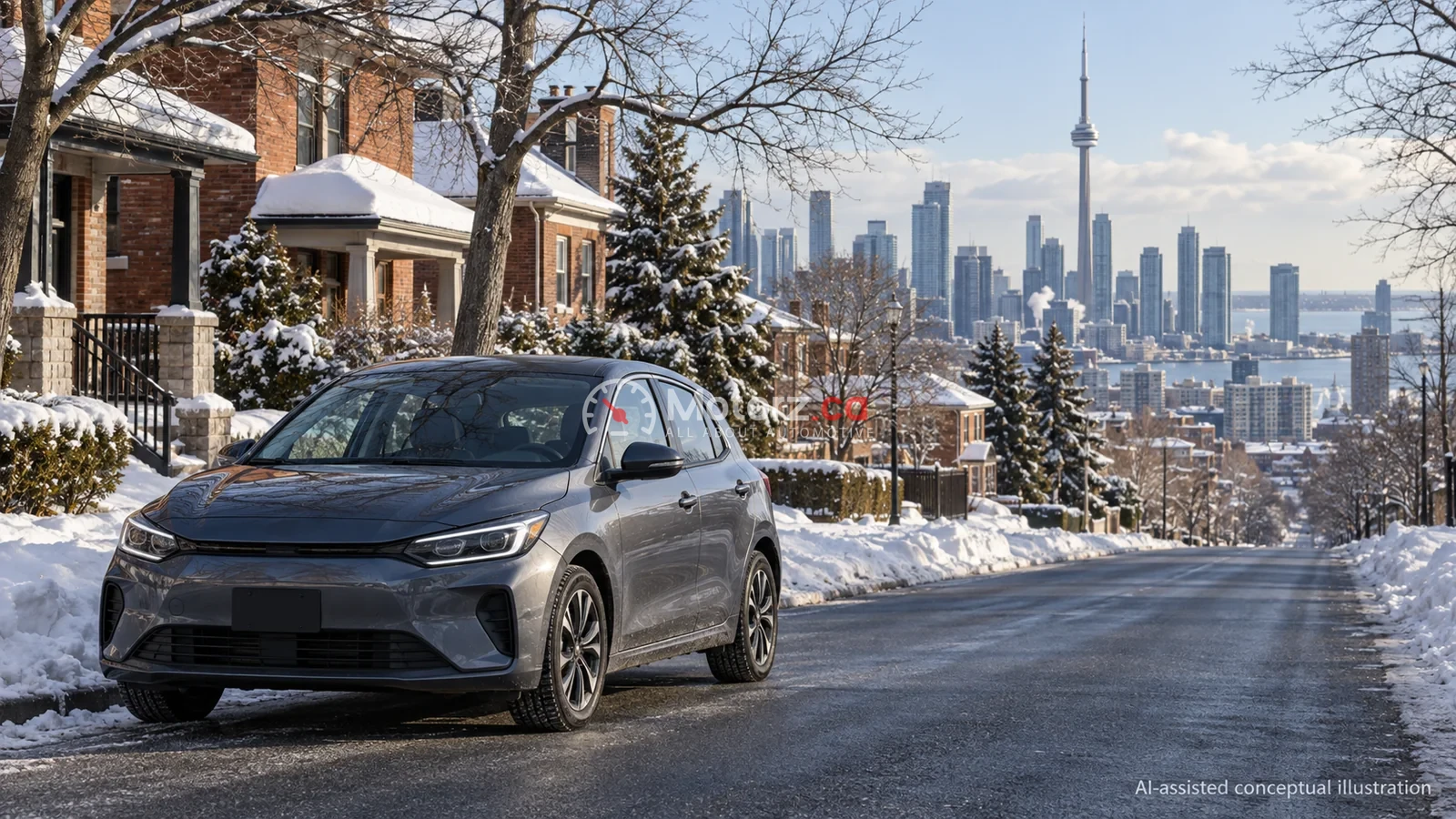
Featured image: AI-assisted Toronto-inspired conceptual illustration, not a photograph of a documented street or weather event.
Toronto winter travel planning starts with the current city road and parking notices, your full route and a realistic fallback. Check more than the main road: consider the street where you park, the destination entrance and the return journey. A plowing report is not a promise that every part of a trip is clear or safe.
Know which city update answers your question
Toronto’s salting and plowing information describes the city’s road operations. Its separate major-snow-event page explains snow removal and associated parking restrictions. Use the current notices and posted signs for your location; do not translate a general service description into an exact clearing time for your side street or driveway.
Snow clearing and snow removal are not the same operation. The city explains that accumulated windrows can restrict traffic, parking and sightlines, and that removal takes collected snow away. That distinction matters when planning a pickup, a delivery or access to a building after plowing has already occurred.
Check parking again after a major snowfall
The city states that temporary orange no-parking signs prohibit parking until removal is complete and the signs are removed. A declared major snow storm condition also prohibits parking on designated snow routes. Those routes include streetcar routes and are signed. Check the city’s current declaration and route information rather than assuming an ordinary parking routine still applies.
Before leaving a car overnight, ask: can it remain here under the current signs, can you move it if conditions change, and is there a permitted alternative? For a trip to someone else’s address, confirm their access and parking arrangements before setting out. This planning checklist does not override signs or enforcement directions.
Make transit a checked fallback, not an assumption
The TTC winter weather plan describes how winter conditions can affect service. Check current TTC alerts for your route and connection before deciding to leave the car. A usual timetable or yesterday’s service status is not confirmation that the same trip is available during a storm.
For travel that extends beyond city streets, use Ontario 511 for the provincial road-information portion of the journey. It is not a Toronto side-street clearing guarantee. Check the destination’s access separately and allow yourself the option to delay a discretionary trip.
Use a short departure checklist
- Read the latest city notices and check signs where the vehicle is parked.
- Confirm access at both ends of the trip, not only the route between them.
- Check a workable alternative, including the actual TTC route status if using transit.
- Tell anyone expecting you if weather or access changes the plan.
- Recheck before the return journey; a morning check does not cover the entire day.
For broader road-safety preparation, use the Canadian Winter Driving hub. Tire selection and legal requirements belong in our province-specific winter-tire guide, while winter-tire timing and the winter car-kit checklist answer separate preparation questions. This Toronto page deliberately does not repeat generic braking, gear-selection or repair instructions.
Scope and limitations: Toronto winter travel logistics, reviewed September 19, 2026. This is not a live road-condition feed or a guarantee of service times. Official current notices, road conditions and directions take precedence over this planning guide.