
The Winter Fuel Line Freezing is a formidable force. It tests the resilience of everything it touches, from the infrastructure of the city to the metal and rubber of your daily driver. While most Winnipeg drivers diligently plug in their block heaters and ensure their tires are ready for ice, there is a silent, sneaky killer of cold-weather reliability that often gets overlooked: the frozen fuel line.
It’s a frustrating scenario: you go to start your car on a minus 35 morning, the engine turns over, but it simply won’t catch—or worse, it sputters to life only to stall a block later. This isn’t usually the fuel itself freezing; it’s the tiny, yet destructive, presence of water in the fuel system.
In this comprehensive guide, we’ll dive deep into this common Manitoba winter car problem, explaining what causes it, how to spot the warning signs, and the critical Winnipeg maintenance steps you need to take to prevent it. Don’t let a tiny ice crystal sideline your vehicle—read on for your essential cold-weather fuel system survival plan.
The Science of the Freeze: Why Fuel Lines Block
While pure gasoline or Winter Fuel Line Freezing has a very low freezing point (gasoline freezes far below anything experienced in Winnipeg), the culprit in a frozen fuel line is almost always water contamination.
Condensation: The Silent Enemy
Your fuel tank contains air above the fuel level. As Winter Fuel Line Freezing fluctuate, especially in the extreme cold, water vapour in that air condenses on the cold inner walls of the tank. Since water is heavier than fuel, these droplets sink to the bottom of the tank.
Low Fuel Level Danger: The more empty space in your fuel tank, the more air it contains, and the greater the opportunity for condensation to form. This is why running on a perpetually low tank is one of the biggest winter car mistakes you can make in Winnipeg.
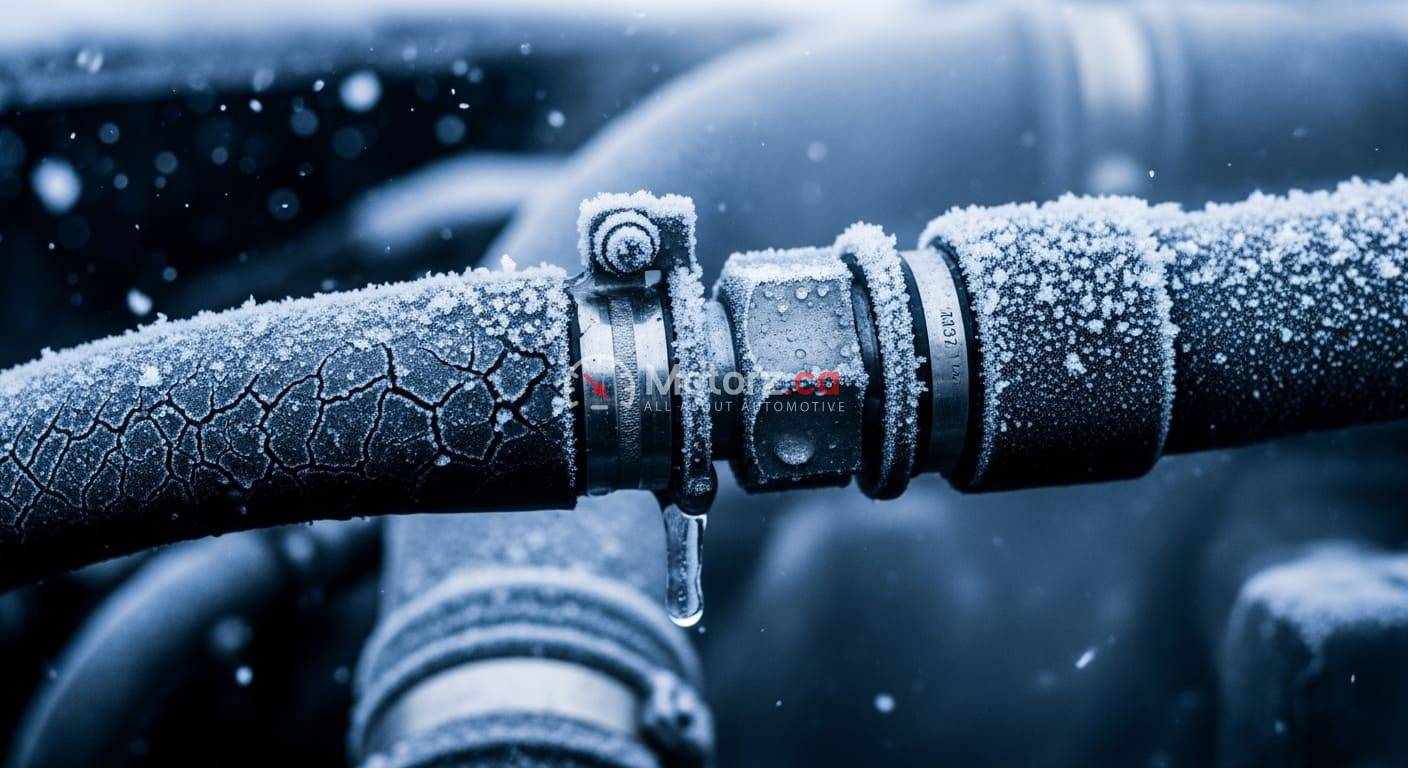
Water in the System: Once enough water Winter Fuel Line Freezing, it gets drawn into the fuel pump and then into the narrow fuel lines and the fine mesh of the fuel filter. At extreme Winnipeg temperatures, this water freezes solid, creating a blockage.
Diesel Fuel Gelling vs. Gasoline Line Freeze
It is important to distinguish between the two:
Gasoline Vehicles: The problem is a frozen water blockage in the line or filter.
Diesel Vehicles: The problem is fuel Winter Fuel Line Freezing. Diesel fuel contains paraffin wax. In extreme cold, this wax crystallizes, turning the fuel thick and cloudy, preventing it from passing through the fuel filter. This requires a specific anti-gel additive, which is different from an anti-freeze or water dispersant additive used in gasoline.
Key Takeaway: For both gas and diesel drivers, the bitter cold creates a vulnerability that must be actively managed.
Recognizing the Symptoms of a Blocked Fuel Line
A frozen fuel line effectively starves your engine of its lifeblood. The symptoms are unmistakable and often happen when you least expect them—like when you’re late for work.
Engine Won’t Start
This is the most common and frustrating Winter Fuel Line Freezing. You turn the key, the engine cranks strongly (thanks to your block heater and charged battery), but it never fires up. A complete ice blockage means no fuel is reaching the combustion chambers.
Sputtering, Stalling, or Hard Starting
If you manage to start the vehicle, but the engine runs roughly, sputters, hesitates on acceleration, or suddenly stalls after a short distance, this indicates a partial fuel line blockage. Enough fuel is getting through to run, but not enough to run correctly under load. This can be dangerous if you stall in traffic or on a busy Winnipeg street.
Engine Cranks But Won’t Catch
This is a classic sign of an issue between the tank and the Winter Fuel Line Freezing. The starter motor is working, the battery is good, but the vital spark never happens because the fuel delivery is compromised.
Reduced Engine Power and Poor Acceleration
If your vehicle feels sluggish, seems to be “cutting out” under load, or just lacks its usual power, it’s a sign that the fuel flow is being restricted. This often means the ice is starting to build up at the most restrictive point: the fuel filter.
Prevention is the Best Medicine: Essential Winnipeg Car Care
In a climate as harsh as Manitoba’s, Winter Fuel Line Freezing until you have a problem is asking for a tow truck bill. Proactive winter fuel maintenance is simple and highly effective.
The Full Tank Rule
This is the most crucial, cheapest, and easiest prevention method. Keep your fuel tank at least half full at all times during the winter months. Ideally, keep it topped up to three-quarters. A full tank minimizes the air space inside, which drastically reduces the amount of water vapour that can condense on the tank walls overnight. Make it a habit to fill up as soon as your gauge hits the halfway mark.
The Power of Fuel Line Antifreeze Additives
Regular use of a quality fuel line antifreeze Winter Fuel Line Freezing (often containing isopropanol or methanol) is your chemical solution to the water problem.
How it Works: These alcohol-based additives act as water dispersants. They bond with the water molecules in your fuel system, preventing the water from separating and freezing. Instead, the water-alcohol mixture disperses harmlessly through the fuel system and is consumed in the combustion process.
Usage: Add the specified amount to your tank before you fill up. The action of filling the tank helps the additive mix thoroughly with the fuel. Use a dose once a month or as directed, especially during prolonged cold snaps.
Opt for Winter-Grade Fuel
During the cold months, most reputable gas Winter Fuel Line Freezing in Winnipeg and across Manitoba switch to a winter-grade fuel blend.
Gasoline: Often has a higher proportion of Winter Fuel Line Freezing (in non-diesel vehicles). Ethanol is a type of alcohol that naturally acts as a water dispersant, offering some built-in protection against freezing.
Diesel: Winter-grade diesel is formulated with anti-gelling agents (cold-flow improvers) to lower the point at which the paraffin wax will crystallize, greatly reducing the risk of filter clogging. Always use reputable stations for your winter fills.
Park in a Warm Spot
If you have access to a heated garage, a Winter Fuel Line Winter Fuel Line Freezing, or even a sheltered spot out of the wind, use it! Even a small difference in ambient temperature can be enough to prevent water in the fuel lines from freezing solid overnight. In extreme cold, even a few hours in an underground or heated parkade can help thaw a partially frozen system.
How to Fix a Frozen Fuel Line
If you wake up to a sputtering, non-starting Winter Fuel Line Freezing and suspect a frozen fuel line, do NOT crank the engine repeatedly. You risk draining your battery, flooding the engine, or burning out the fuel pump trying to force fuel through a solid block of ice.
Get Warm (The Safest Solution)
The most reliable solution is to thaw the vehicle.
Tow to Warmth: If possible, have your vehicle towed to a heated garage or professional auto service shop. An hour or two in a warm environment will melt the ice blockage.
Home Thaw (If Available): If you have an Winter Fuel Line Freezing garage, pull the vehicle in and let it sit for several hours. Ensure the garage is warm enough to melt the ice, not just keep it at zero.
Chemical Intervention (The Quick Fix)
Once the car is in a safe, open Winter Fuel Line Freezing, you can attempt a chemical fix.
Use the Right Additive: Head to a local automotive parts store and purchase a reputable brand of fuel line anti-freeze or water remover.
Application: Pour the entire bottle into your fuel tank. Allow at least 20-30 minutes for the additive to mix and start dissolving the ice. The alcohol must absorb the water and lower its freezing point.
Try Starting: After waiting, try starting the Winter Fuel Line Freezing. If it sputters to life, let it idle for 10-15 minutes to ensure the entire system has warmed up and the treated fuel has circulated.
Professional Service
If the car still won’t start after chemical Winter Fuel Line Freezing, the ice blockage is likely extensive or located at the fuel filter, which may be fully clogged. At this point, it is best to call for roadside assistance and have the vehicle inspected by a Winnipeg mechanic. They can safely use external heating methods or replace the clogged fuel filter.
Beyond the Line: Complete Cold Weather System Check
A frozen fuel line is often a symptom of a Winter Fuel Line Freezing lack of winter preparation. As you implement your fuel system strategy, remember these related Winnipeg car care steps:
Fuel Filter Check
On older vehicles, water can collect in the fuel Winter Fuel Line Freezing, which is the perfect place for ice to form. Have your mechanic inspect or replace your fuel filter as part of your annual winter vehicle check-up.
Battery Strength
A strong battery is non-negotiable in Winter Fuel Line Freezing. While it won’t prevent a freeze, a fully charged battery provides the sustained cranking power necessary to pump fuel through a partially blocked line if you catch the problem early.
Block Heater Use
Make sure you are using your block Winter Fuel Line Freezing when temperatures drop below minus 15. A warmer engine is less stressed during startup, and the residual heat can sometimes help to slightly warm the nearby fuel lines, adding another layer of protection.