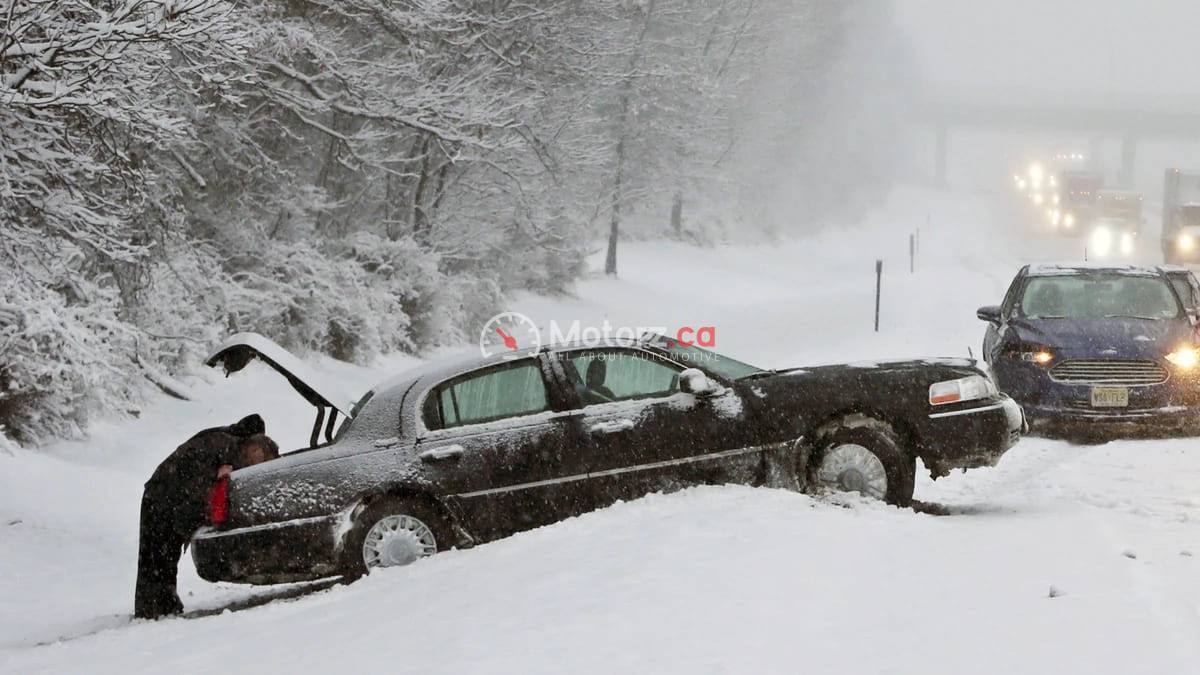
It is the peak of a Canadian winter storm. The wind is howling, the snow is drifting, and the visibility is near zero. You are safely inside your home, sipping coffee and waiting for the plow to pass. Suddenly, you hear a sickening thud. You look out the window to find that a passing vehicle has collided with your car, or perhaps your car has somehow migrated across the street into a neighbor’s fence.
You weren’t in the driver’s seat. You didn’t even have the keys in the ignition. Naturally, you assume you are the victim in this scenario. However, in the complex world of automotive insurance and “Corner Wrench” legalities in 2026, the question of liability isn’t always about who was steering.
Can a winter storm car crash be your fault if you aren’t even in the car? The short answer is yes. From improper parking to maintenance negligence, there are several scenarios where a stationary, unattended vehicle can lead to its owner being held legally or financially responsible for a collision. In this guide, we will break down the nuances of “static liability” during winter weather.
The Legal Concept of “Failure to Secure”
In most provinces and states, vehicle owners have a “duty of care” to ensure their property does not pose a hazard to others. This duty remains in effect whether you are behind the wheel or tucked into bed.
Improper Parking in Low-Visibility Conditions
During a winter storm, “standard” parking can become “obstructive” parking. If you park your vehicle on a narrow street where snowbanks have already reduced the lane width, and a salt truck or emergency vehicle hits you, you could be found partially at fault. If your car is protruding into the roadway in a way that violates local winter parking bans, your insurance company may have a difficult time defending your claim.
The Role of the Emergency Brake
If you park your car on even a slight incline during an ice storm, the tires can lose their “static grip” as the ice melts and refreezes under the rubber. If you failed to engage your parking brake and the car slides down the hill, striking another vehicle or a pedestrian, you are liable. The law views this as a failure to properly secure the vehicle against foreseeable weather conditions.
Maintenance Negligence: The “Ice Missile” Liability
In 2026, many jurisdictions have stepped up enforcement of “clear roof” laws. While this usually applies to moving vehicles, it can also impact stationary liability.
Falling Ice and Snow
If you leave your vehicle parked in a public lot or on a street with a massive “snow mohawk” or a thick sheet of ice on the roof, you are responsible for what happens to that snow. If a gust of wind during a storm blows a heavy sheet of ice off your parked car and it smashes the windshield of a passing vehicle or injures a bystander, you can be held liable for the damages.
Defective Equipment
If your car’s parking pawl (the pin that holds an automatic transmission in “Park”) is broken or if your tires are so bald that the car slides off a flat driveway during a light breeze, this is considered a maintenance failure. As the owner, it is your responsibility to ensure the mechanical components that keep the car stationary are in good working order.
Remote Starters and Unattended Operation
With the prevalence of smartphone-connected remote starters in 2026, more people are “operating” their cars from their kitchen tables than ever before.
Ghost Grinding and Mechanical Failures
If you remote-start your car to defrost it, and a mechanical failure causes the car to shift into gear or move forward (a rare but documented issue with some aftermarket systems), you are legally the operator of that vehicle. Even though you were 50 meters away inside your house, the “operation” of the vehicle was initiated by you. If the car rolls into the street and causes a multi-car pileup during a storm, the liability falls squarely on your shoulders.
The Stolen Vehicle Factor
In some regions, leaving a car running and unattended is illegal (often called “puffing”). If you leave your car running to warm up during a storm, someone steals it, and they subsequently crash into another vehicle, you could be held contributorily negligent for “creating the opportunity” for the crime, depending on your local laws.
How Insurance Views “Unattended” Winter Claims
Insurance adjusters look at the “Proximate Cause” of an accident. They want to know what the primary trigger was for the damage.
Acts of Nature: If a tree branch falls on your car during a storm and pushes your car into a neighbor’s house, this is usually viewed as a “Comprehensive” claim and an “Act of God.” You are generally not at fault.
Negligent Placement: If you parked your car in a “No Parking” zone during a snow emergency and a plow hits you, the insurance company may find you 50 percent or even 100 percent at fault for the accident because your vehicle was illegally placed in a high-risk area.
Tips to Avoid Liability While You’re Indoors
To ensure you stay the victim and not the defendant during the next winter blast, follow these “Corner Wrench” safety protocols:
Curb Your Wheels: When parking on any incline, turn your wheels toward the curb (downhill) or away from the curb (uphill). If the car slips, the curb will act as a secondary block.
Clear the Roof Regularly: Don’t let ice build up. A clean car is a safe car, even when it’s parked.
Respect Parking Bans: If your city declares a “Snow Emergency,” move your car to a driveway or a legal lot. The risk of being hit—and being blamed for it—is too high.
Check Your Tires: Ensure your winter tires have enough tread to provide “static friction” on icy driveways.
Responsibility Doesn’t Stop at the Door
The law treats a motor vehicle as a “dangerous instrument.” As the owner, you are responsible for its safe storage and maintenance. While a winter storm is a powerful force of nature, it does not absolve you of the requirement to park legally, clear away hazardous ice, and ensure your vehicle is mechanically secure.
Next time a storm rolls in, take a moment to look at your car from the perspective of a passing driver. Is it a visible, secure object, or is it a hidden hazard waiting to happen? A little bit of proactive parking can save you years of insurance headaches.