



The Electric Silk Road: Xpeng’s Strategy to Localize Production and Conquer Global Markets
In the hyper-competitive global electric vehicle (EV) market, success is no longer defined just by Xpeng’s Global Manufacturing Pivot or design, but by manufacturing flexibility and geopolitical agility. Chinese EV manufacturer Xpeng has emerged as a key player, known for its advanced software, integrated hardware, and aggressive international expansion goals.
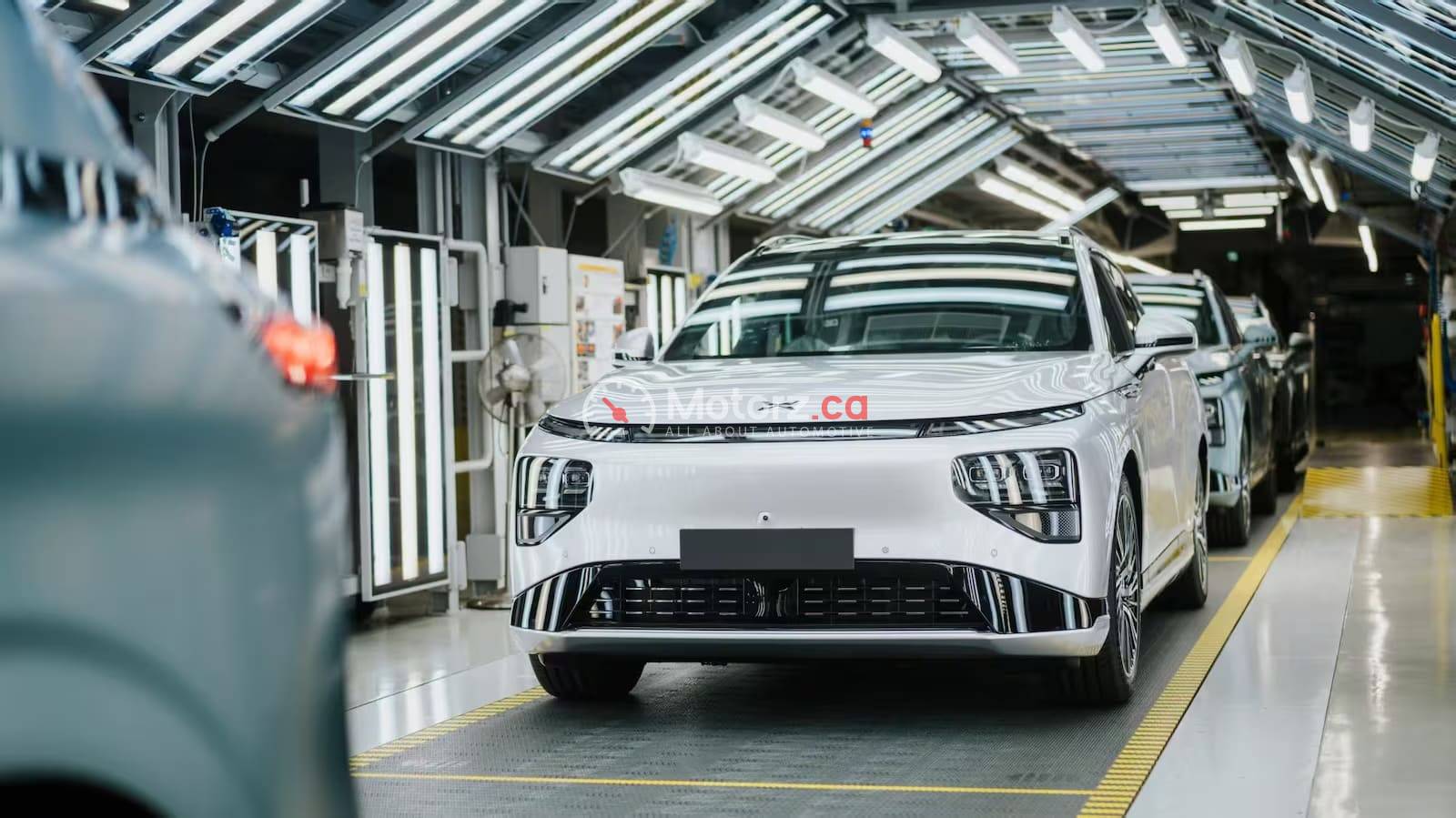
The initial cornerstone of Xpeng’s global production strategy was a partnership with Magna Steyr in Graz, Austria, where assembly of models like the G6 and G9 began in the third quarter of 2025. This contract manufacturing deal was a crucial and rapid way for Xpeng to establish a localized European footprint, helping to mitigate the significant import tariffs (up to 30.7%) imposed by the European Union on Chinese-built EVs.
However, Xpeng’s ambition extends far beyond this initial, assembly-focused partnership. With aggressive goals to expand its sales and service network into 60 countries by 2026 and to have overseas sales account for half of its income within the next decade, the company must transition from reliance on contract manufacturers to building its own specialized, large-scale international production facilities.
This pivotal move signals that Xpeng is ready to play the long game, transforming itself from an export-focused company into a truly global manufacturing enterprise. This article dissects the strategic necessity of this pivot, explores the likely target regions, and examines the impact of this move on the global EV landscape.
The Strategic Necessity: Why Magna Steyr is Only the First Step
The collaboration with Magna Steyr, a respected contract manufacturer, was an intelligent, fast solution to kickstart European production and bypass immediate tariff barriers. However, it presents inherent limitations for Xpeng’s long-term global vision.
The Transition from Contract Assembly to Full Localization
The current arrangement in Graz, Austria, is primarily focused on Semi-Knocked-Down (SKD) assembly, where pre-fabricated components are shipped from China for final assembly. While fast and tariff-friendly, this limits profit margins and control.
Cost Control and Scale: Contract manufacturing, while flexible, comes with a premium fee. To achieve the deep cost savings and control required to compete with volume-focused rivals like Tesla and BYD, Xpeng needs to own and optimize its supply chain and assembly process. A dedicated, wholly-owned factory provides maximum control over efficiency, quality, and proprietary manufacturing processes.
Deepening Localization: The current Magna deal utilizes Magna’s supply chain. For Xpeng to truly localize and receive the full benefit of reduced tariffs and improved supply stability, it needs to integrate its own specialized technology—especially its proprietary smart driving hardware and software—into the local supply chain. A dedicated factory allows Xpeng to dictate the localization level and engage local component suppliers directly.
Geopolitical Resilience: Relying on a single contract manufacturer in one region (Austria) creates a single point of failure and limits geographical reach. To achieve its goal of a 50 percent overseas sales contribution, Xpeng needs multiple production hubs spread across different continents to serve diverse regional markets effectively and navigate complex trade relations.
The Competitive Pressure of Global Giants
Xpeng’s rivals are already moving to establish deep global footprints, creating pressure to accelerate its own production diversification.
BYD’s Manufacturing Hubs: BYD, the world’s largest EV builder, is already heavily invested in Europe, with factories operating or planned in Hungary and Turkey. This proactive approach gives BYD a significant first-mover advantage in establishing local supply chains and distribution.
The Tesla Blueprint: Xpeng often follows the Tesla playbook of vertical integration and technological licensing. Tesla’s success in conquering Europe and Asia was predicated on building Gigafactories—massive, locally-owned hubs that control production, battery supply, and distribution, which Xpeng must emulate for true global dominance.
Identifying the Next Global Production Hubs for Xpeng
Xpeng’s international sales and service network already spans over 52 countries, with aggressive plans to reach 60 by 2026. This vast distribution network provides clear clues about where the next localized production facilities are likely to land.
Europe: The Next Major Investment
While the Magna partnership provides a quick entry, Europe remains a priority for a full Xpeng-owned manufacturing investment to serve the high-value market and combat tariffs.
Germany’s R&D Base: Xpeng has already established an R&D center in Munich, Germany. This hub is crucial for localizing autonomous driving and smart cabin technology for European consumer tastes. Placing a manufacturing plant nearby would create a powerful technology and production synergy, mirroring the success of Tesla’s Berlin Gigafactory.
Targeting Large Volume Markets: The ideal location in Europe would offer skilled labor, efficient logistics, and government incentives. Poland, Czech Republic, or Spain are often cited as potential sites for new automotive production, given their centralized locations and existing automotive supplier networks. The goal is to move beyond the limited capacity of the Magna facility and secure a site capable of hundreds of thousands of units annually.
Asia-Pacific and Latin America: Growth and Tariff Avoidance
Beyond Europe, Xpeng is focusing on two rapidly growing regions where localized assembly offers immense benefits: Southeast Asia and Latin America.
Southeast Asia (ASEAN): Xpeng has significantly expanded its sales and service network in countries including Malaysia, Singapore, and Indonesia. The company started its first Knock-Down (KD) assembly operations in Indonesia in 2025. This model, where parts are shipped and assembled locally, is common for emerging markets as it avoids high import tariffs and satisfies local content requirements, which are often mandates for government tenders. A full Xpeng plant in the region (perhaps Thailand or Indonesia) would solidify its dominance in this rapidly growing EV market.
Latin America: Xpeng Vice-Chairman Brian Gu has publicly mentioned Brazil and Mexico as markets under close watch, which will “require local investments.” Mexico, in particular, offers strategic access to the vast North American market through existing free-trade agreements and an established manufacturing ecosystem, though potential US political hurdles remain. A factory in Mexico would be a highly strategic move for future expansion.
The Xpeng Advantage: Technology Licensing and the AI Factor
Xpeng’s global manufacturing expansion is not solely dependent on its own vehicles. Its technological lead in smart driving and software creates a unique business model that enhances its manufacturing strategy.
The Volkswagen Partnership and Technology Licensing
Xpeng’s deal with Volkswagen (VW) is a masterstroke that validates its technology and provides a new profit stream.
Software as a Service (SaaS) and Revenue: Xpeng is co-developing two mid-sized EVs for the Chinese market with VW, based on joint technology and purchasing activities. This technological licensing model provides a significant, non-vehicle revenue stream that will grow into 2026. This partnership not only funds Xpeng’s international expansion but also demonstrates that its autonomous driving and smart cabin architecture (VLA 2.0) are robust enough for a global giant like VW, boosting Xpeng’s brand credibility worldwide.
VLA 2.0 for Global Markets: Xpeng’s proprietary software architecture is designed to work outside of China with “minimal work or training,” according to the company. This technological ease of deployment significantly reduces the cost and complexity of launching vehicles in diverse global markets, making manufacturing localization in new regions faster and more efficient.
The Long-Term Vision: AI, Robotics, and Integrated Manufacturing
Xpeng’s CEO, He Xiaopeng, views the company not just as a car manufacturer, but as a mobility technology powerhouse focused on “Physical AI.”
Robotics and Production: Xpeng’s internal ventures into humanoid robotics (IRON) are planned for mass production by the end of 2026. While currently a high-cost research area, success here could fundamentally change how Xpeng designs and operates its future factories, making its production facilities highly automated and efficient on a global scale.
Integrated Charging Infrastructure: Alongside manufacturing, Xpeng is aggressively expanding its charging network. The company plans to open 1,000 ultra-fast charging stations in Europe and Asia-Pacific within three years, starting in 2026. This integrated approach—building cars and the infrastructure to support them—is essential for gaining consumer trust in new international markets.
Xpeng’s Manufacturing Destiny
Xpeng’s foray into global production, starting with the smart, tariff-beating move at Magna Steyr in Austria, is just the prelude to a much larger global manufacturing strategy. With ambitious sales targets, a highly validated technology portfolio (thanks to the VW partnership), and the looming threat of competitors like BYD, Xpeng cannot afford to remain reliant on contract assembly.
The next phase requires significant investment in wholly-owned factories across key growth regions like Germany, Southeast Asia, and potentially Mexico. By localizing production, controlling its supply chain, and deploying its advanced AI and software globally, Xpeng is meticulously building the infrastructure required to transition from a successful Chinese EV exporter into a dominant, multinational automotive technology enterprise. This expansion is Xpeng’s defining move to secure its position as a genuine contender against established Western giants in the new era of electric mobility.