There is a Winter Road kind of silence that happens when you are stuck on the side of a highway in the middle of a Canadian blizzard. The wind howls against the glass, the temperature inside the cabin begins to drop, and suddenly, that “check engine” light or low tire pressure warning feels much more urgent than it did in the driveway. Winter driving isn’t just about getting from point A to point B; it is a test of your vehicle’s resilience and your own preparedness.
In this edition of “The Corner Wrench,” we are going beyond the basic “buy winter tires” advice. We are looking at the 2026 winter season through the lens of modern automotive technology and old-school survival instincts. Whether you are driving a brand-new electric vehicle (EV) with high-tech thermal management or a trusty high-mileage pickup, these ten tools and tips will ensure that you don’t just survive the winter on the road—you master it.
From the latest in portable power to the physics of black ice, here is your roadmap to staying safe, warm, and mobile when the mercury plummets.
The Portable Lithium Winter Road: Your Battery’s Best Friend
In 2026, the old-fashioned, tangled mess of jumper cables is officially a relic of the past. If you carry only one tool this winter, make it a high-capacity portable lithium-ion jump starter.
Why It’s a Game Changer
Traditional jumping requires another vehicle, which isn’t helpful if you are stranded in a remote area or a dark parking lot. A lithium jump starter is about the size of a thick paperback book but can pack enough punch to turn over a frozen V8 engine multiple times on a single charge.
The Cold Weather Bonus
Unlike lead-acid booster packs, modern lithium units hold their charge remarkably well in the cold. Look for a model with a “Boost” or “Override” button—this is essential for when your car’s battery is so dead it cannot even signal to the jumper that it is connected. As a “Corner Wrench” tip, keep the unit inside the warm cabin rather than the trunk to maximize its discharge power when you need it.
Master the “Black Ice” Mindset: The 6-Second Rule
Technology is great, but physics always wins. One of the most dangerous elements of winter driving is black ice—a transparent coating of ice that looks exactly like a wet road.
The Physics of Following Distance
On dry pavement, the 2-second rule is standard. In winter, you need to transition to a 6-second rule. This isn’t just about your brakes; it is about giving yourself time to react if the car in front of you suddenly spins or slides.
How to Recover from a Slide
If you feel the back end of your car begin to fishtail, remember the classic “Corner Wrench” mantra: Look where you want to go, and steer into the slide. If your car has ABS (which almost all cars do in 2026), do not pump the brakes. Apply firm, steady pressure and let the computer handle the rapid-fire pulsing while you focus on steering.
High-Quality Silicone Wiper Blades
Visibility is your first line of defense. Standard rubber wiper blades tend to harden and “chatter” when the temperature drops below freezing, leaving behind streaks that turn oncoming headlights into a blinding glare.
The Silicone Advantage
Silicone blades remain flexible even in extreme sub-zero temperatures. They also apply a thin, invisible layer of water-repellent coating to your windshield as they wipe. This makes it much harder for sleet, salt, and “road spray” to stick to the glass.
Winter Blade Maintenance
Always make it a habit to pull your wipers away from the glass when parking during a storm. This prevents the delicate rubber edge from freezing to the windshield, which can tear the blade the next time you turn them on.
The Emergency “Warmth Kit”: Beyond the Blanket
If your engine fails in the winter, your car becomes a metal refrigerator in less than twenty minutes. A simple fleece blanket isn’t enough for a Canadian winter emergency.
The Modern Space Blanket
Pack a few Mylar “space blankets.” They weigh almost nothing and reflect 90 percent of your body heat back to you. Pair these with a high-quality wool blanket, which retains its insulating properties even if it gets wet from snow.
Chemical Hand Warmers
Keep a pack of large, 12-hour chemical heat packs in your glove box. These can be placed inside boots or tucked under armpits to prevent hypothermia while waiting for a tow truck.
Understanding EV Winter Range: The 40 Percent Factor
If you have made the switch to an electric vehicle, winter maintenance involves a new set of rules. Batteries are chemical devices, and cold weather slows those chemicals down.
Pre-Conditioning is Vital
In 2026, most EVs allow you to “pre-condition” the battery and cabin while the car is still plugged into your home charger. This uses grid power to warm the battery to its optimal operating temperature, preserving your driving range for the actual road.
Expect Range Loss
On average, expect to lose between 30 and 40 percent of your total range when the temperature hits minus 15. Plan your charging stops accordingly and never let your “State of Charge” drop below 20 percent in the winter, as the car needs that reserve to keep the battery management systems warm.
A Telescopic Snow Brush with a Brass Scraper
Most people grab the cheapest plastic brush at the gas station, but “The Corner Wrench” recommends investing in a telescopic model with a brass or high-grade polycarbonate blade.
Why Brass?
Brass is softer than glass but harder than ice. It will slice through a thick layer of frost without scratching your windshield, unlike plastic scrapers that often get jagged or dull after a few uses.
Clear the Roof
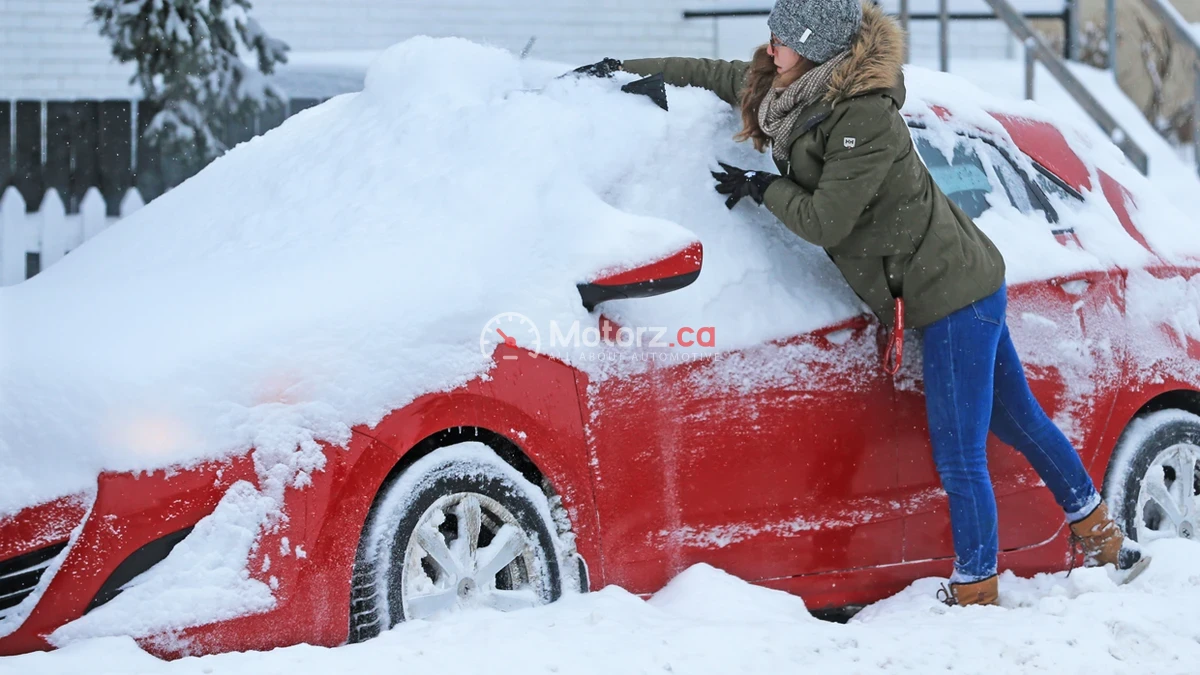
It is not just about your vision; it is about everyone else’s. Clearing the snow off your roof prevents it from sliding forward and blinding you when you brake, or flying off and smashing the windshield of the driver behind you. In many provinces, failing to clear your roof can result in a significant fine.
Traction Aids: Traction Mats vs. Kitty Litter
If you find yourself stuck in a snowbank or on an icy patch in your driveway, you need grit.
The Traction Mat Solution
Modern foldable traction mats are better than sand or kitty litter. They provide a “track” for your tires to grab onto and are reusable. If you do use kitty litter, ensure it is the non-clumping kind. Clumping litter turns into slippery clay the moment it gets wet, which can actually make your situation worse.
The Floor Mat Trick
If you are truly desperate and have no tools, you can use your car’s rubber floor mats. Place them under the driving wheels to provide just enough grip to get the car moving. Just be prepared to buy new floor mats afterward!
LED Road Flares and High-Visibility Vests
Changing a tire on the side of the road is dangerous enough; doing it in a snowstorm is a nightmare.
Electronic Flares
Standard chemical flares are great but they burn out quickly. LED electronic flares are waterproof, magnetic, and can flash for dozens of hours on a single set of batteries. Stick one to the roof of your car and place others 50 meters behind you to give other drivers plenty of warning.
The Safety Vest
Keep a high-visibility safety vest in the side pocket of your driver’s door. You want to be visible the moment you step out of the car. In the low-light conditions of winter, a dark coat makes you nearly invisible to a driver through a salt-streaked windshield.
Winter-Grade Washer Fluid and Spare Supplies
Your washer fluid is as important as your fuel in the winter. “Summer” fluid (the blue stuff) will freeze in the lines, potentially cracking your reservoir or pump.
The Purple or Yellow Stuff
Always use fluid rated for at least minus 40. These formulas contain higher concentrations of methanol to prevent freezing. Always keep a spare four-liter jug in your trunk. On a slushy day, you can go through an entire reservoir in a single hour of highway driving.
Unfreeze Your Nozzles
If your nozzles freeze up, a “Corner Wrench” hack is to use a small amount of hand sanitizer. The high alcohol content can help melt the ice blockage in the spray head quickly.
The 12V Tire Inflator: Managing the “Cold Drop”
As the temperature drops, so does your tire pressure. For every 6 degrees of temperature drop, your tires can lose about 1 PSI.
Avoiding the Flat Spot
Low tire pressure reduces your traction and can cause uneven wear. A small 12V tire inflator that plugs into your accessory outlet allows you to top up your tires in your own driveway rather than huddling over a coin-operated air machine at a gas station.
Check the Spare
While you are at it, check the pressure in your spare tire. There is nothing more frustrating than finding your spare is just as flat as the tire you are trying to replace.
Preparation is the Ultimate Safety Feature
The key to surviving winter on the road isn’t luck—it’s the combination of the right gear and the right habits. By equipping your vehicle with modern tools like lithium jump starters and silicone blades, and by respecting the physics of the road, you turn a stressful season into a manageable one.
Winter driving demands your full attention and a well-stocked trunk. Take an hour this weekend to build your survival kit, check your fluids, and adjust your following distance. Your “Corner Wrench” instincts are your best asset when the snow starts to fall.