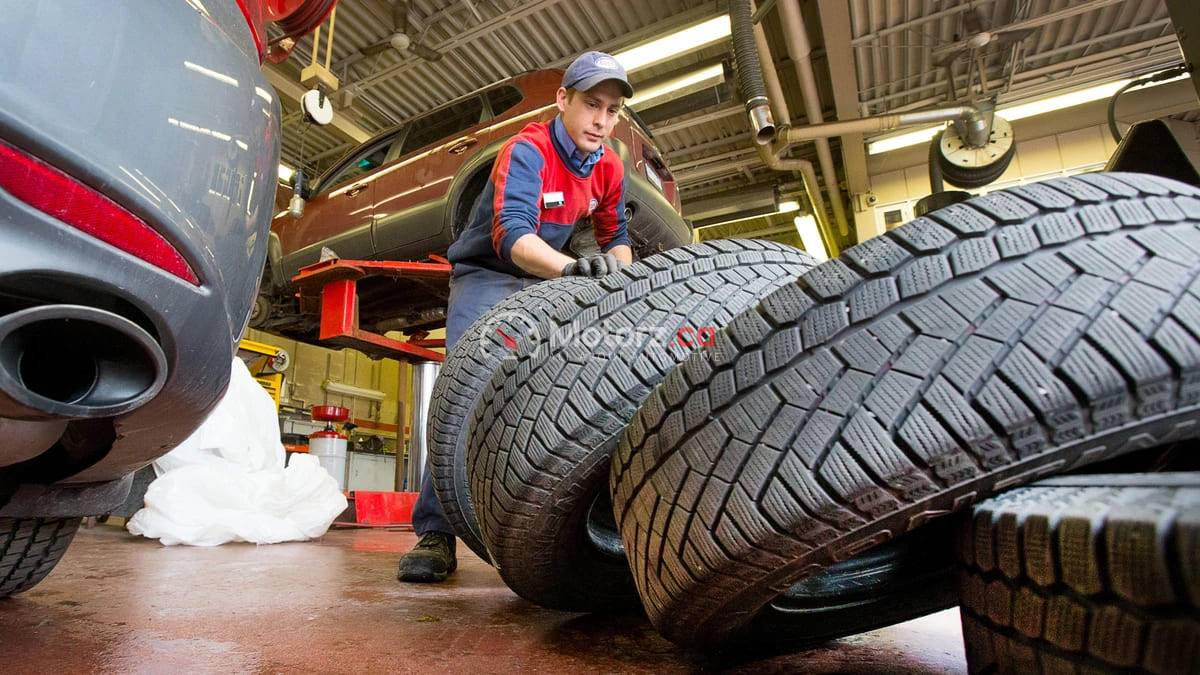
It is that time of year again. The morning air has a sharp bite, the frost is thick on the windshield, and the local tire shop has a lineup out the door. You’ve hauled your set of winter tires out of the garage, and now you face the annual dilemma: Do you just bolt them on and go, or do you pay the extra fee to have them balanced?
In the world of the “Corner Wrench,” we are all about efficiency. Nobody wants to spend extra money on a service they don’t need, but ignoring a vibration can lead to a long, uncomfortable winter and a much larger repair bill in the spring. As we head into the 2026 winter season, vehicle suspensions are becoming more sensitive to even the slightest imperfections. What felt like a minor “shimmy” five years ago can now feel like a jackhammer through the steering wheel of a modern SUV.
So, how do you decide if your winter rubber needs a date with the balancing machine? In this comprehensive guide, we will break down the science of tire balance, the red flags you can’t ignore, and the specific scenarios where skipping the balance is a gamble you shouldn’t take.
The Science of Balance: Why Does a Tire Shake?
Before we talk about the money, we need to understand the mechanics. A Winter Tires and wheel assembly is never perfectly round or perfectly weighted out of the box.
The Heavy Spot Phenomenon
Even a high-end winter tire has microscopic variations in rubber thickness. When that tire is mounted on a rim, those “heavy spots” want to pull outward as the wheel spins. At 100 km/h, a single ounce of imbalance can feel like hitting the wheel with a hammer several hundred times per minute.
The Dynamic of Winter Tires
Winter tires are particularly prone to balance issues. Their deep treads, softer rubber compounds, and specialized sipes are designed to grab snow, but they also tend to wear more unevenly than sleek summer tires. As the rubber wears down over one or two seasons, the weight distribution of the tire changes. This is why a tire that was “perfect” last March might be a shaky mess this November.
The Cost of the “Vibe”: Why Balancing Saves You Money
Many drivers see balancing as a luxury or a “dealer upsell.” However, from a mechanical standpoint, an unbalanced tire is an engine of destruction for your vehicle’s front end.
Protecting Your Suspension
Your shocks, struts, and ball joints are designed to handle bumps in the road, not constant, high-frequency vibrations from within the wheel itself. Driving on unbalanced tires for a full Canadian winter can prematurely wear out your wheel bearings and bushings. Replacing a set of wheel bearings can cost ten times more than a simple balance.
Preventing “Cupping” and Uneven Wear
When a tire is out of balance, it doesn’t just vibrate—it “bounces” almost invisibly against the pavement. This creates a wear pattern known as cupping or scalloping. Once a tire develops this pattern, it becomes noisy and will never be smooth again, essentially ruining a perfectly good set of winter rubber before the tread is even gone.
Red Flags: How to Tell if Your Tires Need Balancing
You don’t always need a machine to tell you there is a problem. Your car provides several “Corner Wrench” clues if the balance is off.
The 80 to 110 KM/H Shimmy
If your steering wheel feels calm around town but starts to “hum” or vibrate the moment you hit highway speeds, that is a classic sign of an unbalanced front tire. If you feel the vibration in your seat rather than your hands, the issue is likely with the rear tires.
The Lost Weight Clue
Take a quick look at your rims. Do you see a clean, rectangular spot where a sticky weight used to be? Over a summer of storage or a spring of muddy driving, these weights can fall off. If one is missing, your balance is guaranteed to be off.
Steering Wheel “Ghosting”
If the steering wheel seems to oscillate back and forth slightly when you are driving on a perfectly smooth, flat road, your tires are fighting each other for balance.
When You SHOULD Re-balance
If you fall into any of these categories, do not skip the balance this year:
You Bought New Tires: This is a non-negotiable. New rubber must be balanced to the rim.
You Feel a Vibration: If you noticed a slight shake at the end of last winter and “planned to deal with it later,” that time is now.
You Had a Flat Repair: If a tire was patched or plugged over the summer, the addition of the patch and the removal/re-mounting process has changed the weight distribution.
You Hit a Massive Pothole: If your last memory of the spring was a bone-jarring thud, your rim might be slightly out of round, requiring new weights to compensate.
They Have Been Stored for 2+ Years: Rubber can “flat spot” or change shape slightly if stored improperly for long periods.
When You Can PROBABLY Skip It
At the Corner Wrench, we value honesty. You might not need a balance if:
They were smooth as silk when you took them off: If your winter tires were perfectly balanced and stored in a cool, dry place on their own rims, they are likely still fine.
You only drive low speeds: if you have a secondary vehicle that never leaves a 50 km/h town zone, you are unlikely to ever feel the effects of a minor imbalance.
They were balanced mid-season last year: If you only put 2,000 kilometers on them after their last balance, the wear hasn’t been significant enough to shift the weight.
The 2026 Tech Tip: Road Force Balancing
If you have a high-performance vehicle or a sensitive electric vehicle (EV), ask your shop about Road Force Balancing. Unlike a traditional spinner, a road force machine presses a large roller against the tire to simulate the weight of the car. This can detect “hard spots” in the rubber that a normal balancer will miss, ensuring the smoothest possible ride for heavy modern vehicles.
The Final Verdict
Is it worth re-balancing your winter tires? If you value your suspension, your tire longevity, and your sanity during a two-hour highway drive in a snowstorm, the answer is usually yes. For a relatively small investment, you ensure that your tires wear evenly and your vehicle stays tight and quiet.