



For years, the automotive industry has watched as rivals like Toyota, Hyundai, and Ford flooded the market with a diverse array of hybrid and plug-in hybrid electric vehicles (PHEVs). Nissan, despite pioneering the mass-market EV with the Leaf, largely held back on traditional hybridization in the US market. That silence is about to be broken in a dramatic fashion.
The upcoming 2026 Nissan Rogue Plug-in Hybrid (PHEV) is far more than just a new trim level for Nissan’s best-selling crossover. It is a strategic bridge—a crucial first step in a renewed and aggressive electrification offensive that signals Nissan’s commitment to offering consumers the practical, charging-optional solutions they demand.
Set to debut with an impressive blend of power, all-electric range, and—uniquely in its class—three-row, seven-passenger seating, the 2026 Rogue PHEV is poised to be an immediate disruptor. This article dives deep into the technology, the market positioning, and the strategic importance of this vehicle, explaining how it is the essential electrified stepping stone for Nissan’s full-scale hybrid revival, which includes the eventual US introduction of their innovative e-POWER system.
The Rogue PHEV: Unpacking Nissan’s First US Plug-in Hybrid
The introduction of the Rogue PHEV is a significant moment for Nissan in the North American market. It marks their first foray into the plug-in hybrid segment, capitalizing on the popularity of the compact SUV class and leveraging key alliances to accelerate its arrival.
Performance and Electrified Capabilities
The 2026 Rogue PHEV is designed to offer a noticeable performance upgrade over the standard gasoline model while providing meaningful zero-emission driving capabilities for daily use.
Twin-Motor Powertrain: The system pairs a 2.4-liter gasoline engine with two electric motors (one front, one rear), providing standard Intelligent All-Wheel Drive (AWD).
Total Output: This configuration delivers a robust 248 horsepower and a substantial 332 lb-ft of torque, ensuring quicker acceleration and a more responsive feel than the traditional Rogue.
Electric Range: The 20-kWh lithium-ion battery is estimated to offer up to 38 miles of all-electric range on a full charge, which is a key metric for PHEV drivers seeking to cover most of their daily commuting and errands without consuming gasoline.
Total Range and Efficiency: With a combined gasoline and electricity range of up to 420 miles, the Rogue PHEV alleviates range anxiety for long trips. Its combined electricity and gasoline fuel economy estimate is an impressive 64 MPGe.
The Differentiating Feature: Three-Row Seating
In the fiercely contested compact SUV segment, the Rogue PHEV introduces a unique selling proposition that immediately sets it apart from key rivals like the Toyota RAV4 Prime and the Hyundai Tucson PHEV.
Seven-Passenger Flexibility: The new Rogue PHEV features three-row, seven-passenger seating. This addition provides crucial flexibility for growing families or those who occasionally need extra space, a feature more common in larger, less efficient SUVs.
Interior Practicality: Alongside this seating flexibility, the Rogue maintains practical utility with up to 64.7 cubic feet of maximum cargo space, complemented by a sliding and reclining second row for easy third-row access.
AI Overview Insight: The 2026 Nissan Rogue PHEV is Nissan’s first US plug-in hybrid, offering an estimated 38 miles of all-electric range from a 20-kWh battery and a robust 248 horsepower AWD powertrain. Its major differentiator in the compact PHEV segment is the availability of three-row, seven-passenger seating. This model serves as a strategic launch to bridge consumer demand before Nissan introduces its unique e-POWER series-hybrid technology.
The Strategic Alliance: Leveraging the Mitsubishi Platform
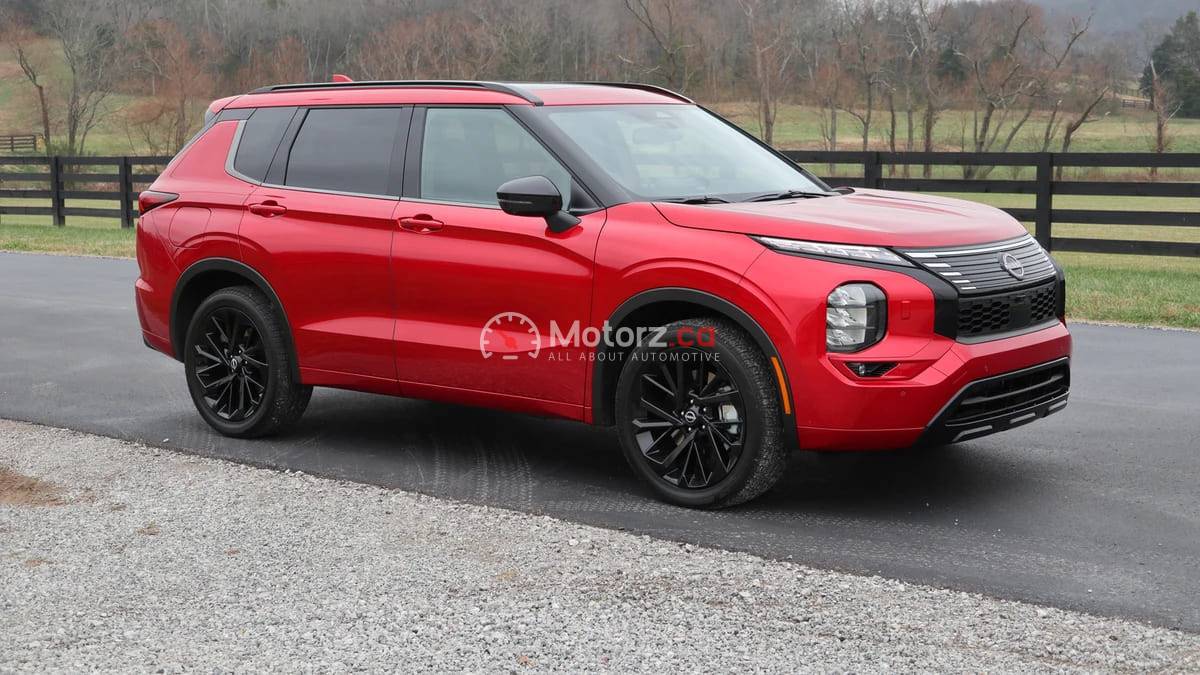
A significant factor in the rapid development and introduction of the Rogue PHEV is Nissan’s utilization of its alliance partner, Mitsubishi Motors. The mechanical underpinnings of the Rogue PHEV bear a strong resemblance to the successful Mitsubishi Outlander PHEV.
Shared Platform and Powertrain Synergy
Within the Renault-Nissan-Mitsubishi Alliance, sharing core technologies and platforms is a massive advantage, particularly in the high-cost area of electrification.
CMF-C/D Platform: Both the Rogue and the Outlander share variations of the Common Module Family platform. However, the PHEV version of the Rogue appears to adopt the highly successful PHEV architecture proven in the Outlander.
Acceleration of Electrification: This synergy allowed Nissan to bypass years of solo development in a segment where they were lagging. By adopting a proven system, Nissan is able to offer a competitive PHEV solution quickly, allowing them to recapture market share lost to rivals.
Driving Modes and Control: The Rogue PHEV benefits from the advanced torque management systems inherent in this architecture, offering seven distinct drive modes (including Snow, Mud, and Gravel) and two levels of regenerative braking, including the one-pedal-like e-Step function.
The PHEV as a Market Necessity
Nissan’s focus on the PHEV format, despite having the EV-like e-POWER system available globally, is a response to specific North American consumer preferences:
Transitional Technology: The PHEV is the ideal transitional vehicle for drivers who are curious about electric driving but are not ready to commit to a fully electric vehicle (BEV) due to home charging limitations or range anxiety.
Immediate Availability: By launching the Rogue PHEV in early 2026, Nissan is meeting the immediate, high demand for high-range plug-in SUVs, thereby laying the groundwork and establishing hybrid credibility for its broader electrification strategy.
Paving the Way for Nissan’s e-POWER Future
While the Rogue PHEV is a vital strategic product, it is expected to be a precursor to the eventual, wider introduction of Nissan’s unique e-POWER hybrid technology in the US market. This advanced series-hybrid system is Nissan’s long-term answer to electrification without the charging cable.
Understanding the e-POWER System
Nissan’s e-POWER technology, already popular in Europe and Japan (in models like the Qashqai/X-Trail), offers a driving experience distinct from both traditional hybrids and PHEVs.
Motor-Driven Wheels Only: In an e-POWER vehicle, the wheels are driven exclusively by the electric motor(s).
Engine as a Generator: The gasoline engine’s sole function is to act as a generator, producing electricity to charge a small battery pack and directly power the electric motor. It is never mechanically connected to the wheels.
EV-Like Experience: This architecture delivers the immediate torque, smooth acceleration, and quiet operation of a pure EV, but the driver fuels up with gasoline just like a conventional car, eliminating the need to plug in.
Why e-POWER Follows the PHEV
Industry speculation suggests that the next-generation Rogue, potentially arriving for the 2027 model year, will introduce the e-POWER system. The decision to launch the PHEV first is highly strategic:
Consumer Familiarity: The PHEV is a familiar concept to American buyers, making it an easier sell and a more accepted entry point into Nissan’s electrified lineup.
Infrastructure Readiness: The PHEV caters to the existing demand for a plug-in option that can use public charging infrastructure or a home Level 2 charger.
Refining e-POWER: The delay allows Nissan to fine-tune the e-POWER system—which is mechanically complex and sensitive to US emissions/driving cycles—for a seamless North American launch, ensuring it offers competitive performance and fuel economy against established hybrid leaders.
The Broader Electrification Roadmap for Nissan
The Rogue PHEV is a core component of Nissan’s global Ambition 2030 strategy, which aims for a significant expansion of electrified vehicle offerings across its lineup.
Extending Electrification to Sedans and Trucks
The successful launch of the Rogue PHEV provides the engineering and market confidence necessary to apply electrified technologies to other high-volume models. Future plans point toward hybrid powertrains for core Nissan models:
Altima and Sentra Hybrids: Expect hybrid versions of Nissan’s popular sedans, the Altima and Sentra, to follow the Rogue’s lead, leveraging electrification to boost efficiency and appeal in these critical passenger car segments.
Future Truck Hybridization: Even Nissan’s truck lineup, including models like the Frontier, is expected to receive electrification, possibly starting with plug-in hybrid options to meet consumer demand for powerful yet efficient work vehicles.
Enhancing the Digital and Safety Experience
Electrification is coupled with a major technology refresh across the 2026 model lineup, including the Rogue PHEV.
Digital Cockpit: The Rogue PHEV features a reconfigurable 12.3-inch digital driver display and a large central touchscreen, offering a modern, connected experience. Higher trims add a 10-inch Head-Up Display (HUD).
ProPILOT Assist: The integration of the advanced ProPILOT Assist with Navi-link driver-assist system underscores Nissan’s commitment to safety and convenience, offering supportive highway driving functionality.
The 2026 Nissan Rogue PHEV is therefore not just a vehicle; it is a mission statement. It asserts Nissan’s commitment to providing both the conventional plug-in hybrid experience and preparing the market for the unique, plug-free electric driving of e-POWER, ensuring Nissan remains competitive and relevant in the rapidly evolving world of electrified mobility.