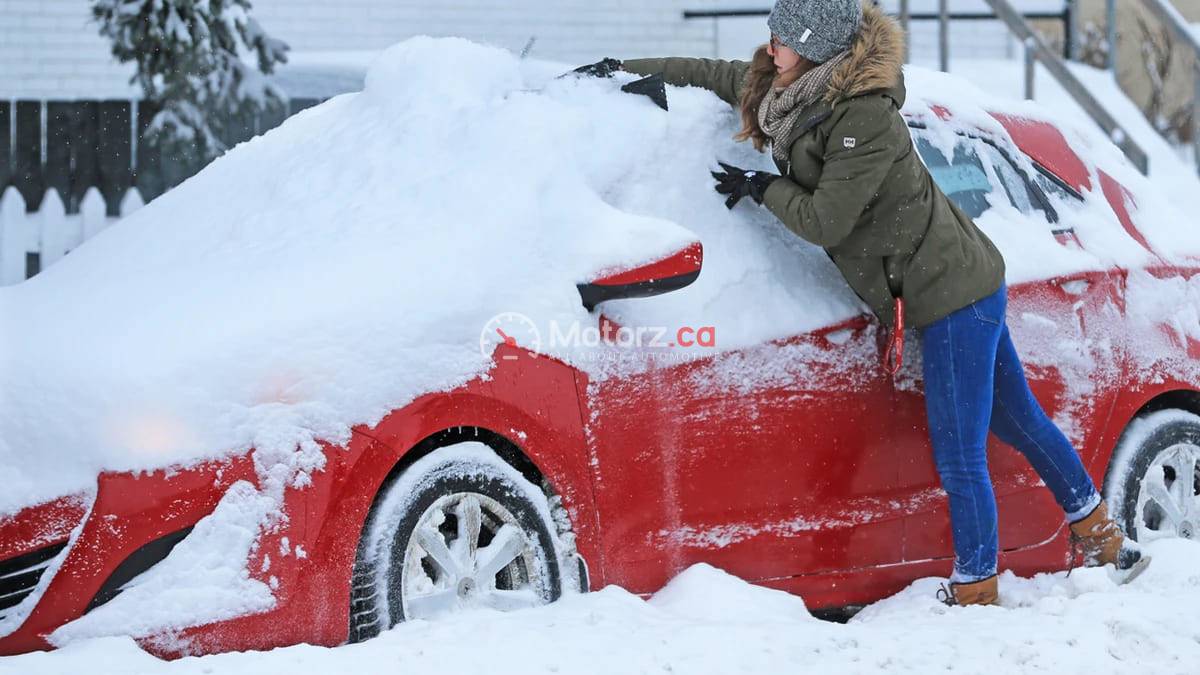
The scenario is a classic Cheap Seasonal Car Worth. You have a beautiful, late-model SUV or a prized performance car sitting in your driveway. As the first salt trucks begin their patrol in Montreal or Winnipeg, you start to wince. You know that the mixture of road salt, brine, and slush is essentially a slow-acting acid for your car’s underbody, suspension, and paint.
Then comes the idea: “What if I buy a winter beater?” For the uninitiated, a “winter beater” is a sacrificial lamb—a cheap, high-mileage vehicle purchased specifically to endure the brutal winter months so your “good” car can stay clean and salt-free in the garage. But in the 2026 automotive market, where even “cheap” cars have become expensive and safety technology has advanced rapidly, does the math still add up?
In this deep dive from “The Corner Wrench,” we are weighing the rust-free dream against the mechanical nightmare. From hidden costs to safety compromises, here is everything you need to know about the reality of owning a winter beater today.
The Cheap Seasonal Car Worth: Calculating the True Cost of a Beater
Ten years ago, you could find a reliable “winter warrior” for 1,500. In 2026, that same car likely costs 4,000 and comes with a laundry list of deferred maintenance. Before you pull the trigger, you need to look at the hidden math.
The Acquisition and Registration Costs
Buying the car is just the start. You have to factor in the provincial sales tax (PST/HST), the cost of the safety inspection, and the licensing fees. If you are in Ontario or Quebec, getting an old car to pass a modern safety inspection can easily add another 1,000 in parts like tires, wipers, or a new windshield.
The Double-Insurance Penalty
Unless you are taking your “good” car entirely off the road and handing back the plates, you are now paying for two insurance policies. While you can often put “storage insurance” (comprehensive only) on your nice car, the cost of a secondary liability policy for the beater often eats up any savings you might have made in depreciation protection.
The Maintenance Loop
A winter beater is, by definition, an old car. When it sits all summer, rubber seals dry out and batteries lose their charge. When you wake it up in November, you will inevitably face a “revival” bill—oil changes, coolant flushes, and the high probability of a failing alternator or starter motor.
The Rust Protection Myth: Is It Actually Saving Your Good Car?
The primary reason for a winter beater is to avoid rust. But is the trade-off actually worth it?
Modern Rust Prevention
Today’s vehicles have significantly better factory corrosion protection than cars from the early 2000s. Galvanized steel and extensive plastic underbody shielding mean that a modern car, if washed regularly and treated with an annual oil-based rust spray (like Krown or Rust Check), can easily last 15 years without significant rot.
The Depreciation vs. Maintenance Balance
You might be saving your nice car from 2,000 in salt-related depreciation, but if you spend 3,000 a year on the beater’s purchase, insurance, and repairs, you are technically losing money to save an asset that is depreciating anyway. At Motorz, we often argue that for most people, simply driving the “good” car and investing in a high-quality undercoating is the more logical financial move.
The Safety Risk: What Are You Sacrificing?
This is where the conversation turns serious. When you choose to drive a “beater,” you are often stepping back a decade or more in safety technology.
Crumple Zones and Airbags
A 2026 compact car is infinitely safer than a 2010 mid-size sedan. Older beaters may have degraded airbag sensors, rusted-out structural points that compromise crumple zones, and primitive seatbelt pretensioners. In a winter accident—where the risk of a collision is at its highest—you are putting yourself in a less-protected “envelope.”
Active Safety Tech
Modern cars feature Electronic Stability Control (ESC), Lane Keep Assist, and sophisticated Anti-lock Braking Systems (ABS) that are tuned for modern tire technology. Most winter beaters lack these features or have older versions that aren’t nearly as effective on black ice. As we say at “The Corner Wrench,” a car that doesn’t rust is great, but a car that keeps you out of the hospital is better.
When a Winter Beater Makes Sense
Despite the risks and costs, there are still scenarios where the “sacrificial car” is the right choice.
The Performance Car Owner
If your primary vehicle is a rear-wheel-drive sports car or a lowered luxury sedan with low-profile summer tires, it simply isn’t designed for a Canadian blizzard. In this case, a 4WD winter beater like an old Subaru or a high-mileage CR-V is a functional necessity rather than just a “salt-saver.”
The Long-Distance Commuter
If you have a 100-kilometer daily commute through a “snow belt,” the sheer wear and tear of winter driving—sand-blasting your paint, rock chips in the windshield, and high-mileage accumulation—can destroy a new car’s value quickly. A beater allows you to pile those “junk miles” onto a vehicle that already has low value.
The DIY Mechanic
If you enjoy turning wrenches, a winter beater is a low-stakes hobby. You can learn how to do your own brakes, suspension work, and cooling system repairs without the fear of “breaking” a 60,000 asset. For the Motorz audience, the beater is often a rolling classroom.
The Final Verdict
Are winter beaters worth the price? In 2026, the answer is no for 80 percent of drivers. Between the inflated price of used cars, the cost of secondary insurance, and the significant safety compromises, most people are better off driving their primary vehicle. To protect your investment:
Invest in a high-quality undercoating: Use an oil-based drip or no-drip spray annually.
Buy the best winter tires: Spend the “beater money” on top-tier rubber for your good car.
Wash the undercarriage: Use a touchless wash with an under-spray once a week to clear out the salt and brine.
However, if you own a vehicle that is truly unsuitable for winter, or if you simply love the “no-stress” lifestyle of driving a car you don’t care about, a beater remains a fun, albeit expensive, Canadian tradition.