




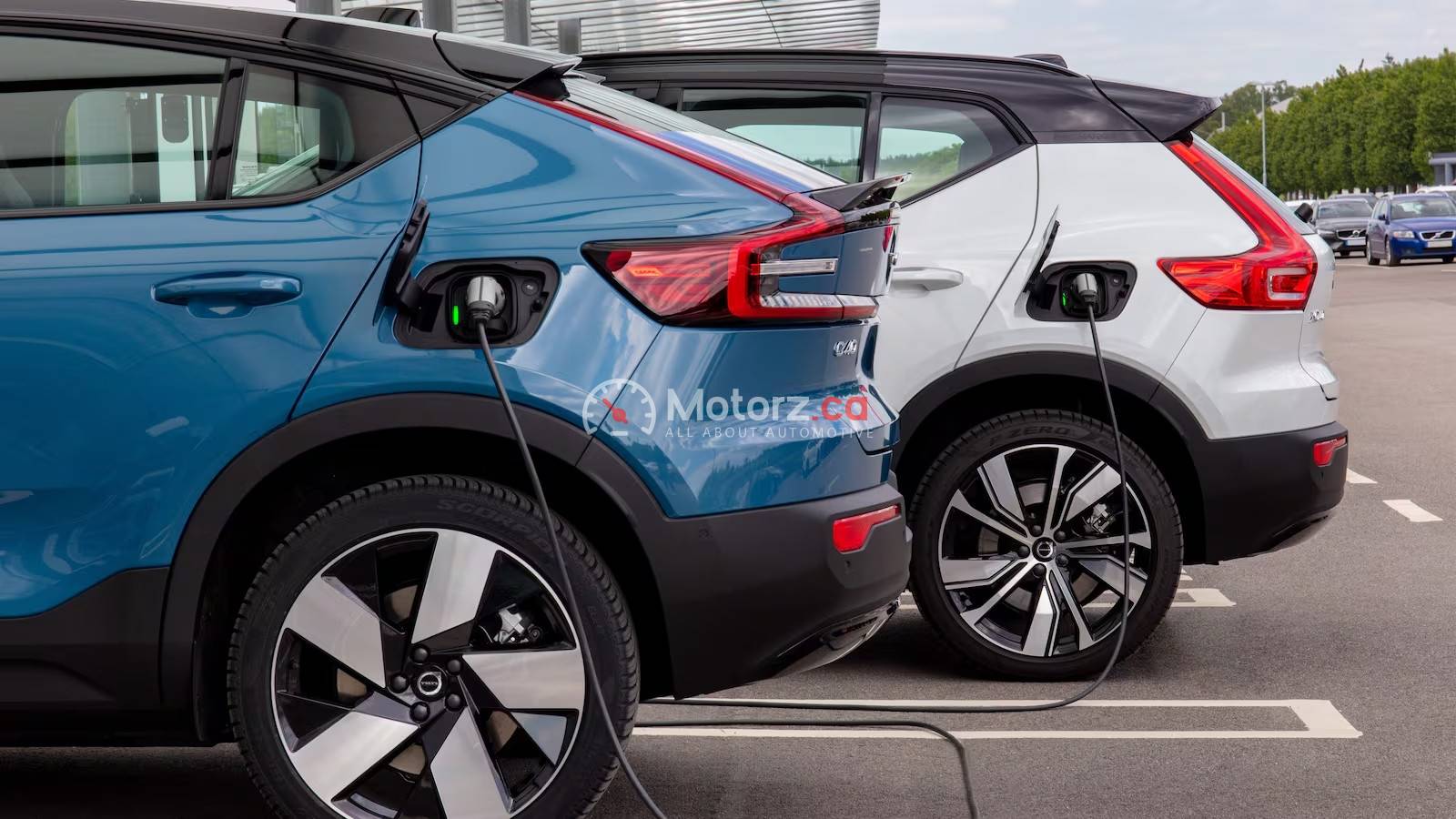

Balancing Climate Ambition with Affordability and Reality
For years, Policy Pivot in British Columbia stood as a beacon of progressive climate policy in North America, leading the charge with aggressive mandates and consumer incentives aimed at accelerating the transition to electric vehicles (EVs). The cornerstone of this ambition was the Zero-Emission Vehicles (ZEV) Act, which included a world-leading target: 100 percent of all new light-duty vehicles sold must be zero-emission by 2035.
This leadership position, however, recently fractured. Citing economic instability, affordability concerns, and a desire for harmonization with federal policy, B.C.’s government announced a major pivot: the 100 percent ZEV mandate for 2035 would be scrapped and revised, and the provincial EV rebate program would be formally abandoned, shifting the entire financial burden and policy direction to the federal government in Ottawa.
This decision marks a critical turning point for Canada’s EV landscape. It signals a national, industry-wide recognition that the pace of electrification, while initially rapid, has become unsustainable under current economic and geopolitical pressures. This article delves into the political, economic, and market forces that drove B.C.’s retreat, and examines the profound implications for consumers, automakers, and Canada’s overall climate strategy.
The Strategic Retreat: Three Core Reasons for B.C.’s Policy Shift
The sudden and decisive nature of B.C.’s pivot was driven by a convergence of factors that made the existing mandates and incentives politically and economically untenable.
The Affordability Crisis and Consumer Demand Cooling
The primary pressure point leading to the policy reversal was the significant affordability gap between EVs and their internal combustion engine (ICE) counterparts, especially after the removal of key incentives.
The Incentive Cliff Effect: B.C.’s provincial rebate program, which offered up to 4,000 for battery-electric vehicle buyers, was paused in May 2025 (after Ottawa’s federal rebate program was paused in January 2025). Industry data revealed that each time incentives lapsed, EV sales dropped sharply and immediately. With the “carrot” of financial support removed, consumer demand for higher-priced EVs significantly cooled.
The Cost Barrier: Energy Minister Adrian Dix publicly stated that the 100 percent goal was “no longer realistic,” largely because of the high purchase costs. Automakers and dealer associations had repeatedly warned that mandates without robust, permanent incentives would force consumers out of the new car market, especially at a time of high interest rates and broader economic strain.
Shifting Responsibility to Ottawa: By formally abandoning the provincial rebate and declaring the financial incentives a “federal responsibility,” B.C. successfully transferred the political and fiscal pressure for supporting consumer affordability back to the national level, arguing for a unified, national incentive strategy.
Aligning with Federal Policy and Industry Harmony
The second major impetus was the need to align provincial goals with federal policy, creating a unified and predictable environment for the automotive industry.
Federal Mandate Review: The federal government, under Prime Minister Mark Carney, had already paused its national ZEV mandate (which also targeted 100 percent by 2035) in September 2025, citing pressure on the Canadian auto industry from international trade issues, including U.S. tariffs.
Industry Call for Coherence: Automakers and the New Car Dealers Association of BC vehemently argued for a single, clear, harmonized sales target across Canada. Dealing with multiple, aggressive, and sometimes conflicting provincial mandates (B.C. and Quebec had the most aggressive targets) created complexity and market distortion. The threat of automakers restricting the sale of ICE vehicles in B.C. to meet the high 26 percent ZEV target for 2026, thereby limiting consumer choice, was a tangible concern.
New, “Realistic” Targets: B.C. confirmed it would introduce new legislation to revise the ZEV mandates in 2026, bringing them in line with the “ambitious but achievable” targets the federal government is expected to announce following its review. This shift prioritizes industry flexibility and compliance ease over a hard, uncompromising deadline.
The Impact: What the Policy Shift Means for Consumers and Automakers
The changes in B.C., a long-time EV adoption leader, will have widespread repercussions, impacting everything from vehicle availability to charging infrastructure investment.
Consequences for EV Buyers in British Columbia
For B.C. residents who previously benefited from the generous incentives, the policy change means a more challenging path to EV ownership.
Higher Upfront Costs: The immediate and complete removal of the provincial rebate means B.C. consumers now face the full, unsubsidized purchase price of an EV. While the federal government is expected to reintroduce a revised national incentive, the current absence of major provincial support will likely cause a sustained reduction in sales until a new program is enacted.
Expanded Plug-in Hybrid (PHEV) Focus: In a pragmatic move, B.C. announced regulatory changes to relax range requirements for plug-in hybrid electric vehicles (PHEVs) to maintain ZEV credit eligibility. This is a clear acknowledgement that PHEVs, which offer fuel flexibility and range assurance, are a crucial “transition” vehicle, particularly for drivers in rural and remote areas where charging infrastructure is still sparse.
Focus on Affordability-Based Credits: B.C. will introduce a ZEV Affordability Program in 2026. This program rewards automakers with additional ZEV credits for efforts that directly lower consumer costs, such as offering zero- or low-interest financing, or investing in home and public charging support. This subtle shift mandates that automakers must now absorb more of the affordability burden rather than relying on direct government grants.
The Message to the Canadian Automotive Industry
The B.C. retreat sends a powerful, unified message from government to the auto sector: mandated supply targets cannot work without corresponding market demand and affordability support.
The Stick Remains, But It’s Less Rigid: While the 100 percent goal is gone, B.C. is not abandoning the ZEV Act entirely. The legal requirement for automakers to sell a minimum percentage of ZEVs remains, but the targets will become more lenient and aligned with the federal standard. Automakers will also receive greater flexibility through expanded ZEV credit eligibility.
Uncertainty and Investment Risk: The policy volatility—pausing the federal mandate, scrapping the B.C. target, and abandoning incentives—creates significant uncertainty for automakers. They have invested billions of Canadian dollars in manufacturing capacity and model development based on the promise of firm 2035 deadlines. This unpredictability risks slowing down future investment decisions in the Canadian EV supply chain.
Infrastructure Focus: Minister Dix emphasized that B.C. will now focus its resources on charging infrastructure, aiming to reach 10,000 public charging stations by 2030 (up from 7,000). This commitment addresses one of the major barriers to mass adoption: range anxiety and accessibility, which must be solved regardless of the sales mandate timeline.
Geopolitical and Economic Headwinds: The Broader Context
B.C.’s retreat must be understood within the context of global economic and geopolitical pressures that are fundamentally reshaping the EV market.
Global EV Market Dynamics and External Pressures
The Canadian EV market is uniquely sensitive to decisions made by the United States and global trade dynamics.
U.S. Tariff Impact: The ongoing trade tensions, including U.S. tariffs and the global review of Chinese EV imports, have created immense financial challenges for the Canadian auto industry, as noted by the federal government. This global trade war complicates vehicle allocation and pricing, making aggressive mandates harder to meet without severe market distortion.
The China Factor: B.C. and Canada’s mandates risked forcing domestic automakers to rely heavily on Chinese-made EVs to meet ZEV quotas. Minister Dix acknowledged that resolving tension with China over EV tariffs is an issue for Ottawa, highlighting the geopolitical complexity of mandating a 100 percent transition reliant on global supply chains.
The Plateau in Sales: B.C.’s decision mirrors a broader global trend where the initial surge in high-income, environmentally conscious buyers has plateaued. The market is now struggling to transition to the mass consumer segment, which is far more sensitive to price, charging availability, and daily utility.
The Future of ZEV Policy in Canada
The policy vacuum created by the B.C. pivot and the federal review will necessitate a new, national blueprint for the EV transition.
The Role of Plug-in Hybrids: The move to embrace PHEVs in B.C. may set a national precedent. As research shows that PHEVs often pollute more in the real world than their lab ratings suggest, a critical debate will emerge about how much “credit” they should receive towards ZEV targets. Their inclusion is a practical compromise for rural drivers, but critics argue it allows automakers to delay full electrification.
Focus on Grid and Infrastructure: The harmonization debate is shifting from sales mandates to infrastructure support. The future success of electrification in Canada hinges not just on selling EVs, but on ensuring the electrical grid can handle the load and that the public charging network is reliable, extensive, and affordable—an area B.C. is doubling down on.
A Pragmatic Reset for Canada’s EV Future
The decision by British Columbia to scrap its ambitious 100 percent EV sales mandate by 2035 and abandon its provincial rebates is not a defeat for the environmental movement, but a pragmatic reset driven by economic reality. It serves as a stark acknowledgment that aggressive mandates cannot succeed in isolation; they must be paired with sustainable consumer affordability programs and a predictable, harmonized national policy framework.
By stepping back, B.C. has compelled the federal government to take ownership of the affordability challenge and the policy direction for the entire country. The next crucial phase of Canada’s EV transition will be defined not by aggressive targets, but by strategic investments in charging infrastructure, market incentives designed to reach the mass consumer, and a unified policy approach that balances climate ambition with the economic viability of the Canadian auto industry.