
The Top-Rated Electric Vehicles market has officially moved past its “early adopter” phase and into the mainstream. In late 2025, as thousands of new drivers make the switch from gasoline to electrons, the conversation has shifted from “Can I make it to my destination?” to “How much do I actually enjoy the experience?”
According to the latest J.D. Power 2025 U.S. Electric Vehicle Experience (EVX) Ownership Study, two specific models have emerged as the gold standards for owner happiness. The BMW iX has secured the top spot in the premium segment, while the Hyundai Ioniq 6 has claimed the crown for mass-market vehicles.
This year’s study is particularly significant because it marks a major rebound in overall customer satisfaction. After a slight dip in 2024 caused by charging frustrations and software glitches, the 2025 data shows that manufacturers are finally listening to their customers. With better range, more reliable software, and a narrowing gap in charging infrastructure, the EV ownership experience is more rewarding than ever.
Understanding the J.D. Power EVX Ownership Study
Before diving into the winning models, it is essential to understand how these rankings are determined. The EVX study is not just a measure of how “cool” a car looks. It is a rigorous data-driven analysis based on responses from over 6,000 owners of 2024 and 2025 model-year vehicles.
The Ten Top-Rated Electric Vehicles
J.D. Power evaluates every vehicle across ten critical categories to calculate a score out of 1,000 points:
Accuracy of Stated Battery Range: How close is the real-world performance to the window sticker?
Availability of Public Charging: Can owners find a plug when they need one?
Battery Range: Does the car offer enough total distance for daily life?
Cost of Ownership: This includes insurance, maintenance, and electricity costs.
Driving Enjoyment: How does the car feel on a twisty road or a long highway?
Ease of Charging at Home: Is the home setup seamless?
Interior and Exterior Styling: Does the vehicle feel premium and modern?
Safety and Technology Features: Are the driver aids helpful or annoying?
Service Experience: How does the dealership handle EV-specific maintenance?
Vehicle Quality and Reliability: Are there squeaks, rattles, or mechanical failures?
For 2025, the study found that 94 percent of current EV owners plan to stick with electric for their next purchase. This incredible loyalty highlights that despite the learning curve, once people go electric, they rarely look back.
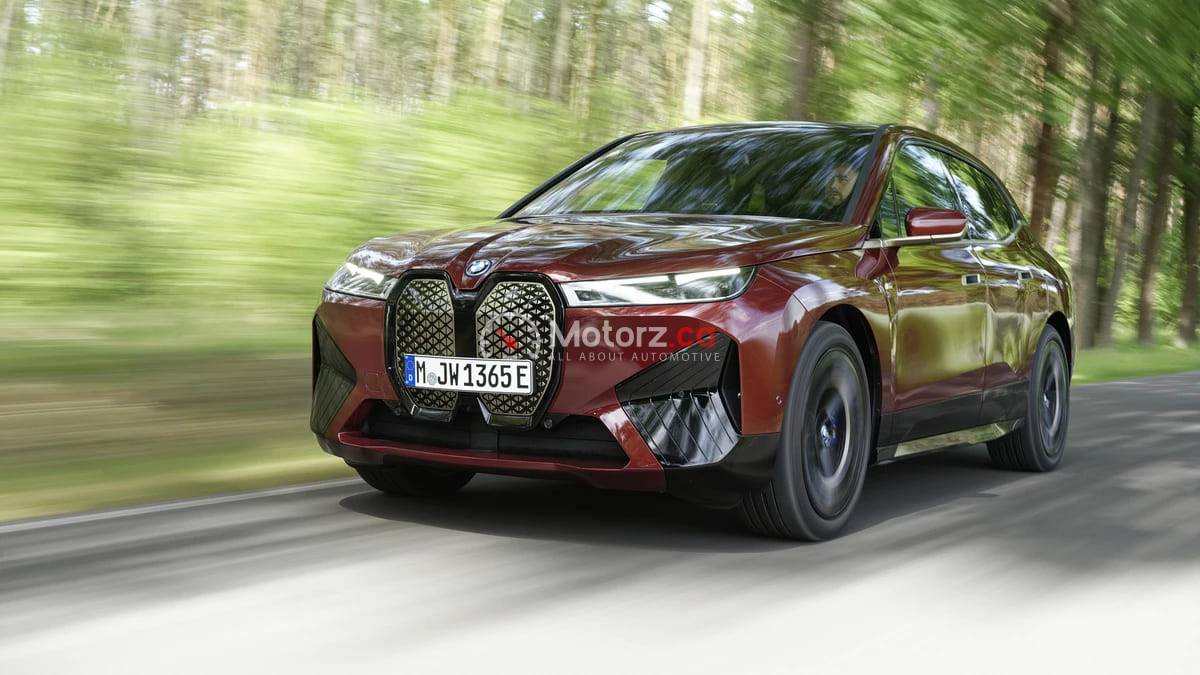
The Premium Champion: BMW iX (790 Points)
For the second year in a row, BMW has dominated the premium category. The BMW iX achieved a staggering score of 790 points, narrowly beating its sibling, the BMW i4, and the rugged Rivian R1S.
Luxury That Doesn’t Compromise
What makes the BMW iX the most satisfying premium EV on the market? It starts with the interior. Owners consistently praise the iX for its “lounge-like” cabin, which features sustainable materials like olive-leaf-tanned leather and recycled fishing net floor mats. Unlike some competitors that feel stark or overly minimalist, the iX maintains a sense of high-end craftsmanship.
Silent but Potent Performance
The driving enjoyment factor is where BMW excels. The iX offers a dual-motor setup that provides effortless, silent acceleration. More importantly, owners report that the air suspension provides one of the smoothest rides in the industry, effectively isolating the cabin from road imperfections.
Software That Actually Works
Software has been a pain point for many EVs, but BMW’s iDrive 8.5 and 9.0 systems have set a new bar. The integration of augmented reality navigation—which overlays arrows on a live video feed of the road ahead—is a favorite feature among owners. It reduces the stress of navigating complex urban junctions, directly contributing to higher satisfaction scores in the technology category.
The Mass-Market Hero: Hyundai Ioniq 6 (751 Points)
In the mass-market segment, competition is fiercer than ever. However, the Hyundai Ioniq 6 rose to the top with a score of 751 points, outperforming the Kia EV6 and the new Chevrolet Equinox EV.
The Efficiency of the “Streamliner”
The Ioniq 6’s unique, aerodynamic design is its secret weapon. Its low drag coefficient allows it to squeeze every possible mile out of its battery. Owners who chose the Long Range Rear-Wheel Drive trim enjoy up to 342 miles of range, which is often cited as the primary reason for their high satisfaction. In an era where “range anxiety” still exists, the Ioniq 6 provides a sense of security that few other affordable EVs can match.
800-Volt Fast Charging
Perhaps the biggest differentiator for Hyundai is its E-GMP platform. The Ioniq 6 features an 800-volt charging architecture, a feature usually reserved for luxury cars like the Porsche Taycan. This allows the car to charge from 10 percent to 80 percent in just 18 minutes at a compatible 350-kW fast charger. Owners report that this significantly reduces the time spent at highway rest stops, making long-distance travel feel nearly identical to owning a gasoline car.
Exceptional Value and Quality
Interestingly, the J.D. Power study noted that mass-market EVs are currently outperforming premium EVs in build quality. Owners of the Ioniq 6 reported fewer squeaks, rattles, and software bugs than owners of vehicles costing twice as much. This “value-for-money” perception is a massive driver of satisfaction in the mass-market segment.
Trends Driving EV Satisfaction in late 2025
The 2025 study revealed several fascinating shifts in the EV landscape that help explain why satisfaction is on the rise.
The Tesla Supercharger Effect
A major boost for mass-market brands like Hyundai, Kia, and Ford has been the opening of the Tesla Supercharger network to non-Tesla vehicles. For years, the gap in charging satisfaction between Tesla and everyone else was huge. In 2025, as more brands gain access to the NACS (North American Charging Standard) plugs, the frustration with broken or slow third-party chargers is finally beginning to fade.
The Narrowing Quality Gap
Early EVs were often criticized for poor panel gaps and cheap interior plastics as manufacturers rushed them to market. The 2025 data shows that “Legacy” automakers have caught up. Seven of the top ten highest-quality EVs in this year’s study come from mass-market brands. This suggests that the industry has moved past the experimental phase and is now applying decades of manufacturing expertise to electric platforms.
The Importance of Dealer Education
A new finding in the 2025 study is the role of the dealership. J.D. Power found that 69 percent of first-time buyers received some form of EV training at the point of sale. However, only 12 percent felt they were properly educated on the “Total Cost of Ownership,” including home charging setup and maintenance schedules. Owners who felt their dealer was an “EV expert” reported significantly higher satisfaction scores throughout their first year of ownership.
Factors That Could Still Improve
Despite the record-high scores for the BMW iX and Hyundai Ioniq 6, the study highlights areas where the industry is still struggling.
Public Charging Reliability: While availability has improved, the “experience” of public charging still lags behind the ease of home charging. Issues with payment apps and station maintenance continue to be the biggest “satisfaction killers.”
Cold Weather Performance: Owners in Northern climates still report significant drops in range during winter months. While heat pumps are becoming more common, the lack of transparency about “winter range” remains a source of frustration for some buyers.
Tax Credit Confusion: In 2025, shifting government policies around EV tax credits created a confusing landscape for buyers. Those who were able to easily secure their incentives (often totaling up to 7,500 USD) reported much higher satisfaction with their vehicle’s “value” than those who missed out.
Tips for Prospective EV Buyers in 2026
If you are looking at the success of the BMW iX or the Hyundai Ioniq 6 and considering a move to electric, here is how to ensure your own satisfaction stays high:
Prioritize Home Charging: Owners who can charge at home report the highest satisfaction scores across the board. If you live in an apartment, check for “Level 2” chargers nearby before you buy.
Look for 800-Volt Architecture: If you plan on taking road trips, vehicles like the Ioniq 6, Kia EV6, or Audi e-tron GT offer much faster highway charging than 400-volt systems found in many other models.
Check the Software Updates: Ask the dealer how often the car receives “Over-the-Air” (OTA) updates. A car that can improve its range or navigation through a software download will feel newer for longer.
Consider a Lease: With EV technology moving so fast, many owners in the J.D. Power study opted for a lease. This protects you from rapid depreciation and allows you to upgrade to the latest battery tech in three years.
A Bright Future for Electric Owners
The 2025 J.D. Power EVX study confirms what many have suspected: the “growing pains” of the electric revolution are finally subsiding. By focusing on quality, range accuracy, and user-friendly technology, brands like BMW and Hyundai have proven that electric vehicles can exceed the expectations of even the most demanding drivers.
The BMW iX stands as a testament to what a luxury SUV can be when it is built from the ground up as an EV. Meanwhile, the Hyundai Ioniq 6 proves that you do not need to spend a fortune to get world-class efficiency and charging speeds. As we move into 2026, these two models remain the benchmarks that the rest of the industry must chase.