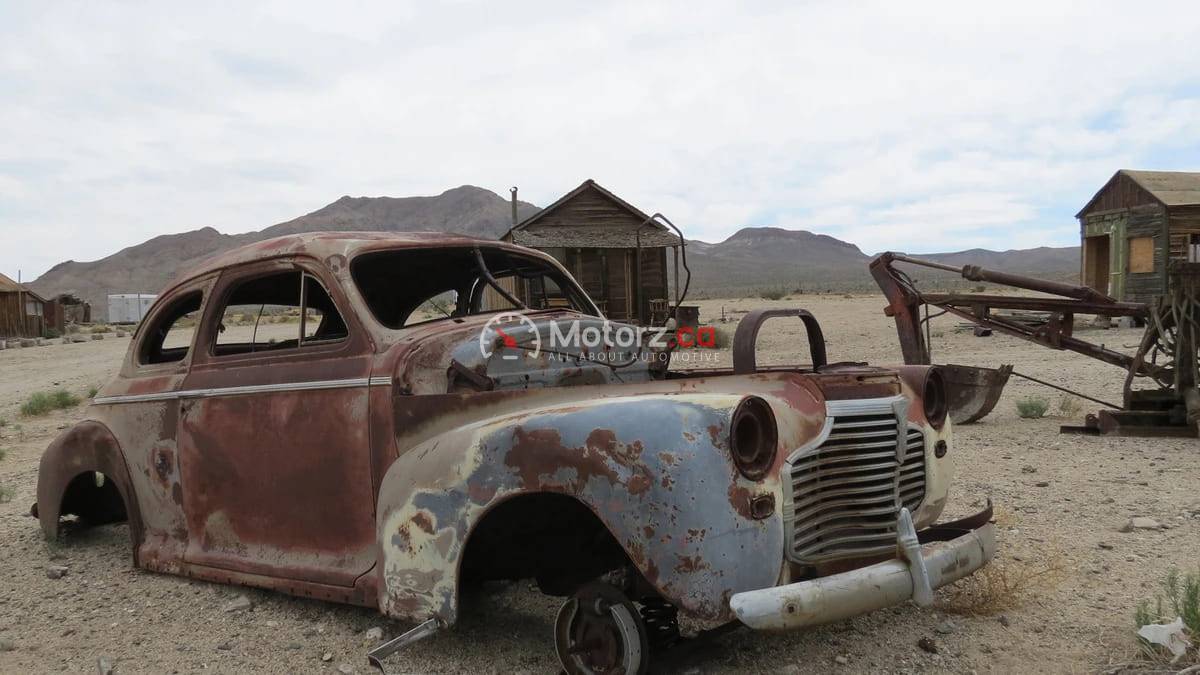
Imagine stepping into a time machine parked in a Drive Your Grandparents’ Car. You pull back a heavy tarp to reveal a gleaming, chrome-grilled beast from the 1950s or 60s. It smells of old vinyl, unburnt gasoline, and memories. You have the keys in your hand, but as you settle into the bench seat—unsupported by headrests and devoid of a shoulder belt—you realize something startling. This isn’t just an older version of your current crossover; it is a completely different species of machine.
In the world of “The Corner Wrench,” we often celebrate the heritage of the automotive industry. But as we navigate the tech-heavy roads of 2026, the gap between “then” and “now” has become a canyon. From the physical effort required to turn the wheel to the complex ritual of starting a cold engine, driving a vintage vehicle requires a skillset that most modern drivers have never had to develop.
Could you drive your grandparents’ car today? The answer isn’t as simple as putting it in “D” and hitting the gas. Today, we are breaking down the mechanical hurdles, the safety culture shocks, and the “lost arts” required to master a classic from the golden age of motoring.
The Drive Your Grandparents’ Car: More Than Just a Button
In 2026, we are used to proximity keys and push-button starts. You sit down, press a button, and the computer handles the rest. In your grandparents’ day, starting the car was a delicate negotiation between man and machine.
The Mystery of the Carburetor and Choke
Before electronic fuel injection (EFI) became standard, engines used carburetors to mix air and fuel. On a cold morning in Winnipeg or Halifax, you couldn’t just turn the key and expect a smooth idle.
The Manual Choke: Many older cars required you to pull a knob on the dash to restrict airflow (choking the engine) to create a richer fuel mixture for starting.
The “Pump-Pump-Hold” Method: If the car was stubborn, you had to pump the accelerator pedal a specific number of times to prime the engine with fuel. One pump too many, and you’d have a “flooded engine” (something we covered recently in our Motorz guide); one too few, and it would just crank endlessly.
Warm-Up Time
Today, you can drive away almost immediately after starting. In a vintage car, the oil and the metal components needed several minutes to reach operating temperature. If you tried to merge onto a highway with a cold 1965 V8, the engine would likely cough, sputter, and stall, leaving you in a precarious position.
The Physicality of the Drive: No “Power” in These Steering Wheels
Modern drivers are pampered by electronic power steering and vacuum-boosted brakes. Driving a car from the mid-century was a full-body workout.
Manual Steering: The “Armstrong” Method
If your grandparents’ car didn’t have the optional power steering box, turning the wheel at low speeds (like parallel parking) required genuine muscle. The steering wheels were massive—often 17 or 18 inches in diameter—not for style, but for leverage. You had to begin moving the car slightly just to make the wheel turnable.
Non-Power Drum Brakes
Today, a light tap on the brake pedal brings your car to a screeching halt. In an older vehicle with four-wheel drum brakes and no power booster, you had to “stand” on the pedal. There was no Anti-lock Braking System (ABS). If you slammed on the brakes in an emergency, the wheels would lock up instantly, sending you into a slide. Mastering the “threshold braking” technique was a survival skill every driver needed.
Shifting Perspective: Three on the Tree and Manual Gears
If you grew up on 10-speed automatics or the single-speed direct drive of an EV, the transmission of 1960 will be your biggest hurdle.
Three on the Tree
Manual transmissions weren’t always on the floor. For decades, the “column shifter” was the standard. Known as “Three on the Tree,” this required you to move a lever on the steering column through an H-pattern while simultaneously operating a heavy clutch pedal with your left foot. It was a rhythmic dance that required perfect timing to avoid “grinding the gears.”
Non-Synchronized Gears
On very old vehicles, the gears weren’t “synchronized.” This meant you couldn’t just shift from second to third smoothly. You had to “double-clutch”—neutral, release clutch, rev the engine to match the speed, clutch in, and then shift. Without this, the gearbox would scream in protest, and you’d likely leave a trail of metal shavings on the road.
The Safety Culture Shock: Life Before the “Safety Cell”
This is where the reality of driving a classic becomes sobering. Modern cars are designed to sacrifice themselves to save the occupants. Vintage cars were built to stay rigid, often at the expense of the people inside.
The Missing “Safety Nets”
No Airbags: Your only protection was the distance between you and the steering wheel—which was often a solid steel shaft aimed at your chest.
Lap Belts (or Nothing): Shoulder belts didn’t become common until the late 60s. In an older car, you might only have a lap belt, which prevented you from being ejected but offered zero upper-body restraint.
Metal Dashboards: While soft-touch plastics dominate modern interiors, your grandparents’ car likely featured a beautiful, painted steel dashboard. In a collision, there was no “give.”
Visibility and Lights
The mirrors on a 1950s sedan were tiny, often only on the driver’s side. The headlights were “sealed beams,” which by 2026 standards, are about as bright as a pair of weak flashlights. Driving at night required a much slower pace and much higher levels of concentration.
Respecting the Craft
Could you drive your grandparents’ car today? Technically, yes—but you wouldn’t be “driving” in the modern sense. You would be operating a piece of industrial machinery.
At Motorz, we have immense respect for the drivers of the past. They didn’t have lane-keep assist, blind-spot monitoring, or even reliable heaters. They had to understand the mechanical soul of their vehicle, listening for every tick and feeling every vibration.
If you ever get the chance to sit behind the wheel of a true classic, take it. But do so with a dose of humility. You’ll quickly realize that while our modern cars are faster, safer, and more efficient, they lack the visceral, tactile connection that made your grandparents’ car a true member of the family.