




The metallic jingle of keys is fast becoming obsolete. Today, the most powerful tool for unlocking and starting a modern vehicle isn’t a physical fob; it’s the smartphone in your pocket. The technology of digital car keys—allowing drivers to lock, unlock, share access, and even start their engine using an app or a digital wallet—promises unparalleled convenience.
Automakers, device manufacturers like Apple and Samsung, and the Car Connectivity Consortium (CCC) are rapidly standardizing this technology, moving us into an era where your phone is the central command for your mobility. But as with any major leap in connectivity, the question remains: are we trading security for convenience?
The transition from the traditional key fob to the digital key ecosystem is fraught with complex challenges, from sophisticated cyber threats like relay attacks to the simple vulnerability of a dead phone battery. This deep-dive analysis explores the revolutionary technologies powering the digital key—namely Near Field Communication (NFC), Bluetooth Low Energy (BLE), and Ultra-Wideband (UWB)—and critically weighs the immense benefits of seamless access and key sharing against the potential risks of hacking, data privacy exposure, and the reliability of relying on a smartphone for vehicle access.
The Digital Key Advantage: Unlocking Unprecedented Convenience
The shift to digital keys, standardized under the CCC Digital Key Specification, offers clear, tangible benefits that redefine the owner experience and asset management.
Seamless Access and Passive Entry
The greatest appeal of the digital key lies in its ability to facilitate true passive entry and ignition.
Hands-Free Operation: Leveraging Ultra-Wideband (UWB) technology, modern digital keys eliminate the need to physically interact with your phone. The vehicle can precisely determine the location of the authorized smartphone (often within 10 to 30 centimeters of accuracy). As you approach the driver’s door, the car automatically unlocks; once inside, the vehicle can start without the phone leaving your pocket or bag.
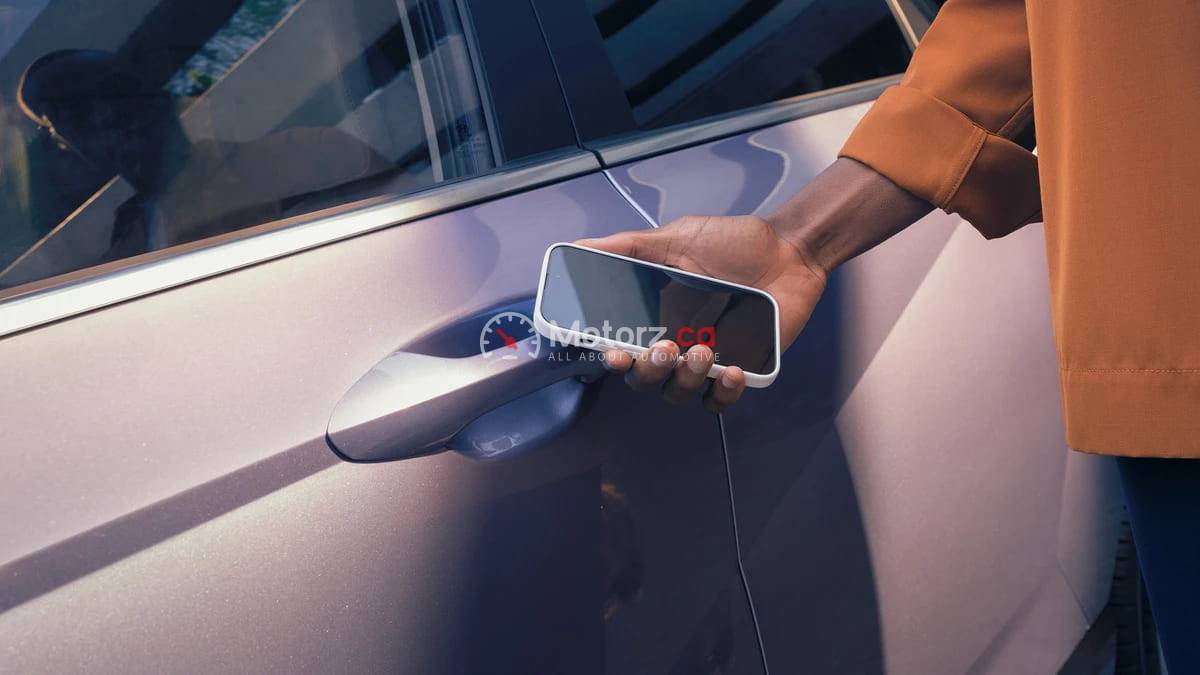
NFC Backup: To address the critical issue of a dead smartphone battery, the Car Connectivity Consortium (CCC) mandates the use of Near-Field Communication (NFC) as a backup. Even if your phone is powered down, you can hold it against a specific reader on the door handle or wireless charging pad to use the residual power stored in the Secure Element (SE) to unlock and start the car.
Revolutionizing Key Sharing and Fleet Management
Digital keys offer a level of control and flexibility that is impossible with physical fobs, especially for shared vehicles and business operations.
Instant, Remote Access Sharing: Vehicle owners can securely and instantaneously share a digital key with family members, friends, or service providers (like valets or mechanics) directly through digital wallets (e.g., Apple Wallet, Samsung Wallet).
Customized Access Profiles: The owner maintains granular control, allowing them to limit the key’s use by setting restrictions like:
Time Limits: Granting access only for a specific window (e.g., 24 hours for a family visitor).
Distance Limits: Restricting the vehicle’s driving distance or setting speed caps (valet mode).
Revocation: Access can be instantly revoked remotely from the owner’s device or cloud platform, eliminating the need to physically retrieve a lost or shared key.
Business Insight: For fleet managers and car-sharing services, the digital key is a game-changer. It provides real-time access logs, instant provisioning, and seamless key management across hundreds of vehicles, enhancing security and logistics efficiency.
The Security Challenge: Hacking, Theft, and Digital Vulnerabilities
Despite the integration of advanced encryption, the complexity of connected systems introduces new and evolved security risks that drivers must acknowledge.
Mitigating the Threat of Relay Attacks
The most common method used by organized crime to steal vehicles with keyless entry fobs is the relay attack. Thieves use relay boxes to extend the radio frequency (RF) signal of the key fob from inside a house to the vehicle outside, tricking the car into thinking the key is present.
UWB as the Solution: Traditional key fobs and initial digital key versions relying solely on Bluetooth Low Energy (BLE) were susceptible to relay attacks because BLE, while good for long-range communication, lacks precise localization. The CCC Digital Key 3.0 specification mandates Ultra-Wideband (UWB) specifically to counter this. UWB measures the true time-of-flight (ToF) of the signal with centimeter-level precision, allowing the car to verify that the key is physically located inside the vehicle before allowing the engine to start.
The Transition Gap: While UWB offers superior protection, not all digital key implementations are based on UWB yet. Early systems using only BLE may still be vulnerable to signal interception or amplification, placing the security risk directly on the technology implemented by the automaker.
The Risk of Phone Loss, Hacking, and Data Exposure
Reliance on a single smart device for vehicle access consolidates multiple risks into one:
Phone Theft or Loss: If a physical key fob is lost, it can’t be used immediately without being found near the car. If a phone is lost or stolen, criminals potentially gain access to the vehicle, location data, and other connected car features. However, the CCC architecture addresses this by storing the key in a Secure Element (SE) within the phone (separate from the main OS) and often requiring biometric authentication (face or fingerprint ID) to authorize the car’s start.
Mobile Application Vulnerabilities: The connection between the smartphone and the vehicle is often managed through a manufacturer’s proprietary app. Flaws in these mobile applications or the backend cloud servers can create cybersecurity vulnerabilities that cybercriminals can exploit to gain unauthorized access to the vehicle or personal data.
Data Privacy: Digital keys facilitate a constant, encrypted communication link between the car, the smartphone, and the manufacturer’s cloud. This exchange generates vast amounts of data—trip history, location tracking, driving habits, and maintenance status—all of which require strong privacy protocols to prevent unauthorized access or sale of personal information.
The Technology Behind the Security: NFC, BLE, and UWB
The reliability and security of a digital car key are directly proportional to the quality and combination of the wireless technologies employed.
CCC Digital Key: The Standardized Triple Threat
The Car Connectivity Consortium (CCC) has established a standardized framework that uses a triad of radio protocols, each serving a specific security and functionality role:
The Secure Element (SE) and Encrypted Credentials
To protect the cryptographic keys that verify the user’s identity, the CCC standard utilizes a Secure Element (SE) in both the smartphone and the vehicle.
Tamper-Proof Storage: The SE is a hardware-based, tamper-resistant chip separate from the phone’s main operating system. It stores the digital key securely, isolating the critical credentials from malware or OS-level hacking attacks.
Mutual Authentication: The SE facilitates asymmetric cryptography and mutual signature authentication. This means the smartphone and the vehicle must mutually authenticate each other using stored private and public keys, establishing a secure, encrypted channel before any function (unlock, start) is permitted.
The Verdict: Balancing Innovation with Practicality
For the average driver, the benefits of digital car keys generally outweigh the risks, provided the implementation adheres to the stringent, advanced standards of the Car Connectivity Consortium (CCC).
Essential Safety Guidelines for Digital Key Users
While the technology is secure, the user remains the primary security vulnerability. Drivers should adopt simple, effective habits:
Set Up Biometric Authentication: Always enable a secondary layer of authentication (Face ID or fingerprint) on your smartphone, especially for authorizing engine start functions.
Manage Shared Keys Aggressively: When sharing access, set strict time limits on the key, and immediately revoke access once the recipient no longer needs the vehicle.
Keep Software Updated: Regularly update your vehicle’s infotainment software and the corresponding manufacturer’s mobile app. Security patches are crucial for addressing newly discovered digital vulnerabilities.
Have a Backup Plan: While NFC offers a dead-battery backup, always know where your physical key fob is stored. For critical long-distance travel, carrying the physical key provides ultimate peace of mind.
The Future is Interoperability
The ongoing evolution of the CCC Digital Key (with new specifications like Digital Key 4.0 focusing on cross-platform and cross-version operability) will only increase the convenience and utility of the technology. As UWB chips become standard in more smartphones and vehicles, the core security vulnerability of relay attacks will be largely eliminated, making the digital key the superior, more secure replacement for the traditional key fob.
The digital key is poised to become as ubiquitous as contactless payment. For consumers, embracing the technology while remaining aware of the need for robust smartphone security and smart key-sharing habits is the clear path forward.