



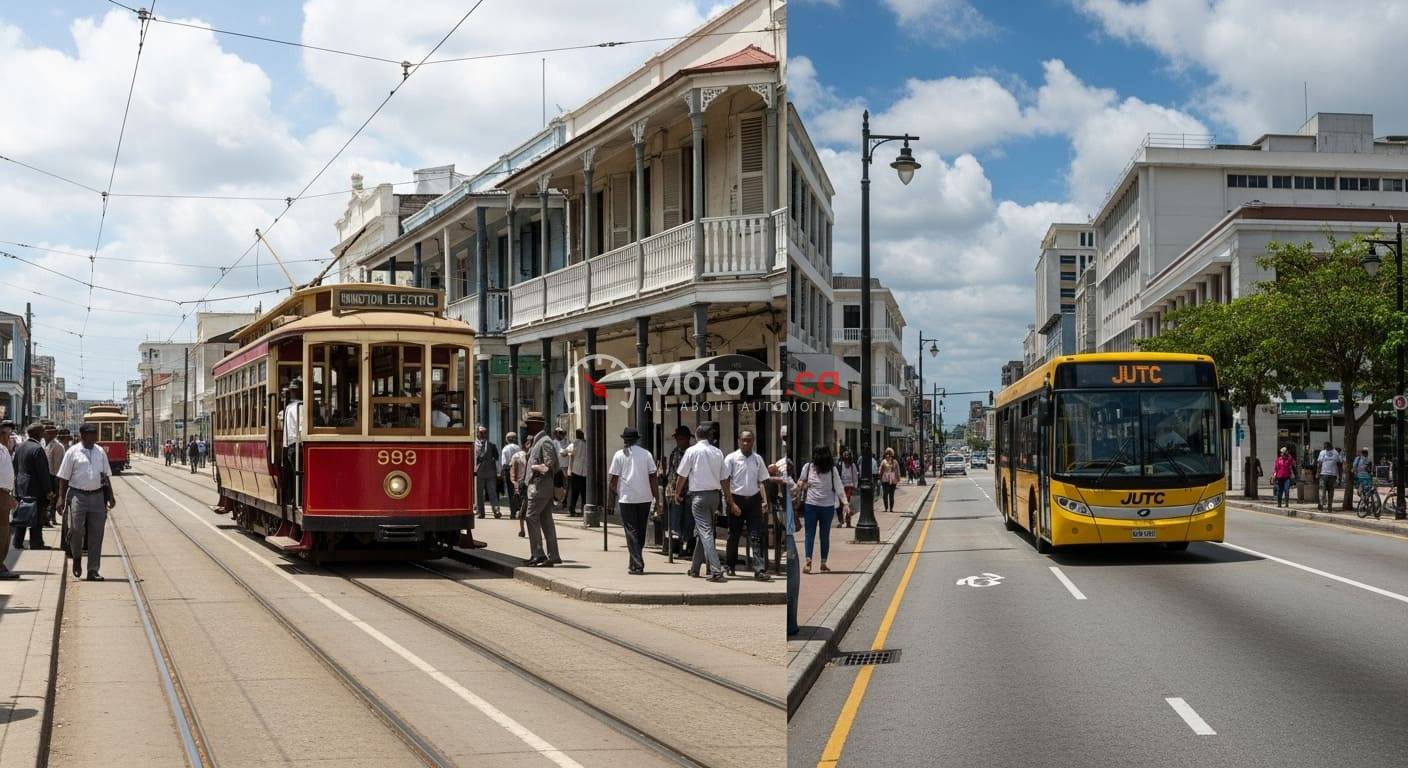

For millions of Evolution of Public Transport, the beat of Kingston, Jamaica is felt not just in its music, but in the rhythm of its public transport. It’s a complex, often chaotic, yet utterly essential system that moves the nation’s lifeblood. From the early days of sprawling bus networks to the rise of the ubiquitous route taxi and the massive consolidation under the Jamaica Urban Transit Company (JUTC), the journey has been long, colourful, and marked by constant reinvention.
Now, as the world pivots towards Evolution of Public Transport and smart infrastructure, Kingston finds itself at a critical juncture. The familiar diesel engines and loud exhausts are beginning to share the road with quieter, greener technologies. The question is: How prepared is the capital to transition from the era of the Coaster to the future of the electric vehicle (EV)?
This in-depth look explores the dramatic evolution of public Evolution of Public Transport in Kingston. We will dissect the eras—from the private operators that defined the past to the integrated technology and environmental challenges shaping the future. Understanding this history and the current technological push is key to comprehending the future of commuting in the Kingston Metropolitan Area (KMA).
The Golden Era of Private Operators and the Evolution of Public Transport
Before the era of centralized services, Kingston’s transportation landscape was characterized by decentralized, entrepreneurial, and sometimes unreliable private services.
The Iconic Coaster and Minibus Culture
The Japanese Toyota Evolution of Public Transport bus became synonymous with public transit in the 1980s and 90s. These vehicles, often customized and driven by independent contractors, formed a highly flexible but loosely regulated network.
Pros and Cons: While offering high frequency and covering diverse routes, this era suffered from route competition, unpredictable schedules, and a lack of standardized safety regulations, often leading to traffic congestion and chaotic loading zones.
The Birth of the Route Taxi: As the city grew, the smaller route taxi—often a sedan—emerged to fill the demand for faster, more direct point-to-point travel, especially in densely populated areas like Spanish Town Road and Portmore.
The Problem of Informal Transport
A persistent challenge throughout this period was the proliferation of informal or robot taxis—unlicensed operators who, while filling gaps in Evolution of Public Transport, undermined safety standards and government revenue, complicating efforts to create a unified public transit system.
Keywords: Route taxi, Coaster bus, private operators, traffic congestion, robot taxis, Kingston transit.
The JUTC Revolution: Consolidation and Infrastructure
The establishment of the Jamaica Evolution of Public Transport Transit Company (JUTC) in 1998 marked the most significant structural change in Kingston’s public transport history, aiming to formalize, centralize, and improve the quality of service.
Standardizing the Fleet and Service
JUTC replaced the fragmented private system with a uniform fleet of large, high-capacity buses, significantly improving rider capacity and Evolution of Public Transport on major routes.
Dedicated Bus Lanes and Infrastructure: Efforts were made to establish dedicated bus stops and, crucially, dedicated bus lanes on major corridors. While implementation has faced challenges, these lanes are vital for improving journey times and efficiency in heavy Kingston traffic.
Introduction of Technology: JUTC pioneered the introduction of standardized ticketing systems and, later, the use of GPS tracking on buses to monitor routes, ensuring adherence to schedules and improving security.
Challenges of Scale and Maintenance
Despite the centralization, JUTC faced persistent issues related to the high cost of maintenance for its large diesel fleet, fuel Evolution of Public Transport, and the perennial struggle to compete with the faster, though often more expensive, route taxis. This highlights the need for continuous public sector investment in modern fleet management.
Keywords: JUTC, bus lanes, public transport infrastructure, GPS tracking, fleet management, centralized service.
The Digital Leap: Apps, Data, and Smarter Commuting
The integration of smart technology is the latest chapter in Kingston’s transport evolution, moving beyond simple transit to optimizing the commuter experience.
The Role of Ride-Sharing and Mobile Apps
The global rise of ride-sharing platforms (both official and informal) has dramatically changed how many middle-class commuters access Evolution of Public Transport transport.
Uber and Local Competitors: The growth of local apps and the adoption of international models allow users to book, track, and pay for services digitally, providing unprecedented convenience and transparency—a direct challenge to the traditional, cash-based route taxi model.
Real-Time Information: Modern transit planning hinges on data. Apps and digital signage at major terminals (like Half-Way-Tree) offer real-time bus tracking and schedule updates, empowering riders to make informed decisions and reducing wait times.
Smart Ticketing and Cashless Payments
The shift away from cash toward digital and Evolution of Public Transport payment solutions is crucial for efficiency, security, and reducing fraud across all public transport sectors. Smart cards and mobile payment options are becoming the standard for JUTC and integrated services.
Keywords: Ride-sharing, mobile apps, smart ticketing, cashless payments, real-time tracking, digital transformation.
The Future is Electric: From Diesel to Decarbonization
The global push for climate action and the need to reduce Jamaica’s reliance on imported fossil fuels are driving the most disruptive change yet: the adoption of electric vehicles (EVs) in public transport.
Introducing the Electric Bus and Taxi Fleet
The government and JUTC are actively Evolution of Public Transport and piloting electric buses and electric taxis. These vehicles promise a radical reduction in local pollution, lower operating costs (fuel vs. electricity), and a quieter city soundscape.
Total Cost of Ownership (TCO): While the initial purchase price of an electric bus is higher, the TCO—factoring in lower maintenance (fewer moving parts) and cheaper energy costs—makes them economically viable for the long term, reducing dependency on oil price volatility.
Charging Infrastructure Challenge: The biggest hurdle is developing reliable, widespread EV charging infrastructure across the KMA and integrating this demand into the national energy grid without causing blackouts.
Policy and Incentives for Green Transport
The transition requires more than just new Evolution of Public Transport; it requires supportive government policy. Incentives for private taxi operators to convert or upgrade to electric vehicles and investment in renewable energy sources to power the charging network are critical next steps toward a sustainable public transport system.
Keywords: Electric vehicles (EVs), Evolution of Public Transport, decarbonization, charging infrastructure, sustainable transport, Total Cost of Ownership (TCO).