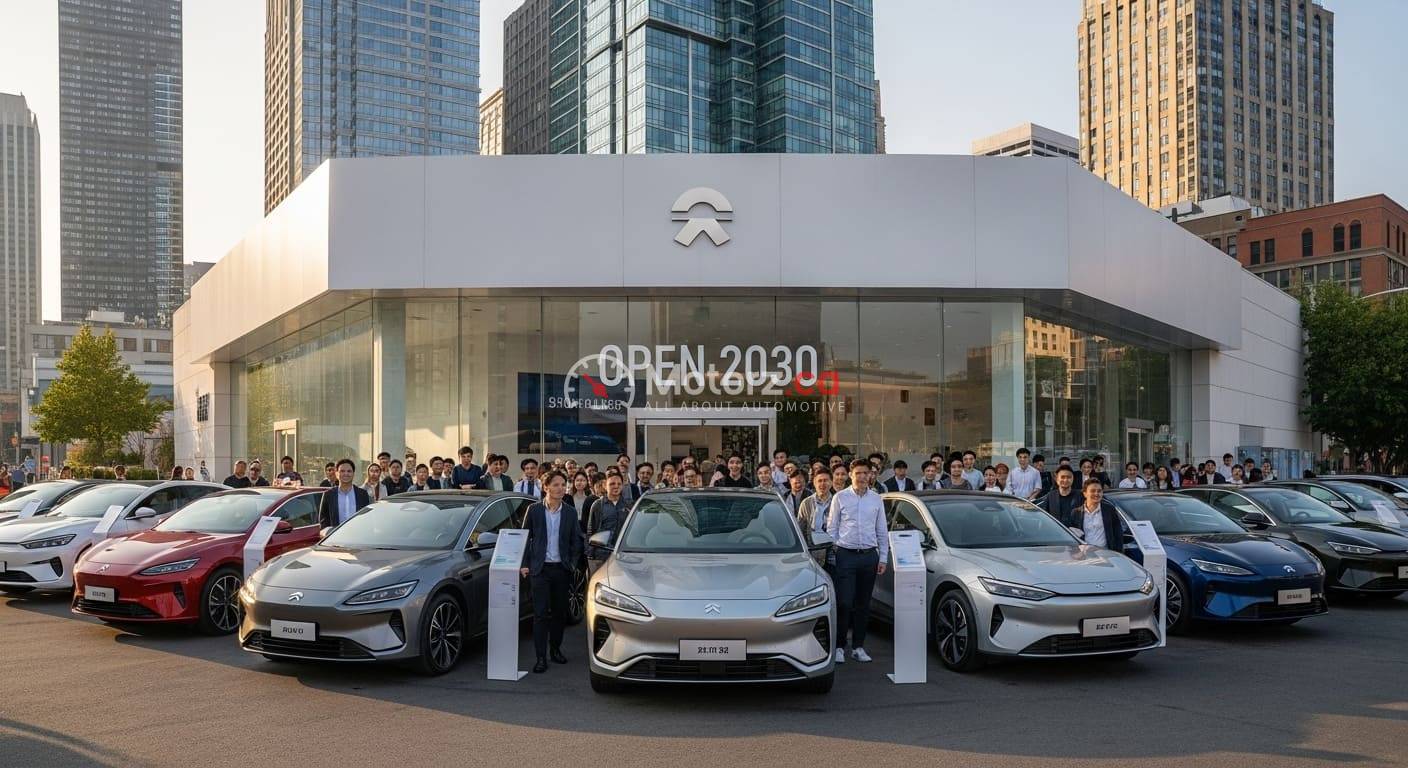
For decades, the Chinese Automakers are Poised—the United States and Canada—has been dominated by the Big Three (General Motors, Ford, and Stellantis) and established players from Japan, South Korea, and Germany. The idea of a significant influx of vehicles from Chinese automakers seemed distant, hindered by trade barriers, skepticism over quality, and a lack of established brand identity.
However, the rapid and often overlooked transformation of the global automotive landscape is setting the stage for one of the biggest market shake-ups in a generation. By 2030, analysts project that the Chinese automotive industry will be an unavoidable, potent force in North America. This disruption will not arrive through traditional, slow expansion but through a perfect storm of technological superiority, economic necessity, and a geopolitical pivot that few Western consumers are currently prepared for.
The story is simple: Chinese firms like BYD, Geely, NIO, and XPeng have perfected the electric vehicle (EV) ecosystem, creating products that are often more technologically advanced and significantly more cost-competitive than their Western Chinese Automakers are Poised. While immediate entry is complicated by tariffs and regulatory hurdles, the global market saturation and sheer manufacturing scale of these giants mean they must find a way into this high-value market.
The Global Footprint Chinese Automakers are Poised
To understand the threat to the North American market, one must first recognize the sheer scale of the Chinese automotive export drive that has occurred in the mid-2020s.
Dominance in Emerging and Developed Markets
While US and Canadian consumers rarely see a BYD Chinese Automakers are Poised car, these brands are already market leaders in vast swaths of the globe.
Europe: Chinese brands have intensified their offensive in the world’s second-largest EV market, capturing over 10 percent market share in several European countries.
Emerging Markets: In regions like Southeast Asia, Latin America, and the Middle East (Thailand, Israel, Brazil), Chinese brands now command market shares exceeding 80 percent, rapidly displacing Japanese and Korean incumbents in the transition from internal combustion engine (ICE) vehicles to EVs.
Scale and Volume: China maintains market Chinese Automakers are Poised with a phenomenal 51 percent EV penetration rate in 2025, supported by strong domestic manufacturing and comprehensive charging infrastructure. By 2030, China is projected to manufacture four out of every ten cars built in the world, with annual auto exports potentially hitting nine million Chinese Automakers are Poised. This immense production capacity creates an economic imperative to find new global buyers.
The Vertical Integration Advantage
Chinese automakers have achieved their cost and speed advantage through vertical integration, a strategic model that Detroit has struggled to replicate.
Supply Chain Mastery: Companies like BYD control nearly every step of the EV production process, from the sourcing and processing of raw lithium and rare earth materials to the manufacture of proprietary Blade Batteries and semiconductors, right up to the final vehicle assembly. This unparalleled control minimizes logistical costs, shields them from many supply chain disruptions, and allows for much faster product development cycles (often 18 months versus five to seven years for legacy automakers).
Affordability Strategy: This integration leads directly to the core disruptor: unbeatable pricing. Chinese manufacturers are known for their ability to deliver high-content, technologically rich EVs at price points significantly below those offered by Western and Japanese rivals, a strategy that directly targets the crucial middle-class buyer who is currently heectronics first and a machine second.
Intelligent Systems: Brands like NIO and XPeng are Chinese Automakers are Poised in the development of sophisticated Advanced Driver-Assistance Systems (ADAS) and in-car AI. BYD’s XUANJI Architecture and its pioneering XUANJI AI Large Model integrate AI across all vehicle domains, from real-time environmental perception to advanced safety features.
Connectivity: The emphasis on advanced connectivity, massive digital screens, and seamless integration with the mobile ecosystem caters perfectly to the Millennial and Gen Z buyers who prioritize digital features and are less tethered to traditional brand loyalty.
Navigating the North American Trade Barrier
The single greatest hurdle for Chinese EV manufacturers remains the high tariffs and protectionist policies in place across the United States and Canada, notably the steep tariffs on vehicles imported directly from China. The current geopolitical landscape is designed to prevent an “extinction-level event” for the established American auto industry.
The Tariff Evasion Strategy: Made in Mexico and Beyond
The obvious solution for Chinese brands is to bypass direct import tariffs by utilizing the North American supply chain and leveraging trade agreements like the United States-Mexico-Canada Agreement (USMCA).
Nearshoring Production: The construction of manufacturing plants in Mexico is the most likely and aggressive path. By establishing final assembly facilities in Mexico, Chinese automakers can potentially qualify their vehicles for reduced tariffs, enabling them to compete on price with locally assembled vehicles. This strategy redirects production capacity from Asia to the North American border, fundamentally altering the automotive supply chain.
Partnering with Non-Chinese Brands: Chinese-owned entities, such as Geely, are already firmly established in the North American market through their ownership of Volvo and a major stake in its EV subsidiary, Polestar. Furthermore, Geely also controls Lotus and has a share in Smart Automobile. They could leverage these global brands and their existing distribution networks and manufacturing footprints (in Europe and the US) to introduce components and eventually, entire platforms, under a more familiar umbrella.
Brand Obfuscation and Market Entry
Some Chinese firms may utilize strategies to “downplay the company’s home-country identity” when entering foreign markets.
New Brand Launch: Launching entirely new, Western-sounding brands, built specifically for the North American aesthetic and safety standards, is a clean-slate approach to overcoming consumer perceptions and political resistance.
The Component Wars: Even if passenger cars face high tariffs, the introduction of Chinese-made EV components (batteries, thermal management systems, charging units) at highly competitive prices into the North American manufacturing base is inevitable and is already occurring, increasing the dependency of American vehicles on Chinese supply chains.
The BYD and Geely Playbook: The Frontrunners
The two primary forces expected to lead the disruption are BYD and the Geely Holding Group, each employing distinct but powerful strategies.
BYD: The Volume and Technology Giant
BYD, having surpassed major rivals in global EV sales, has the scale and technology to launch a decisive attack.
The Price Disruptor: Their primary weapon is price. BYD’s vertical integration allows them to offer EVs at prices that the US market has not yet seen in the current high-cost EV environment. This directly addresses the biggest barrier to EV adoption in North America: affordability.
The Phased Approach: BYD has already gained a foothold in North America by selling electric buses and commercial vehicles (such as electric forklifts), gaining familiarity with US regulations and operating conditions. Passenger vehicle entry is the inevitable next step.
Geely: The Corporate Empire Builder
Geely’s strategy is less of a frontal assault and more of an internal flanking maneuver.
Leveraging Existing Brands: Geely utilizes its controlling stakes in Volvo and Polestar to gain market experience and develop platforms that can be shared globally. The premium Zeekr brand, a high-tech EV line, is already expanding aggressively in Europe and is a prime candidate for a North American launch, leveraging a sophisticated, digital-first retail model.
Acquisition Strategy: As the global automotive industry consolidates, Geely has the financial firepower to acquire struggling or smaller niche brands, using them as Trojan horses to quickly establish a manufacturing and retail presence in the US and Canada.
The Future Landscape: 2030 and Beyond
By 2030, the North American auto market will look significantly different, regardless of current policy decisions. The momentum of Chinese production and technological development is simply too vast to ignore.
Increased Consumer Choice and Affordability
The most immediate benefit for North American consumers will be a massive increase in the selection of affordable electric cars and a subsequent drop in the pricing of entry-level EVs across the board. The traditional automakers will be forced to compete on price and features, accelerating the entire EV transition.
Geopolitical and Economic Friction
The entry of Chinese automakers will be met with significant political and economic friction. Debates over labor standards, environmental regulations, and the use of government subsidies will intensify. Policy decisions around the extension or modification of tariffs will become a central feature of North American trade and industrial policy through the decade.
A Decade of Disruption
The shift will mark the first time since the entry of Japanese automakers in the 1970s and 80s that Detroit has faced a technological and cost-based threat of this magnitude. The year 2030 is not the end of the disruption, but the point at which the presence of Chinese automakers—whether directly branded or leveraging local production—becomes a permanent, undeniable part of the North American automotive ecosystem. The market is Chinese Automakers are Poised for the unexpected, and the consumers are set to reap the rewards of unprecedented global competition.