




The Performance Flagship Arrives: Why the Magma GT is More Than Just a Concept Car
For years, the Genesis Unleashes the Magma GT Concept has successfully established itself as a formidable contender in the luxury sedan and SUV markets, challenging German and Japanese rivals with striking design, premium interiors, and aggressive pricing. But one area remained unchallenged: the high-performance, track-ready supercar. The brand’s design language, dubbed “Athletic Elegance,” always hinted at power, but it lacked a true, dedicated performance flagship—a halo car to sit at the apex of its lineup.
That era of restraint is officially over.
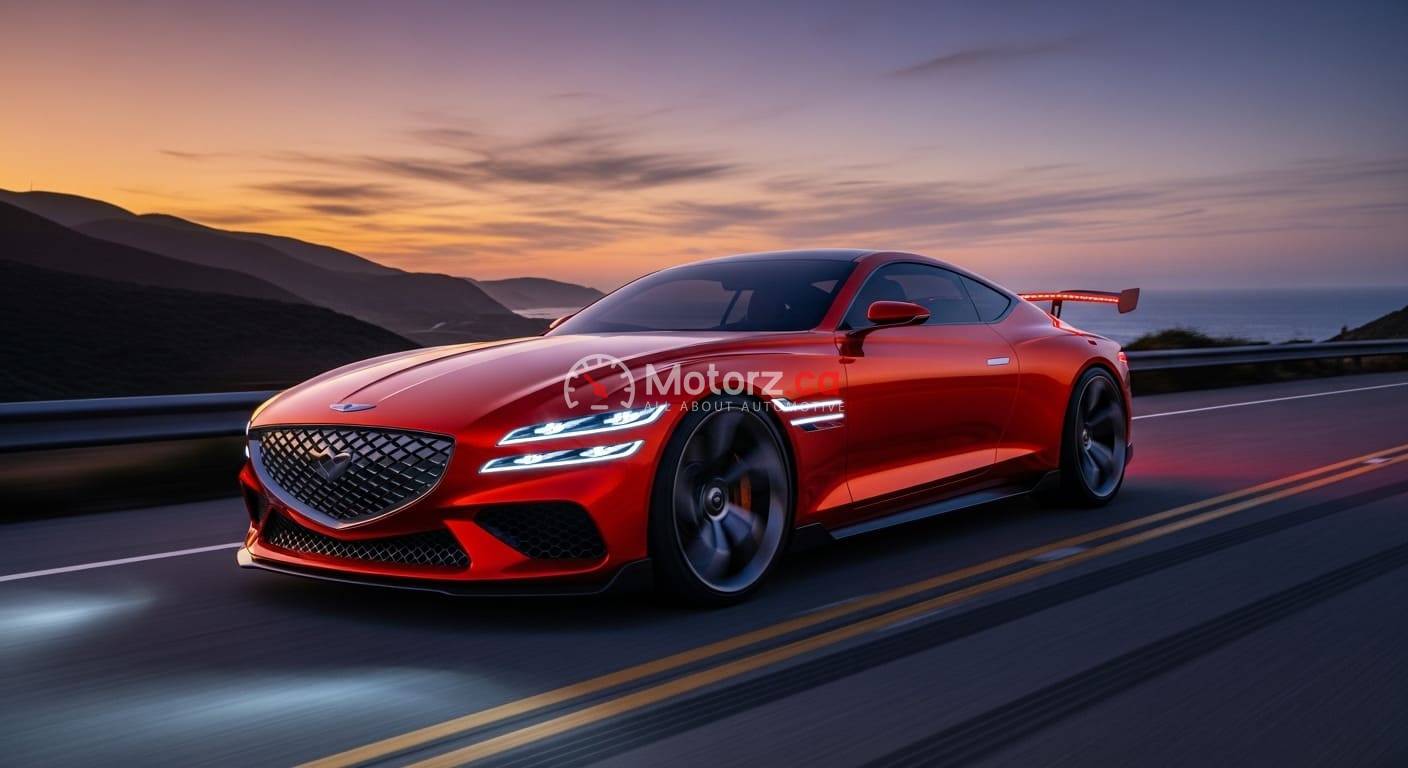
The unveiling of the Genesis Magma GT Concept is not merely another design study; it is a strategic declaration of intent. Revealed in the signature “Magma Orange” hue, this two-door, mid-engined sports car serves as the “symbolic foundation” for the new Genesis Magma high-performance sub-brand, aiming squarely at established rivals like the Porsche 911, Mercedes-AMG GT, and the hybrid offerings from Lamborghini and Ferrari.
This concept is a clear roadmap, announcing two massive corporate goals: the launch of a dedicated performance road-car division and the brand’s ambition to enter the highly competitive GT racing class. This article dives deep into the design philosophy, technical hints, and monumental implications of the Magma GT Concept, which promises to be Genesis’ most potent and important vehicle of the decade.
Magma: The Birth of Genesis’ Performance Sub-Brand
The Magma GT Concept is the crown jewel of the Genesis Magma performance division, which is being positioned as the Korean luxury brand’s answer to BMW’s M and Mercedes-Benz’s AMG.
Defining the Magma Philosophy
The core ethos of the Magma sub-brand is “Effortless Performance.” According to Genesis’ Chief Creative Officer, Luc Donckerwolke, the Magma models are not defined by “raw aggression or uncompromising speed,” but by balance, refinement, and driver connection.
The Signature Hue: The Magma Orange color is more than a paint job; it’s a philosophical marker. Inspired by the emotion and vibrancy of Korea’s culture and its volcanoes, the color instantly separates the Magma vehicles from the standard Genesis palette, signaling elevated performance and exclusivity.
A Two-Pronged Approach: The Magma division is launching with vehicles across the entire lineup, not just this supercar:
The Production EV: The GV60 Magma (based on the E-GMP platform shared with the Hyundai Ioniq 5 N) serves as the first high-volume production model, offering a dual-motor, 641-horsepower, all-wheel-drive performance electric crossover.
The Halo Flagship: The Magma GT Concept is the ultimate expression, a purist, track-focused machine designed to command attention and redefine the brand’s perception.
Mid-Engine Layout: A Serious Statement of Intent
Unlike the previous beautiful but conceptual “X Gran Berlinetta” and “X Speedium Coupe” concepts, which retained a front-engine, cab-back proportion typical of grand tourers, the Magma GT adopts a fundamental shift in architecture.
Optimal Balance: The mid-rear engine layout is the undisputed gold standard for pure sports car handling, prioritizing centralized mass and optimal weight distribution for dynamic track capability. This configuration immediately signals that the Magma GT is a purpose-built rival to the Corvette C8 and various European supercars, moving beyond the traditional GT segment.
GT Racing Foundation: The mid-engine layout is a prerequisite for entry into the premier GT racing classes (like FIA GT3). By designing the road car with this architecture, Genesis is laying the required foundation for eventual track homologation, directly tying the production model’s fate to the brand’s motorsport aspirations.
Design Language: Athletic Elegance Meets Race Functionality
The Magma GT Concept takes Genesis’ “Athletic Elegance” design philosophy and injects a massive dose of functional aerodynamics and racing aggression.
Aerodynamics Dictate the Form
Every line and proportion on the Magma GT is meticulously sculpted to optimize airflow and stability—a requirement for its track ambitions.
The Low-Slung Profile: The design features a dramatically low-set front bonnet that flows into an elongated, almost teardrop-shaped cabin, culminating in a striking, tapered boat-tail rear section. This silhouette maximizes aerodynamic efficiency and minimizes drag.
Functional G-Matrix: The brand’s signature Crest Grille has evolved into a functional air intake, and the G-Matrix pattern (the familiar diamond mesh) expands into the front splitter and side skirts, serving as functional elements that channel airflow for cooling and downforce.
The Quad Lights Evolve: The trademark Two-Line lighting signature remains, but is dramatically adapted. The front lines integrate seamlessly with functional canards (small winglets) to increase downforce, while the mechanical rear light bars widen the car’s visual stance, emphasizing its stability and planted posture.
Butterfly Doors: Adding a touch of pure hypercar drama, the Magma GT features large butterfly doors, underscoring its status as a technological and design flagship.
Interior Philosophy: Beauty of White Space for the Track
While the concept’s interior details remain minimal, the stated philosophy emphasizes a driver-focused, purist environment.
Pilot-Centric Cockpit: The goal is to apply the Genesis ethos of “Beauty of White Space”—reducing clutter and prioritizing essential information—to the race track. This translates to an environment where distractions are minimized, and every touchpoint, from the steering yoke to the padded, quilted bolsters of the Recaro-style seats, is designed to enhance driver focus and responsiveness.
Carbon Fiber and Composites: To achieve the necessary lightweight structure for high performance, the use of extensive carbon fiber and other composite materials is hinted at throughout the chassis and cabin, ensuring the Magma GT will be a genuine featherweight contender in the segment.
Powertrain and Production: The V8-Hybrid Speculation
Genesis has been deliberately vague about the precise powertrain, but the context of the Magma GT’s reveal strongly hints at a direction that blends traditional high performance with modern hybrid assistance.
The Internal Combustion Clues
Despite Genesis’ broader commitment to electrification, the Magma GT Concept appears to be powered by an internal combustion engine (ICE), or at least a powerful hybrid system built around an ICE.
The V8 Rumble: Reports from the concept’s European reveal confirmed a distinct V8 rumble, suggesting a modified version of the high-revving V8 currently being developed for the GMR-001 Hypercar that Genesis Magma Racing (GMR) is preparing for the World Endurance Championship (WEC).
Hybrid Power Targets: To compete with modern European rivals like the Ferrari 296 GTB and Lamborghini Temerario, which rely on plug-in hybrid V6 and V8 systems, the production Magma GT is likely targeting a combined output that easily exceeds 800 horsepower. The Genesis X Gran Berlinetta VGT Concept previously demonstrated this ambition with its V6-Hybrid system generating over 1,071 hp.
The “Effortless” Equation: The hybrid assist would not only boost power but also provide instantaneous torque fill, aligning perfectly with the brand’s stated goal of Effortless Performance and superior composition under pressure.
The Road Ahead: A Production Promise
Unlike many fanciful concepts, the Magma GT is being treated as a near-production prototype. The brand’s spokespeople have clearly stated that this is “more than a design study” and that the model is “slated to mature into a road-going halo car by the end of the decade.”
GT3 Homologation: A key driver of the production decision is the need for homologation—Genesis must build a required number of road-going versions (typically around 30 for the GT3 class) to qualify its race car for competition. This ensures the Magma GT will exist beyond the auto show circuit.
The 911 Strategy: Genesis leadership has also hinted at a strategy mirroring the Porsche 911, suggesting that the Magma GT could evolve into a range of variants: from a base model (Magma GT) to more extreme versions (Magma GT S, GT R, GT Roadster), ensuring a long-term, profitable flagship presence.
Challenging the Performance Hierarchy
The Genesis Magma GT Concept is the luxury brand’s biggest statement yet. It leverages the global racing stage and a new performance sub-brand to fundamentally change how the world views Korean luxury. By focusing on a dedicated mid-engine platform, aggressive yet functional design, and hints of a powerful V8-hybrid powertrain, Genesis is making a serious, costly, and ambitious bid for supremacy.
This car, and the Magma line it spearheads, completes Genesis’ transition from a stylish luxury challenger to a fully formed global performance icon, ready to trade blows—and lap times—with the industry’s long-standing elite. The Magma GT is not just a halo car; it is the ultimate expression of the brand’s global ambition for the next decade.