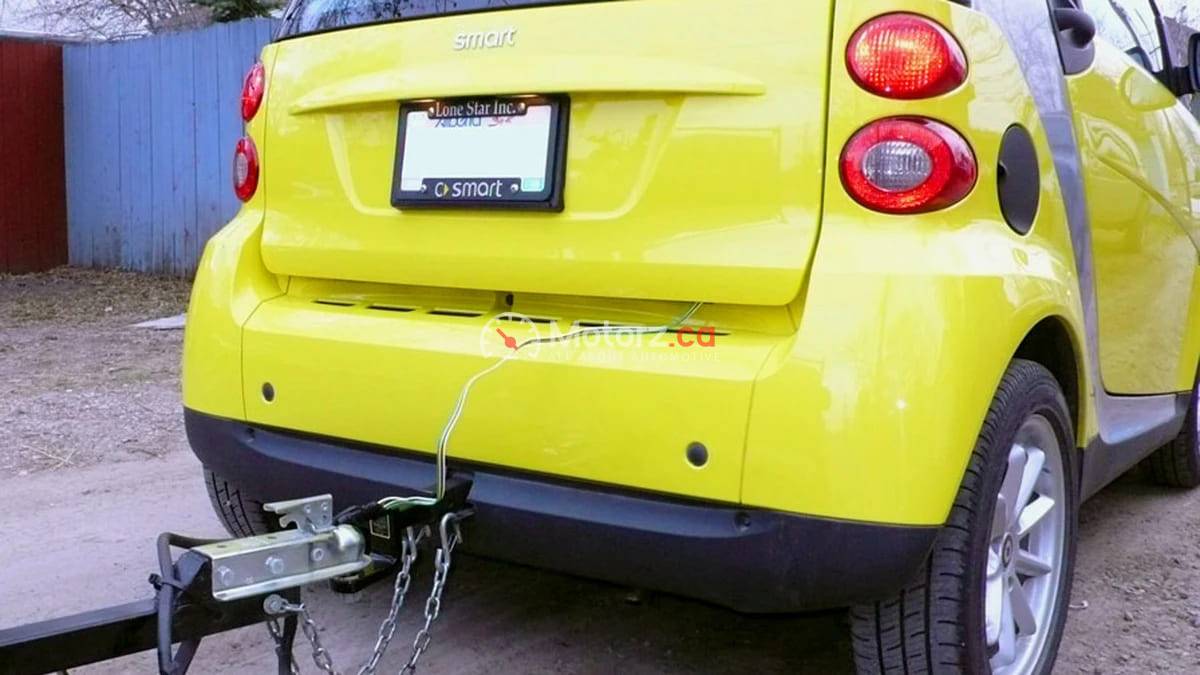
For Towing Capacity, the math of towing was simple. If you had a heavy load, you bought a vehicle with a big engine, a beefy radiator, and a heavy-duty frame. From the family camper to the weekend boat trip, towing was a core pillar of North American automotive culture. But as we move through 2026, the landscape looks drastically different. We are seeing smaller turbocharged engines replacing V8s, the rapid rise of Electric Vehicles (EVs), and a shift toward “unibody” crossovers that prioritize fuel economy over raw pulling power.
In the world of “The Corner Wrench,” we are hearing the same question from drivers in Calgary, Vancouver, and beyond: “Where did all the towing capacity go?” It feels as though the industry is pivoting away from the rugged utility that once defined the truck and SUV segments. But has the industry truly given up, or is the nature of towing simply evolving into something new?
At Motorz, we live for the technical details. Today, Lorraine Explains why your new SUV might have a lower tow rating than the model it replaced, the “hidden” engineering behind modern tow ratings, and how 2026 technology is actually making towing safer—even if the numbers on the bumper look a little different.
The Displacement Dilemma: Smaller Engines and Turbocharging
The biggest shift in the last few years has been “downsizing.” The rumbling 5.7L or 6.2L V8 engines of the past are being phased out in favor of 2.0L or 3.0L turbocharged engines. Many enthusiasts at “The Corner Wrench” worry that these smaller powerplants aren’t up to the task of hauling heavy loads.
Torque vs. Horsepower
Automakers haven’t necessarily given up on Electric Vehicles; they have changed how they deliver it. Modern turbocharged engines often produce more “low-end torque” than the old V8s. Torque is the force that gets a heavy trailer moving from a dead stop. However, the trade-off is heat. Turbochargers generate immense heat, and when you are pulling a 5,000-pound trailer up a mountain pass in British Columbia, that heat can push the cooling system to its absolute limit.
Transmission Stress
It isn’t just the engine that has changed. We have moved from 4-speed and 6-speed transmissions to 10-speed units and even CVTs (Continuously Variable Transmissions). While a 10-speed transmission is excellent for keeping an engine in its “power band,” it adds complexity. More moving parts mean more potential for heat buildup, which is why many modern vehicles now require specialized auxiliary transmission coolers just to hit their maximum rated capacity.
The EV Revolution: The Highs and Lows of Electric Towing
Electric Vehicles are the elephant in the room when it comes to the future of towing. On paper, an EV is the perfect towing machine. An electric motor provides 100 percent of its torque at zero RPM, meaning you can pull a trailer off the line with effortless smoothness.
The Range Penalty
The “Big Problem” for EVs isn’t power; it’s physics. Aerodynamic drag is the enemy of range. When you hitch a large, boxy travel trailer to an EV, the driving range can drop by 50 percent or more. For a driver trying to cross the Canadian prairies, a 400-kilometer range suddenly becoming a 180-kilometer range is a major hurdle.
Infrastructure Challenges
Most current charging stations are designed as “pull-in” spots, similar to a standard parking space. If you are towing a 20-foot trailer, you often have to unhitch the trailer just to reach the charger. Until “pull-through” charging lanes become the standard, automakers haven’t given up on EV towing—but the infrastructure certainly has.
Unibody vs. Body-on-Frame: Why Ratings are Dropping
If you look at the mid-size SUV market, many vehicles that used to be “body-on-frame” (like a truck) have transitioned to “unibody” construction (like a car). This change is great for ride comfort and safety, but it fundamentally changes how a vehicle handles a trailer.
Structural Rigidity
A body-on-frame vehicle has a thick steel “ladder” underneath that absorbs the stress of a trailer pushing and pulling on the hitch. In a unibody vehicle, the entire body of the car is the structure. If you tow too much, you risk literally “tweaking” the body of the car, leading to misaligned doors or cracked windshields.
Payload vs. Towing
Automakers are also facing stricter “Payload” limits. Payload is the total weight of the passengers, cargo, and the “tongue weight” of the trailer. As we add more safety tech, panoramic sunroofs, and heavy battery packs to vehicles, the remaining weight available for a trailer decreases. You might have the power to pull 7,000 pounds, but if your suspension can only handle 500 pounds of tongue weight, your actual towing capacity is much lower.
The SAE J2807 Standard: The Real Reason Numbers Changed
You might notice that a truck from 2010 was rated for 10,000 pounds, while a similar truck today is rated for 9,200. This doesn’t mean the new truck is weaker; it means the testing got harder.
The “Davis Dam” Test
In the past, automakers could essentially “guess” their tow ratings. Today, almost every manufacturer follows the SAE J2807 standard. This involves a brutal series of tests, including a launch on a 12 percent grade and a long climb up the Davis Dam in Arizona in high heat without the engine overheating or losing speed.
The Result: Modern tow ratings are “honest” ratings. When a 2026 vehicle says it can tow 5,000 pounds, it means it can do so safely, repeatedly, and without damaging the powertrain.
The Future of the Hitch
So, have automakers given up on towing? The answer is a resounding no, but they have stopped prioritizing it for “every” vehicle.
Specialization: Instead of making every SUV a “tow rig,” brands are creating specialized “Tow Packages” with upgraded cooling, different gear ratios, and reinforced frames.
Tech Integration: We now have “Smart Hitches” that weigh your trailer, cameras that allow you to “see through” the trailer, and backup assist systems that steer the trailer for you.
Hybrid Power: The middle ground is the Hybrid. By combining a turbocharged engine with an electric motor, automakers are finding a way to provide the torque needed for towing while maintaining the fuel efficiency required by law.
At Motorz, we believe that towing is still a vital part of the automotive experience. It just requires more research than it used to. Don’t just look at the brochure; look at the door jamb sticker for your specific “Payload” and “GVWR.” If you do your homework and keep your “Corner Wrench” ready for maintenance, you can still haul your world behind you with confidence.