




For decades, the standard measure of vehicle safety has been based almost entirely on the anatomy of the average adult male. This pervasive, gender-biased testing methodology has contributed to a well-documented and concerning reality: women are significantly more likely than men to suffer serious or fatal injuries in car crashes of comparable severity, even when wearing seat belts.
The tide is finally turning. The United States National Highway Traffic Safety Administration (NHTSA) and the Department of Transportation (DOT) have unveiled the design details for a revolutionary new safety tool: the THOR-05F (Test device for Human Occupant Restraint, 5th-percentile Female). This advanced female crash test dummy is the first of its kind in the US to be specifically designed to reflect the biomechanical and anatomical differences between male and female bodies.
This pivotal development is set to redefine federal safety standards, forcing automakers to design vehicles that offer truly equitable protection for all occupants. This article dives into the crucial deficiencies of current crash testing, the advanced features of the new THOR-05F, and the timeline for its long-awaited deployment that will finally begin to close the safety gap for women drivers and passengers.
The Safety Gap: Why Current Crash Tests Fail Women
The higher injury rates for women are not random; they are a direct consequence of decades of safety testing that used inadequate and often scaled-down male models.
The Problem with the Crash Test Dummy
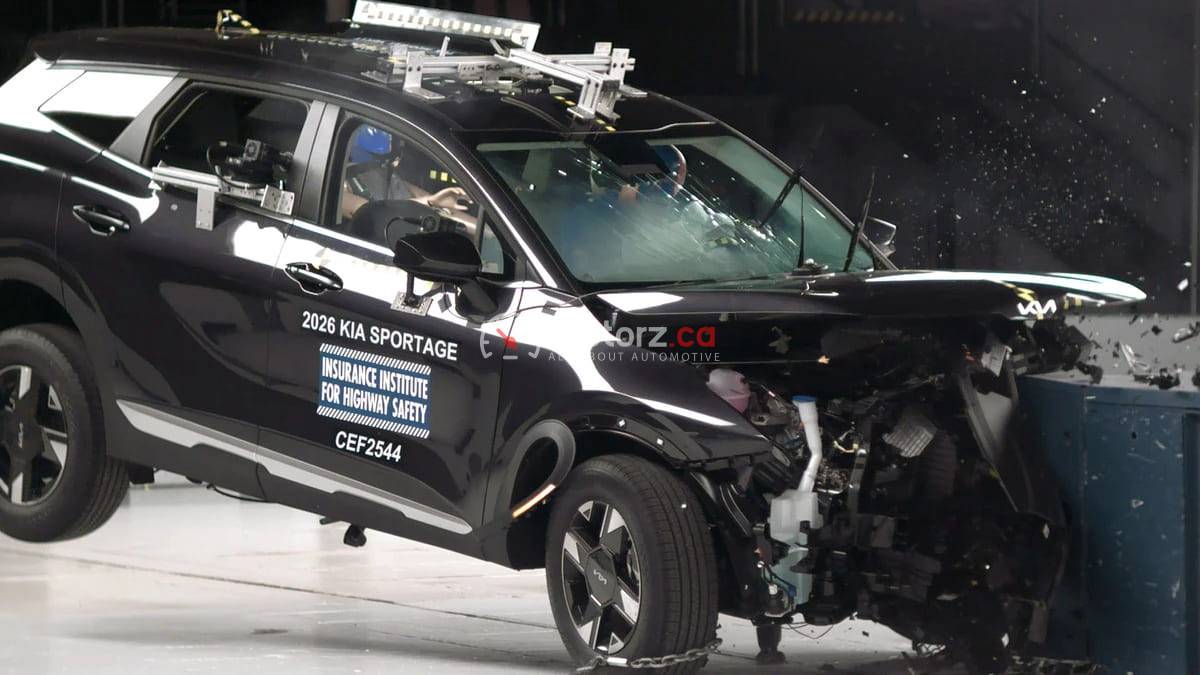
The current industry standard for frontal crash testing, the Hybrid III 50th percentile male dummy, represents the average male from the 1970s (approximately 5 feet 9 inches tall and weighing 171 pounds).
The Male Standard: Vehicle safety features—from seatbelt tensioners and airbags to the crush zones of the chassis—have been optimized to protect this male body type.
The Scaled-Down “Female” Dummy: For years, the only female-representing dummy used in US frontal crash tests was the Hybrid III 5th percentile female (4 feet 11 inches tall, 108 pounds). Critically, this dummy was not designed based on female anatomy; it was simply a scaled-down, shorter, and lighter version of the male dummy.
Lack of Anatomical Fidelity: This scaled-down model fails to capture essential female anatomical differences that affect crash injury patterns, such as the shape of the pelvis, the curvature of the spine, muscle composition, and the lower strength of the neck and ligaments.
Documented Disparities in Crash Injuries
The consequence of this testing disparity is a stark difference in real-world injury rates, even when accounting for crash severity and vehicle type.
Severe Injury Risk: Belt-restrained female drivers are approximately 47 percent more likely than their male counterparts to sustain severe injuries in comparable frontal crashes.
Vulnerable Body Regions: Women are significantly more prone to specific injuries in collisions, including:
Lower Leg/Foot Injuries: Due to differences in knee and leg alignment relative to the dashboard and firewall.
Whiplash: Due to lower neck strength and head-to-neck mass ratio.
Abdominal/Pelvic Injuries: Due to the distinct shape of the female pelvis, which affects how the seatbelt holds the body in a crash. Studies show women experience about 80 percent more injuries to these four areas compared to men.
Inaccurate Driver Placement: Furthermore, the smaller 5th percentile dummy was historically often placed in the passenger seat, reinforcing the bias and failing to test the safety systems from the perspective of the majority of licensed drivers.
Introducing THOR-05F: The Next Generation of Safety Testing
The development of the THOR-05F represents a commitment by NHTSA to leverage modern biomechanics and close the long-standing safety gap. This dummy is significantly more advanced and anatomically accurate than any female model previously used in US federal testing.
Key Anatomical and Sensor Advances
The THOR-05F is a state-of-the-art Anthropomorphic Test Device (ATD), designed from the ground up to mimic the human body’s response with unparalleled fidelity.
The Focus on Female-Specific Vulnerabilities
The advanced sensor technology and anatomical design directly target the areas where women face the highest injury risk:
Lower Leg Sensors: A large number of sensors are concentrated in the lower legs to gather precise data on injury forces, directly addressing the higher risk of lower extremity injuries in women.
Abdomen and Pelvis: The specialized, rounded pelvis design interacts differently with the lap belt, allowing engineers to fine-tune seatbelt geometry, pretensioners, and force limiters for women. Data collected here will inform designs that prevent submarining (sliding under the lap belt) and organ damage.
Advanced Neck and Spine: The THOR-05F’s neck and spine are designed to more accurately reflect the lower muscle mass and ligament structure of the female body, providing better data on whiplash and spinal injury dynamics in frontal and rear-end collisions.
The Road Ahead: Timeline and Regulatory Impact
The unveiling of the THOR-05F design details is a massive step, but its full impact on vehicle safety standards will be realized over the next few years.
From Design to Deployment
The process of incorporating a new dummy into federal safety testing is rigorous and time-intensive.
Availability and Cost: With the design specifications now finalized and published, dummy manufacturers (like Humanetics) can begin building the physical models. Individual THOR-05F units are complex and expensive, potentially costing over 1 million each.
Testing Integration (2027–2028): The new advanced female dummy is unlikely to be fully integrated into the federal New Car Assessment Program (NCAP), which assigns consumer star ratings, before 2027 or 2028. This integration requires a period of research, validation, and a final rule publication by NHTSA.
Global Precedent: While the US is catching up, other global bodies, like the European New Car Assessment Programme (Euro NCAP), have been utilizing the smaller female dummy (Hybrid III) and other female-specific models in testing for two decades, setting a precedent for more inclusive safety standards.
The Regulatory Shift for Automakers
The integration of the THOR-05F into federal testing will fundamentally change how automakers design and certify their vehicles.
Re-Engineering Restraint Systems: To achieve high safety ratings under the new rules, automakers will have to redesign and retune restraint systems, particularly airbags and seatbelts, to perform optimally for the anatomical responses measured by the THOR-05F. This means adjustments to airbag deployment pressures, steering column collapse mechanisms, and the anchor points and force limits of seatbelts.
Focus on Small Occupants: The THOR-05F, being a 5th percentile female, will push manufacturers to optimize safety for the smallest adult occupants in the vehicle fleet, who are often the most vulnerable. This is especially true for occupants of smaller stature who tend to sit closer to the steering wheel, increasing their risk profile.
The Call for Inclusive Safety Design
The journey toward the THOR-05F highlights a systemic issue that extends beyond just the size of the test dummy: the need for gender-inclusive engineering in all safety contexts.
Addressing the ‘One-Size-Fits-All’ Failure
The traditional approach of using a single male average as the norm, known as the 50th percentile male reference model, is a failure of inclusive design. Vehicle safety must move toward designing for the entire spectrum of the human population, including women, the elderly, and those with varying body mass indexes (BMI).
Pregnant Women: A significant gap remains in testing for pregnant occupants, a group with unique biomechanical responses and vulnerabilities. While some virtual models exist, a standardized physical dummy or test protocol for pregnant occupants is still needed in federal testing.
Older Occupants: As the population ages, crash testing must also evolve to account for the fragility and unique injury patterns associated with older bones and tissues.
The Moral and Economic Imperative
The deployment of the THOR-05F is not just a regulatory compliance matter; it is a moral imperative to save lives and prevent injuries.
Equity in Safety: Every driver and passenger, regardless of sex or size, deserves the highest level of vehicle safety that modern technology can provide. The data clearly shows that the current standards are failing one half of the driving population.
Informed Consumers: The new ratings, informed by the THOR-05F, will give consumers a clearer, more accurate picture of a vehicle’s safety performance for all occupants, influencing purchasing decisions and further incentivizing automakers to prioritize holistic safety.
The Dawn of Truly Universal Vehicle Safety
The unveiling of the THOR-05F is a watershed moment in automotive safety history. It is a long-overdue acknowledgment that human variation demands specialized testing tools. While full implementation will take several years, the commitment by NHTSA to publish detailed specifications for the advanced female crash test dummy guarantees that future generations of vehicles will be designed with the explicit goal of protecting women from the unique injury risks they face. This move heralds the dawn of a truly universal standard of vehicle safety, where every occupant can be protected based on their own specific biomechanics.