For years, the automotive world has been grappling with the fallout of the Takata airbag crisis—the largest and most complex safety recall in history. While many drivers assume the danger has passed, 2026 has brought a new wave of urgency. Nissan has recently intensified its “Do Not Drive” warnings for nearly 84,000 older vehicles in North America, including popular trucks and SUVs that are still frequently seen on Canadian and American roads.
The risk is no longer theoretical. These aging inflators have moved from being “potentially defective” to “critically dangerous.” As the chemical propellant inside these airbags degrades over decades of exposure to heat and humidity, they essentially become ticking time bombs in your steering wheel or dashboard.
In this edition of our safety series, we break down exactly which Nissan and Infiniti models are under the “Do Not Drive” order, why the risk has increased in 2026, and how you can get your vehicle repaired for free without even leaving your driveway.
The “Do Not Drive” List: Is Your Trucks and SUVs Affected?
The current 2026 warning specifically targets a subset of older Nissan and Infiniti models that were previously recalled but remain unrepaired. Because these vehicles are now 15 to 25 years old, the internal components have reached a critical level of instability.
Affected Nissan Models
The following vehicles are under the most urgent “Do Not Drive” advisory:
2002–2006 Nissan Sentra: A high-volume compact that remains a common “first car” for students and commuters.
2002–2004 Nissan Pathfinder: One of the most rugged Trucks and SUVs of its era, still popular with off-roaders and DIYers.
2007–2012 Nissan Versa: Both the Sedan and Hatchback models are under continued scrutiny for inflator stability.
Affected Infiniti Models
Nissan’s luxury division is also impacted by the aging Takata inflators:
2002–2003 Infiniti QX4: The luxury sibling to the Pathfinder.
2001–2003 Infiniti I30 and I35: Luxury sedans with significant unrepaired volumes.
Why the Risk is Higher in 2026
You might be wondering: If my car was recalled years ago, why is the warning so urgent now? The answer lies in the chemistry of the airbag inflator.
The Ammonium Nitrate Problem
Takata used a chemical called ammonium nitrate to create the small explosion needed to inflate an airbag. Unlike other manufacturers, they did not include a drying agent (desiccant). Over 20 years, moisture from the air seeps into the inflator.
The Result: The chemical wafers break down into a fine powder.
The Explosion: Instead of a controlled burn, the powder ignites all at once. The force is so violent that it shatters the metal canister, spraying razor-sharp shrapnel into the cabin.
Environmental Degradation
Vehicles in “High Absolute Humidity” regions—such as the Gulf Coast, Florida, and coastal areas—are at the highest risk. However, 2026 safety data shows that even vehicles in temperate climates like Ontario or the Pacific Northwest have now reached an age where the degradation is significant enough to cause an explosion.
Beyond Takata: The “Emblem Projectile” Recall
While the Takata crisis is the primary focus, owners of older Nissan trucks and SUVs should be aware of a secondary, related safety issue. Nissan recently recalled over 400,000 additional vehicles because the resin emblem on the steering wheel can detach during airbag deployment.
Impacted Trucks and SUVs
If you drive one of these later-model trucks, your airbag might not explode like a Takata, but the emblem itself could become a projectile:
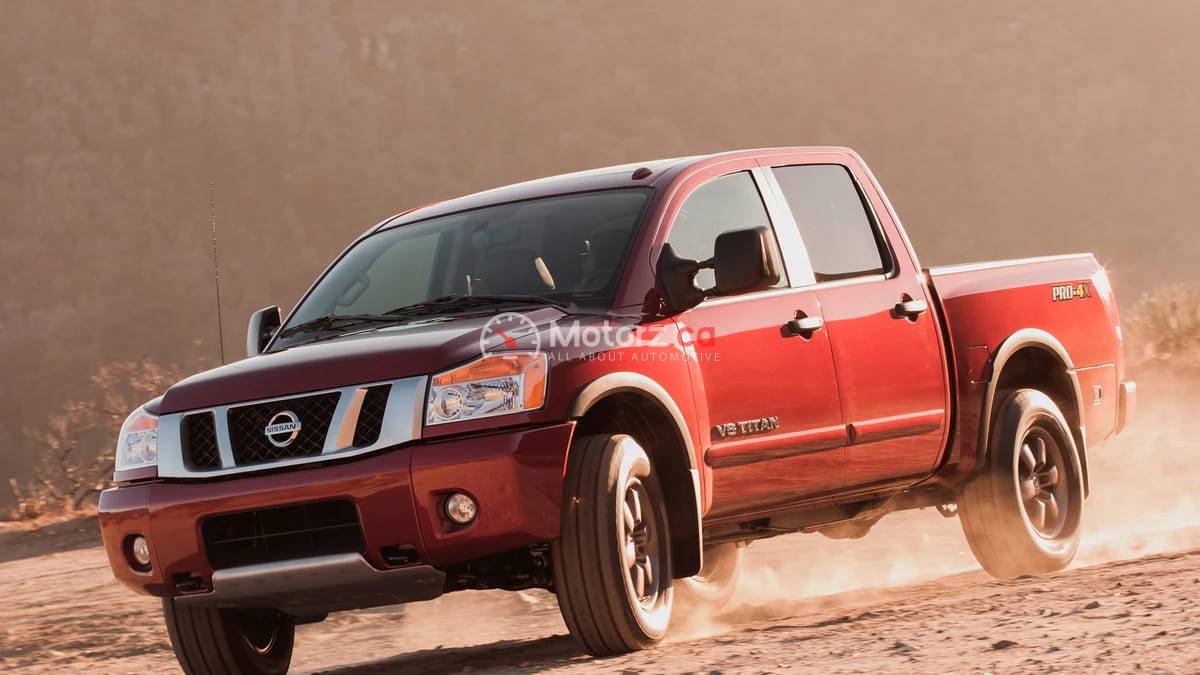
Nissan Titan
Nissan Frontier
Nissan Xterra
Nissan Pathfinder
Nissan Armada
If the adhesive on your steering wheel logo looks cracked or loose, do not attempt to glue it back yourself. This is a safety defect that must be handled by a dealer.
How to Get a Free Repair (Even Without Driving)
If your vehicle is on the “Do Not Drive” list, Nissan and the NHTSA are making it as easy as possible to get the repair done without risking your life on the road.
Free Towing and Mobile Service
Because Nissan does not want you driving these vehicles to the dealership, they are offering:
Free Towing: A flatbed will pick up your vehicle and take it to the nearest authorized dealer.
Mobile Repair: In many regions, a technician can come to your home or workplace and replace the inflator in your driveway in under an hour.
Zero Cost: All recall repairs, including the towing and parts, are 100 percent free.
Identifying Your Risk: The 17-Digit Solution
The only way to know for certain if your specific truck or SUV is safe is to check your Vehicle Identification Number (VIN).
Locate the VIN: Look at the bottom corner of your windshield on the driver’s side or on the sticker inside your driver-side door jamb.
- Act Immediately: If your vehicle shows an “Open Recall” for a Takata inflator, park it immediately.
Don’t Ignore the Warning
In 2026, we are seeing the final, most dangerous stage of the Takata recall. These older Nissan Pathfinders, Sentras, and Frontiers have served their owners well for two decades, but the aging safety systems inside them have become a liability. Taking an hour to check your VIN and schedule a free repair could be the difference between a safe commute and a life-altering injury.