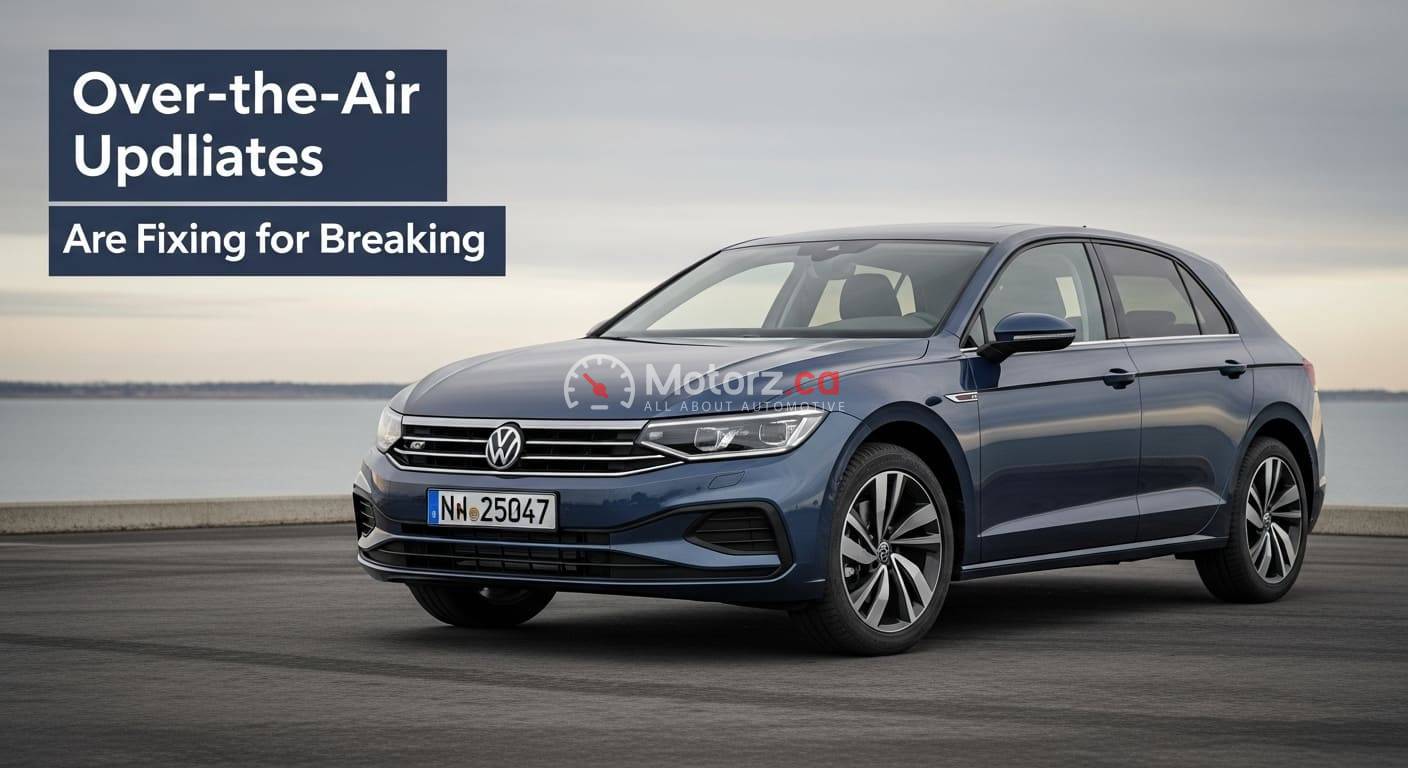

The New VW Lineup world is undergoing a seismic shift, and the epicenter of this revolution isn’t the engine—it’s the code. In an era where cars are essentially computers on wheels, Over-the-Air (OTA) software updates have become the lifeblood of modern vehicles, promising continuous improvement, new features, and instant bug fixes. Volkswagen, with its ambitious electric ID. series, including the highly anticipated ID.4 and the iconic ID. Buzz, has fully embraced this digital paradigm. But the journey has been anything but smooth.
Early adopters of the VW ID. lineup were met with a frustrating reality: vehicles often delivered with glitchy infotainment systems, connectivity failures, and frustrating user interfaces. For a company banking its future on electric mobility and advanced technology, these initial software stumbles were a massive liability. VW’s response has been a relentless push for OTA updates, a digital lifeline meant to bridge the gap between initial release and a polished product.
This raises a crucial, pressing question for every prospective buyer and current owner: Are these Over-the-Air updates truly fixing the new VW lineup, delivering on the promise of a constantly improving electric vehicle, or are they breaking the experience with frustrating delays, new bugs, and the risk of a ‘bricked’ car? We delve deep into the core issues, the successful fixes, and the long road ahead for Volkswagen software stability.
The Promise and the Problem: The Early Software Wounds
The Volkswagen ID. family, built on the versatile MEB platform, launched with a software system widely criticized for being unstable and unintuitive. Consumers reported a litany of issues that detracted significantly from the overall driving experience, tarnishing the initial glow of VW’s EV vision. These weren’t minor annoyances; they were core functional problems.
Infotainment System Lag: Slow responsiveness, frequent freezing, and unexpected reboots of the central touchscreen were common complaints, making essential functions like navigation and climate control a frustrating ordeal.
Connectivity Failures: Issues with consistent network access (LTE connectivity), which is critical for OTA updates themselves, as well as for real-time traffic data and the myVW app integration, left many owners feeling disconnected.
Driver Assistance Glitches: Sporadic malfunctions in advanced features like IQ.DRIVE and Travel Assist, including issues with the rearview camera display and speedometer, led to significant safety concerns and even vehicle recalls. The National Highway Traffic Safety Administration (NHTSA) had to step in for certain display failures on the ID.4, requiring dealership service in many cases.
Basic User Experience: The lack of illumination on key touch-sensitive controls, an issue tied to the software experience, added another layer of frustration.
This turbulent launch established a narrative: VW’s hardware was solid, but its electric vehicle software was a work in progress. The pressure was immense for the OTA system to step up and perform its core function: to rapidly deploy fixes and restore consumer confidence in the new VW lineup. The initial promise of a car that gets better with time was, for many, overshadowed by the reality of a car that needed to get better, and fast.
The Fixes That Matter: VW’s Triumphant Updates
Despite the early stumbles, Volkswagen has been persistent, rolling out a series of significant updates, notably the ID. Software versions (like 2.4, 3.0, 3.2, and more recently, 3.5.11 and beyond), that have genuinely improved the cars. These OTA updates have not just tinkered around the edges; they have delivered meaningful, substantive changes, shifting the balance closer to the “fixing” side of the argument.
Performance and Efficiency Enhancements: Later software versions have optimized battery management and charging algorithms. For instance, some updates have unlocked additional usable battery capacity and delivered faster DC fast charging speeds, directly improving the crucial EV range and road-trip experience for ID.4 owners.
Infotainment System Overhaul: The most noticeable improvements have centered on the notorious infotainment system. Updates brought about greater stability, dramatically reduced lag, and quicker boot times, making the central display feel more like a modern smartphone and less like a beta product. This also includes improved functionality for Wireless App-Connect (Apple CarPlay and Android Auto).
New Features Unlocked: The true power of OTA is delivering features post-purchase. VW has used updates to roll out sought-after capabilities, such as battery pre-conditioning (to improve cold-weather charging), better voice control, and improved functionality for the in-car navigation system. For the coming models like the ID. Buzz, which is launching with newer software versions, this capability is a key selling point.
Crucial Bug and Security Patches: Like any modern connected device, security is paramount. Numerous small, incremental updates have delivered security patches and squashed various bugs that caused system resets, ensuring the vehicle’s electronic control modules operate reliably. This routine maintenance is vital for maintaining VW vehicle dependability.
These successful deployments demonstrate that VW’s underlying architecture can support a robust OTA ecosystem. When executed correctly, the updates fulfill their promise: owners wake up to a better car than they parked the night before, a major competitive advantage in the electric vehicle market, and a huge step toward proving the stability of Volkswagen ID software.
The Frustrations Remain: When Updates Go Wrong
The narrative isn’t purely one of triumph. The very mechanism designed to fix the problem—the OTA update—has, in several high-profile instances, become a source of new and severe frustration, reinforcing the concerns that these digital interventions are occasionally breaking the car.
The most critical issue is the dreaded “bricked car” scenario. While rare, several owners have reported failed installations that render their vehicle inoperable, requiring an unscheduled, lengthy visit to the dealership. This defeats the convenience of OTA and is a massive headache for the owner, transforming a simple software upgrade into a transportation crisis. This volatility points to underlying complexity in VW’s vehicle architecture, which involves managing numerous supplier-specific control units.
Furthermore, a common complaint is the inconsistency and slowness of the rollout. Not all eligible vehicles receive the updates simultaneously, leading to confusion and a sense of being left behind for some owners. When an update is delivered:
Prerequisite Puzzles: Some major updates require a dealer visit for a prerequisite update that the OTA system itself cannot fully manage, forcing owners to still make an appointment and disrupt their schedule.
New Bug Introduction: The software development cycle often involves trade-offs. While one major bug is fixed, a new, minor (or occasionally major) one is introduced—a new connectivity issue, a change in interface preference, or an unexpected climate control behavior. This has fueled the debate on whether to accept a stable-but-flawed version over a newer, potentially riskier one.
User Consent and Process: The update process itself can be clunky, requiring specific conditions (vehicle off, no charging, secure parking), which can be inconvenient, especially for updates that take a long time to download over a potentially slow connection.
The public scrutiny is high, and every failed update or new software glitch feeds the perception that the manufacturer’s internal software company, Cariad, is still struggling to deliver the seamless experience customers expect from a modern, tech-forward EV. This instability is a major hurdle for overall VW ID series reliability.
The Future: SSP, Zonal Architecture, and the ID. Buzz
Volkswagen is acutely aware of its software shortcomings. The company’s future strategy hinges on a complete architectural shift designed to move past the issues plaguing the current MEB-based vehicles. This transition is centered around the upcoming Scalable System Platform (SSP) and a new vehicle electrical architecture.
Cariad and Software 2.0: The long-term goal for the VW Group’s software division, Cariad, is to develop a single, unified operating system—often referred to as Software 2.0—that utilizes a simpler, zonal architecture. This will drastically reduce the number of control units and make the entire system less complex, thus simplifying development, diagnostics, and, crucially, Over-the-Air updates.
The ID. Buzz as a Benchmark: The launch of the long-wheelbase 2025 VW ID. Buzz is a key moment. It benefits from the latest evolutionary version of the existing MEB software, which incorporates many of the fixes and stability improvements learned from the early ID.4 models. Its initial performance will be a bellwether for the current software platform’s maturity before the full SSP transition.
Competition in the Tech Race: In the long run, VW must master OTA to remain competitive. Rivals are already offering advanced features and a much more polished digital experience. The ability to deliver on promised capabilities like Level 4 autonomous driving and vehicle-to-load (V2L) functionality will entirely depend on a reliable, future-proof software stack.
The path forward involves moving away from the patch-and-fix cycle to a model of robust, unified software engineering. For the current lineup, however, the fix is in the code updates, which must prove their consistency to secure consumer faith.
Verdict: A Necessary Evolution, Albeit a Rocky One
The ultimate question—Are Over-the-Air updates fixing or breaking the new VW lineup?—does not have a simple binary answer. The reality is nuanced and sits somewhere in the middle, a tale of both frustration and eventual redemption.
The argument for fixing is strong and demonstrable. OTA updates have genuinely solved critical early-stage flaws, improved performance, and delivered new features that enhance the value of the vehicle over time. Without this capability, the early ID. cars would be fundamentally stuck with their original, flawed software, significantly damaging VW’s reputation and making a second-hand purchase unappealing. The progression from the shaky launch software to the significantly more stable current versions (3.0 and beyond) is a testament to the fact that OTA is a necessary, and ultimately effective, corrective tool for modern auto manufacturing.
However, the argument for breaking remains a significant concern. The high-profile recalls, the occasional ‘bricking’ incidents, and the overall complexity of the update process erode consumer trust. The fact that major patches still, at times, require a workshop update at a dealership undermines the core convenience proposition of OTA. The volatility creates owner anxiety, forcing a community of enthusiasts to become amateur system administrators, troubleshooting their vehicles with methods like “pulling fuse 19” to restore basic connectivity.