


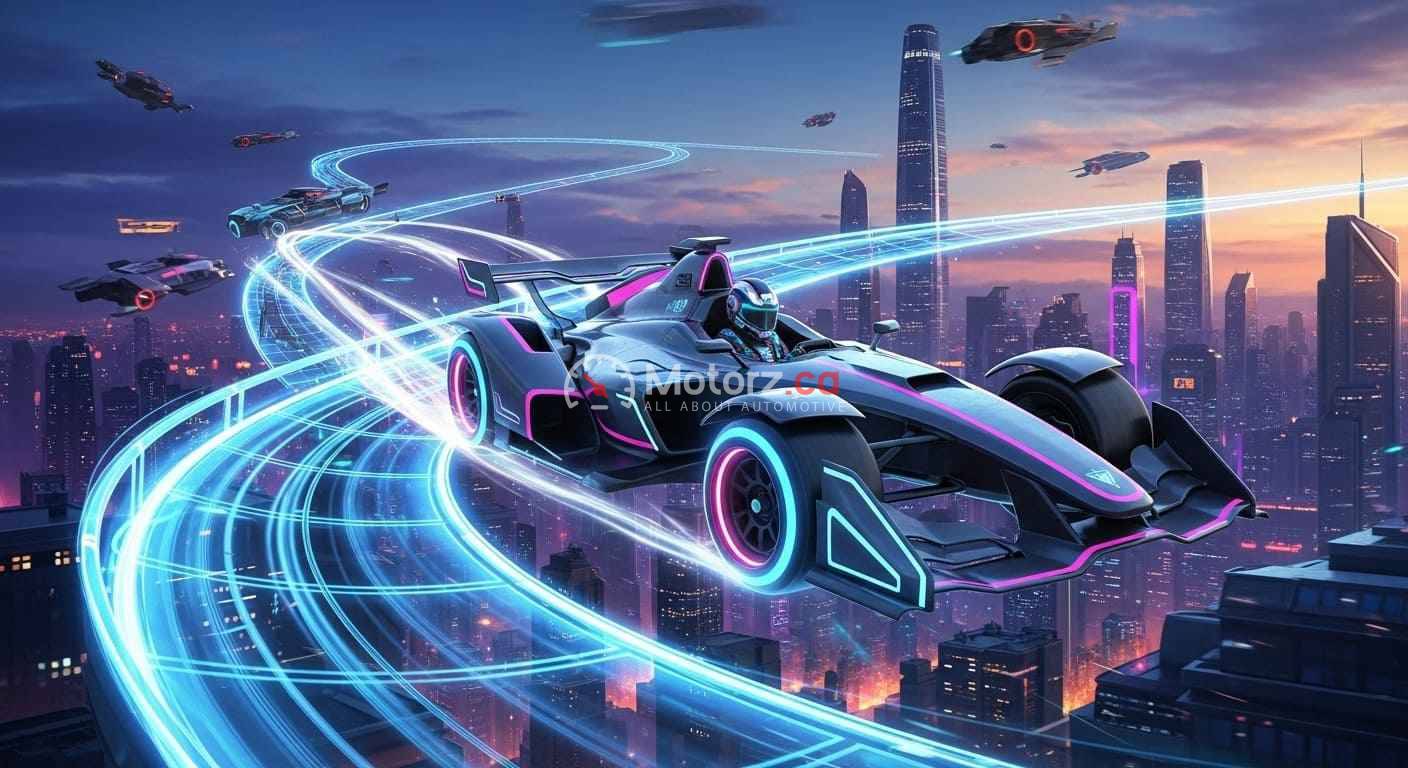

The smell of burning rubber, the thunderous roar of a V10 engine, the symphony of mechanical power—these are the sensations that have defined motorsports for over a century. Yet, a fundamental shift is underway. With the global push toward sustainability and the rapid advancement of technology, the world of racing is being reinvented. The future of motorsports is not just about speed; it’s about a commitment to a cleaner, smarter, and more sustainable world. This new era is being defined by three key pillars: electric power, sustainable fuels, and autonomous Future of Motorsports.
This blog post explores the Future of Motorsports transformation of motorsports, from the rise of all-electric racing to the quiet revolution of biofuels and the mind-bending potential of driverless cars.
The Electric Revolution: From Formula E to Extreme E
When Formula E launched in 2014, it was met with a mix of curiosity and skepticism. Could a silent, all-electric series capture the imagination of fans accustomed to the visceral thrill of internal combustion engines? A Future of Motorsports later, the answer is a resounding yes.
Formula E: The Future of Motorsports
Formula E is now the world’s first all-Future of Motorsports, single-seater international racing series and an FIA World Championship. It has proven that electric cars are not only fast but can produce a different kind of thrill, one centered on strategy, energy management, and razor-sharp efficiency. The series has become a crucial testing ground for electric vehicle (EV) technology. Innovations like advanced battery management, regenerative braking systems, and more efficient electric powertrains are all being developed on the track and then trickling down into consumer road cars.
The future of Formula E is even more Future of Motorsports. The upcoming generations of cars will feature solid-state batteries for faster charging and lighter weight, active aerodynamics, and potentially even wireless charging zones on the track, which could make pit stops a thing of the past.
Extreme E: A Purpose-Driven Adventure
Going beyond the urban tracks of Formula E, Extreme E takes electric racing to some of the world’s most remote and environmentally fragile locations. The series uses a fleet of all-electric SUVs to race in places affected by climate change, like deserts, Future of Motorsports, and rainforests. The mission of Extreme E is not just to race but to raise awareness about global climate issues. The series showcases how electric vehicles can be both powerful and environmentally friendly, all while highlighting the urgent need for climate action.
Other Electric Series
The electric revolution is expanding across the motorsports landscape. There’s MotoE for electric motorcycles, the E1 Series for electric powerboats, and even junior series like the NXT Gen Cup to foster young talent in the world of EV racing. This widespread adoption shows that electric power is not a niche trend but a fundamental part of the future of Future of Motorsports.
A Sustainable Alternative: The Rise of Biofuels and Hydrogen
While electric vehicles grab the Future of Motorsports, the internal combustion engine (ICE) is not going away entirely. Instead, it’s being reinvented with a focus on sustainable fuels. Major racing series, including Formula 1, are embracing a future where roaring engines can coexist with environmental responsibility.
Formula 1’s Biofuel Commitment
Formula 1, with its massive carbon footprint, has made an ambitious commitment to be net-zero carbon by 2030. A key part of this plan is a transition to 100% sustainable fuels. Beginning in 2026, all Formula 1 cars will run on a new biofuel that is synthesized from non-food biological materials, waste, or captured carbon. This e-fuel is designed to drastically reduce greenhouse gas emissions without compromising the performance, sound, or speed that fans Future of Motorsports.
This move is revolutionary because it offers a path for existing ICE Future of Motorsports to become more sustainable, potentially having a massive impact on the wider automotive industry.
The Hydrogen Frontier
Hydrogen is emerging as another powerful contender in the sustainable motorsports landscape. Hydrogen-powered cars can be powered in two ways: through a fuel cell that creates electricity, or by a hydrogen combustion engine that burns hydrogen directly. The only byproduct of both is water, making them zero-emission at the tailpipe.
A major advantage of Future of Motorsports is its rapid refueling time, which is comparable to gasoline and significantly faster than recharging a battery. This makes it an ideal solution for endurance racing. The Le Mans 24 Hours is a prime example, with a new hydrogen prototype class set to race in the coming years.
Beyond the Driver: The Rise of Autonomous Racing
For centuries, motorsports has been defined by the skill and bravery of the driver. But what happens when you remove the human Future of Motorsports? The answer is a whole new dimension of competition driven by artificial intelligence (AI).
Roborace and the Indy Autonomous Challenge
Series like Roborace and the Indy Autonomous Challenge (IAC) are at the forefront of this new frontier. Instead of drivers, these races feature high-speed, autonomous cars controlled by complex AI algorithms. Teams of engineers and data scientists compete to develop the smartest and fastest AI, pushing the limits of technology.
These series are not just for entertainment; they are a critical proving ground for the self-driving technology that will one day be in our road cars. The intense, high-speed, and unpredictable nature of racing provides the perfect environment to test and refine autonomous systems, from object avoidance to decision-making under Future of Motorsports.
A New Kind of Thrill
While the idea of driverless cars may be foreign to traditional fans, autonomous racing offers a unique kind of spectacle. It’s a battle of code, a contest of computational power and algorithmic strategy. It’s a glimpse into a future where technology and sport merge in a breathtaking display of innovation.
The Future is Now: A Diverse and Sustainable Landscape
The future of motorsports is not a single path but a rich tapestry of innovation. It’s not about choosing between electric and internal combustion, but about embracing a diverse range of technologies to create a more sustainable and exciting sport.
For fans: The new technologies are making motorsports more engaging than ever. The focus on energy management and race strategy in electric racing adds a new layer of drama, while the rise of AI-driven strategies and data-rich broadcasts brings fans closer to the action.
For the planet: Motorsports is a high-profile platform that can accelerate change. By pioneering new technologies and raising awareness for sustainability, it is helping to drive the adoption of cleaner energy solutions in the wider world.
The roar of the engine may be replaced by the quiet hum of an electric motor, and the driver may one day be a computer, but the core spirit of motorsports remains. It is a sport of innovation, competition, and a relentless pursuit of speed. The future of motorsports is not just about going faster; it’s about making the world a better place, one lap at a time.