
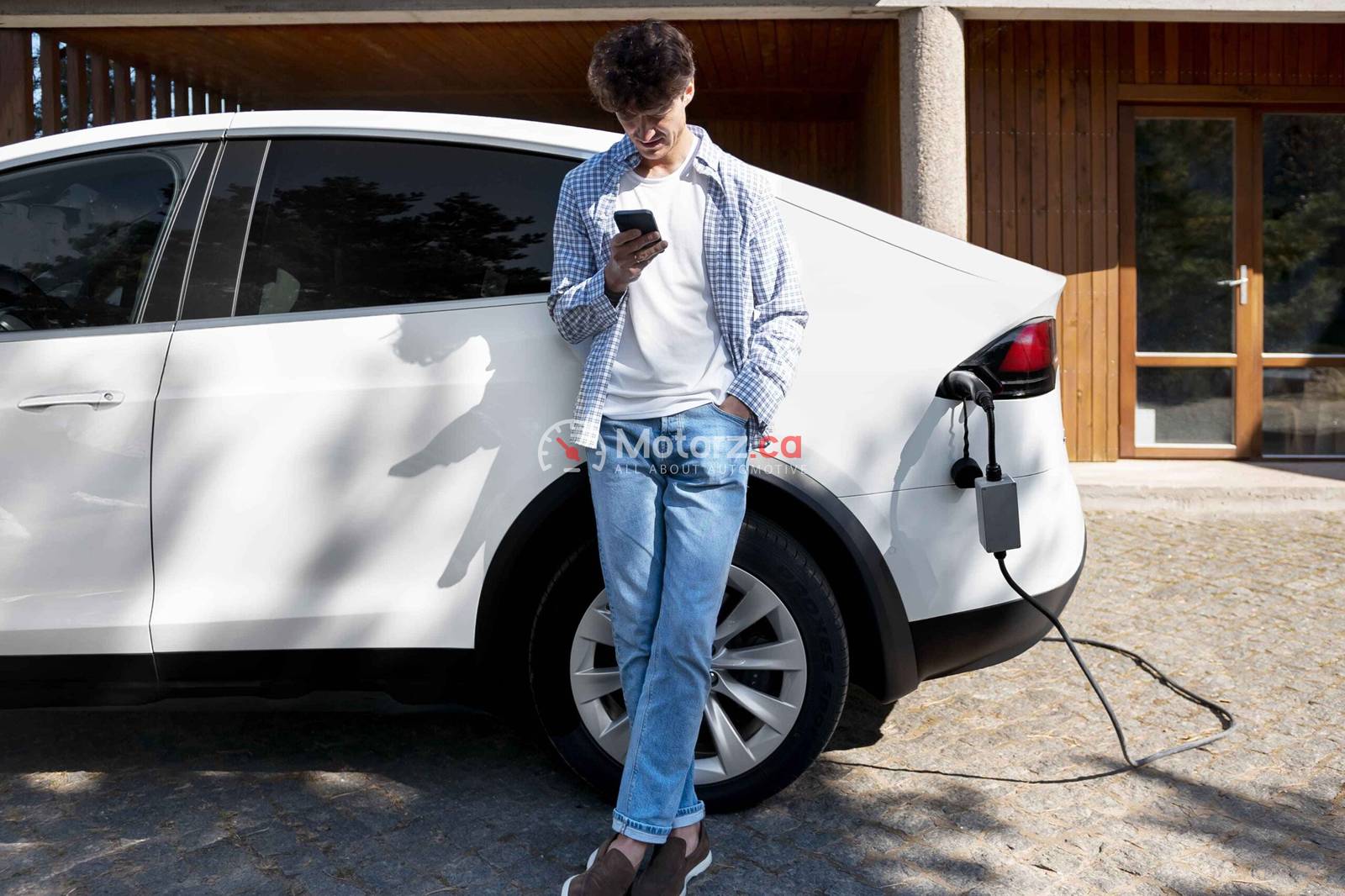

The North American Home revolution has dramatically reshaped the automotive landscape, transitioning us away from fossil fuels and towards a sustainable transportation future. For years, the conversation has centered on the EV’s role as a mode of transport: range, charging speed, and performance. However, a profound new chapter is unfolding in the world of electromobility, one that moves the EV out of the sole realm of transportation and into the heart of the modern smart home. This is the era of bidirectional charging, where your North American Home becomes much more than just a car—it transforms into a massive, mobile energy storage system capable of powering your life in entirely new ways.
The central technologies driving this change are Vehicle-to-Grid (V2G) and Vehicle-to-Home (V2H). Simply put, these systems allow the flow of electricity to move in two directions: from the grid to the car (charging) and from the car back to the grid or your home (discharging).
In North America, where the grid faces challenges from increasing demand, extreme weather events, and the integration of intermittent renewable energy sources like solar and wind, this shift is not just convenient—it’s crucial. Your parked electric vehicle, with its enormous battery capacity (often many times larger than a typical stationary home battery), is poised to become the most significant decentralized energy asset in your community, offering both economic benefits to you and critical support to the power grid.
This blog post dives deep into the world of V2G and V2H, exploring the technology, the benefits, the challenges, and the clear path forward that will see your North American Home become an indispensable part of your North American home’s energy strategy within the next few years. Get ready to rethink what your car can do.
Demystifying V2G and V2H: A Tale of Two Directions
Before exploring the practical applications, it’s essential to clarify the distinction between the two primary forms of bidirectional power flow: V2G and V2H. While often used interchangeably, their functions and beneficiaries are distinct.
Vehicle-to-Home (V2H)
V2H is the most immediately relatable application for the average homeowner. It is the ability for your electric vehicle to power your entire house or a subset of critical loads, especially during a power outage. Think of it as a next-generation, super-sized generator, but without the noise or the need for gasoline.
Backup Power: This is the killer application. In areas North American Home to grid instability, storms, or wildfires, an EV with a battery capacity of 60 to 100 kilowatt-hours (kWh) can power an average home for several days. This offers significant peace of mind and resilience.
Self-Consumption Optimization: If you have rooftop solar panels, V2H allows your EV to store excess solar energy generated during the day and discharge it to power your home’s evening load when the sun is down. This maximizes the value of your solar investment and minimizes the amount of high-priced peak power you draw from the utility.
Vehicle-to-Grid (V2G)
V2G involves a two-way energy exchange directly with the electrical grid managed by your utility. The EV’s battery is treated as a distributed storage asset, a piece of a larger, aggregated resource often called a Virtual Power Plant (VPP).
Peak Shaving and Energy Arbitrage: This is the economic engine of V2G. Utilities often have a high Time-of-Use (TOU) rate during peak demand hours (typically 4 PM to 9 PM). Your EV, acting on automated signals, can discharge a small portion of its stored, low-cost off-peak energy back to the grid during this high-price window. You get paid for this electricity, turning your parked car into a revenue-generating asset that can offset your charging costs.
Grid Stabilization: EVs can provide ancillary services, such as frequency regulation, to help maintain the grid’s power quality. They can react in milliseconds to absorb or inject power, helping to balance the supply of intermittent renewables like solar and wind. By using EVs to smooth out these fluctuations, the utility reduces its need to fire up expensive, polluting “peaker” plants.
The Technology Under the Hood: Bidirectional Charging
The key to unlocking both V2G and V2H is the bidirectional charger. Unlike traditional Level 2 chargers that only allow power to flow in one direction (AC to DC for the car battery), bidirectional chargers contain the necessary power electronics to invert the DC power stored in the battery back to usable AC power for your home or the grid.
Hardware and Communication
The Charger: This special wallbox or charging station connects your EV to your home’s electrical panel and, through it, to the wider grid. The charger itself manages the complex communication and power conversion. North American homeowners will primarily see two major types emerge:
AC Bidirectional Charging (V2H/V2G-AC): This type relies on an AC-to-DC converter inside the vehicle. The external charger simply manages the two-way flow of AC power. This has historically been less common but is gaining ground.
DC Bidirectional Charging (V2H/V2G-DC): This is the more prevalent path for early V2G/V2H deployments, as seen with vehicles using the CHAdeMO standard. The bidirectional inverter is housed within the charging station, sending DC power to the car and receiving DC power back before converting it to AC for the home or grid.
The Protocol: The language allowing the car and charger to “talk” is the International Organization for Standardization (ISO 15118). This is the global standard for communication between the EV and charging equipment, and its adoption is crucial for a standardized, widespread V2G rollout. Specifically, the latest versions are designed to natively support bidirectional power flow, ensuring safety and interoperability across different manufacturers.
Vehicle Compatibility: Your Car as a Power Plant
Compatibility is the current bottleneck, but it is rapidly dissolving. While early V2G initiatives centered on vehicles with the CHAdeMO port (like the Nissan Leaf and Mitsubishi Outlander), the industry is now pivoting toward the North American standard, NACS (North American Charging Standard), which is set to integrate V2G/V2H capabilities via a universal protocol.
Leading the charge are manufacturers who have already announced or launched systems:
Ford: The F-150 Lightning, via its Intelligent Backup Power system, was an early pioneer in V2H, capable of powering a house for days. This paved the way for consumer acceptance.
General Motors (GM): GM is rolling out its GM Energy ecosystem, which includes bidirectional charging for its new EV lineup, starting with models like the Chevrolet Silverado EV.
Kia and Hyundai: New platforms are designed with V2L (Vehicle-to-Load—powering external devices) and V2H/V2G in mind, utilizing sophisticated power electronics.
The prognosis is clear: virtually all new-generation EVs launching from 2026 onwards are highly likely to be V2G-compatible, making the vast majority of North American electric vehicles potential home and grid power sources.
The Economic and Resilience Benefits for Homeowners
For the North American homeowner, V2G and V2H are more than just tech buzzwords—they are a new route to financial savings and energy independence.
Financial Rewards and Savings
Offsetting Charging Costs: By selling power back to the grid during peak pricing hours, a V2G participant can generate revenue that significantly offsets, or in some cases, entirely negates the cost of charging their vehicle. Early North American pilot programs have indicated potential annual savings or earnings that can total hundreds to over a thousand dollars, depending on utility rates and usage.
Lowering Demand Charges: For homeowners and, more significantly, for businesses with EV fleets (like delivery or utility vehicles), V2G can help avoid high utility “demand charges.” By discharging a vehicle battery to cover a temporary surge in power use, companies avoid hitting a high demand peak that would lock in higher rates for the entire month.
Delayed Infrastructure Upgrades: The aggregated capacity of many V2G-enabled EVs acts as a “non-wire alternative” for utilities. Instead of spending millions on new substations or transmission lines to meet rising peak demand, utilities can simply call on the power stored in your vehicles, savings that can translate into lower long-term costs for all ratepayers.
Unparalleled Home Resilience
The true value proposition for many North American consumers is Vehicle-to-Home (V2H) backup power.
Extended Outage Protection: A standard home battery like a Powerwall might offer 13.5 kWh of usable storage, enough for a day or less of critical power. A mid-sized EV, however, can easily hold 70-80 kWh. This massive capacity difference translates to days, not hours, of backup power, a critical feature in regions facing increasingly frequent and intense grid-threatening events.
Integration with Solar: When paired with solar panels, V2H completes the cycle of energy independence. The sun charges the car, and the car powers the home, creating a self-sufficient energy microgrid, all managed by intelligent software that prioritizes your car’s set minimum charge level to ensure you always have enough power for your commute.
The Hurdles: Interoperability, Policy, and Battery Health
The pathway to widespread V2G/V2H adoption is not without speed bumps, primarily relating to standardization, regulation, and consumer concern.
Technical and Regulatory Challenges
Standardization and Interoperability: While ISO 15118 is the standard, its consistent and universal implementation across every new EV and every charging station manufacturer is still an ongoing effort. A lack of uniform standards can lead to compatibility issues and higher installation costs.
Utility Approval and Tariffs: In many regions, the local utility company’s regulations and pricing structures are the largest barrier. Connecting a device that exports power to the grid requires specific approval and interconnection agreements. Furthermore, clear, lucrative V2G tariffs (the pricing structure that rewards homeowners for selling power back) are still nascent in many states and provinces.
Cybersecurity: As the EV becomes a two-way communication and power device, robust cybersecurity protocols are essential to protect the grid from malicious attacks and to safeguard the homeowner’s data and control systems.
The Battery Degradation Question
A major consumer concern is whether frequent V2G cycling will accelerate the wear and tear on an expensive EV battery, potentially voiding the warranty.
Modern Battery Management: Automakers have been clear: modern lithium-ion batteries are highly sophisticated. The V2G/V2H systems are managed by intelligent algorithms that are designed to operate within the optimal State of Charge (SOC) range of the battery. They perform shallow discharges—taking only a small, specific amount of power needed by the grid—which can actually be less stressful than deep, rapid charging.
Manufacturer Assurance: Leading OEMs (Original Equipment Manufacturers) are increasingly offering V2G-specific warranties and have integrated V2G cycling into their battery degradation models, demonstrating confidence in the battery’s longevity. In many cases, V2G is viewed as “exercising the battery,” which can maintain health over the long term.
The Future is Now: V2G/V2H in the North American Context
The technological groundwork is laid, and the regulatory environment is catching up. North America is now entering a critical phase of V2G deployment, moving from isolated pilot programs to commercial viability.
Government and Industry Momentum
Federal and State Incentives: The push for grid modernization and EV adoption in both the United States and Canada is directly supporting V2G. Government funding, tax credits, and utility rebates are increasingly targeting bidirectional charging equipment as a critical piece of infrastructure, helping to lower the upfront cost for homeowners.
Virtual Power Plants (VPPs): Companies are partnering with utilities to create VPPs, which aggregate the power of thousands of distributed energy resources—including your EV battery—to provide megawatt-scale services to the grid. This is how individual homeowners will participate in the energy market and earn revenue.
How to Prepare Your Home
For those considering an EV or a new charger in the coming years, preparing for V2G/V2H is straightforward:
Prioritize Bidirectional Compatibility: When purchasing a new EV, check the manufacturer’s roadmap for V2G or V2H capabilities and the type of charging port it uses.
Install a V2H Ready Charger: Do not install a standard Level 2 charger; instead, choose a model that is explicitly advertised as “bidirectional” or “V2G-ready.” While they are more expensive today, costs are dropping rapidly, and the long-term benefits in energy savings and resilience will justify the investment.
Consult Your Utility: Contact your local power company early in the process to understand their specific interconnection requirements, available V2G tariffs, and any local incentives they may offer for two-way charging.
The future of energy is distributed, resilient, and intelligent. Your electric vehicle is poised to be the centerpiece of this transformation. In a short time, the idea of your car keeping your lights on during a blackout, or even earning you money while you sleep, will not be a futuristic concept—it will be the new normal for the North American smart home. Get ready to plug in and power up.