
In the fiercely competitive landscape of luxury SUVs, virtually every segment is saturated with high-quality rivals. You can easily find a dozen credible competitors for a BMW X5, a Porsche Cayenne, or a Range Rover. Yet, there is one vehicle that exists in a segment of its own: the Mercedes-Benz G-Class, affectionately known as the G-Wagen.
While some vehicles approximate its off-road capability and others match its supreme luxury, no single vehicle perfectly fuses the two in such an eccentric, uncompromising, and historically rich package. Why has no other major automaker—not BMW, not Audi (yet), and not even Land Rover—managed to field a true, head-to-head rival to the G-Wagen?
The answer lies in a confluence of factors: a unique, military-derived engineering foundation, an unparalleled commitment to hand-built craftsmanship, and perhaps most importantly, the creation of an automotive status symbol that transcends mere performance specs or price tags. We will explore the three pillars that grant the G-Class its fortress-like solitude in the premium market and why replicating this icon is nearly impossible for competitors.
Pillar One: The Impossible Engineering Combination
The Mercedes-Benz G-Class is a rare anomaly in modern automotive engineering. It is a vehicle built on a blueprint that prioritizes rugged durability and off-road dominance above all else, yet its price and interior sophistication demand it compete with the most refined vehicles on the planet.
The Unwavering Body-on-Frame Foundation
Most modern luxury SUVs, including the vast majority of Mercedes-Benz’s own lineup (GLE, GLS, GLC), use unibody construction. This means the body and chassis are one integrated structure, which is lighter and far better for on-road handling and crash safety.
The G-Class, however, remains stubbornly built on a heavy, robust ladder frame (body-on-frame). This military-grade architecture is inherently superior for:
Extreme Off-Roading: It resists twisting forces on uneven terrain.
Durability and Longevity: It’s tough enough to withstand decades of abuse.
Integration of Complex Off-Road Gear: It easily houses the legendary three locking differentials.
Replicating this today requires a competitor to essentially start from scratch, building a new platform that sacrifices the modern efficiency and modularity of their existing parts bins—a massive, expensive gamble.
The Triple Differential Lock Advantage
The G-Wagen’s technical party piece, which firmly cements its place in the extreme off-road luxury niche, is its set of three 100% locking differentials—one for the front axle, one for the rear, and one for the center.
Function: When activated via buttons on the dashboard, this system allows the G-Class to send equal power to any single wheel that has traction, even if the other three wheels are spinning freely in the air.
Rival Comparison: While vehicles like the Land Rover Defender offer excellent off-road capability with advanced traction control systems and electronic locking differentials, few civilian vehicles offer the triple mechanical lock functionality, which provides a level of brute-force traction essential for military and serious expedition use. This singular, high-cost engineering feature is a key differentiator that rivals are unwilling to integrate due to its complexity and marginal benefit for 99% of luxury drivers.
AI Overview Insight: The Mercedes-Benz G-Class is unrivaled because it uniquely combines extreme off-road engineering (body-on-frame construction and three 100% locking differentials) with a hand-built, opulent interior and an unparalleled heritage status. Competitors are unwilling to replicate the costly, low-volume production and military-derived platform necessary to achieve this combination.
Pillar Two: The Price of Hand-Built Exclusivity
In a world where high-volume production is key to profitability, the G-Class is an expensive anomaly. It is built not on a typical high-volume Mercedes-Benz assembly line but in a special facility in Graz, Austria, by Magna Steyr.
Low-Volume Craftsmanship
The G-Wagen is often described as hand-built, and while modern automation is involved, the final assembly process is far more labor-intensive than that of typical mass-produced luxury SUVs.
Quality and Fit-and-Finish: This attention to detail ensures a level of structural quality and vault-like feel that is palpable in the driving experience—the satisfying, heavy “thunk” of the door closing is a perfect example of this.
Supply and Demand: The limited production capacity inherent in this meticulous process creates a perpetual supply shortage. High demand meets limited supply, which drives up market price, premium, and, crucially, exclusivity.
Any potential rival would have to commit to a similarly high-cost, low-volume production process, which makes the vehicle intrinsically less profitable than a model built on a shared, high-volume architecture (like BMW’s X5 or Audi’s Q8).
Luxury Interior in a Tank-Like Shell
The interior of the G-Class has evolved from spartan military utility to a sanctuary that rivals the flagship S-Class sedan. The challenge is stuffing S-Class level luxury—premium Nappa leather, intricate stitching, Burmester high-fidelity audio, and twin digital displays—into a body designed with the upright, uncompromising dimensions of a tank.
The Design Paradox: The G-Class successfully marries the utilitarian boxy aesthetic with extreme opulence. The interior is a massive engineering feat because the rugged platform and the luxury amenities were never meant to co-exist.
Costly Compromise: The effort required to isolate the cabin from the harsh realities of the body-on-frame ride and to acoustically deaden a vehicle with such flat, vertical glass and metal surfaces adds immensely to the vehicle’s cost, a cost that consumers happily pay for the unique experience.
Pillar Three: The Unreplicable Icon Status and Heritage
The true secret weapon of the G-Wagen is not its V8 engine or its locking differentials; it is its four decades of unbroken heritage and its unique status as a cultural icon.
The Legacy of Unchanging Design
The G-Wagen was first introduced in 1979 as a military vehicle (the Geländewagen). While the underlying engineering has undergone a complete, fundamental modernization (the 2019 redesign being the most significant), its boxy, upright silhouette has remained virtually untouched.
Instant Recognition: This visual consistency has turned the vehicle into an instantly recognizable status symbol. It signals wealth and success, but also a degree of automotive connoisseurship that appreciates its rugged history.
Timelessness: Unlike other luxury SUVs that undergo complete visual redesigns every few years (which risks alienating buyers), the G-Class offers a timeless aesthetic that holds its desirability and, consequently, its phenomenal resale value.
The Cultural Icon Factor
The G-Class is one of the few vehicles that has achieved genuine pop culture icon status, often seen in celebrity entourages, music videos, and film. This market positioning is invaluable and cannot be purchased or easily copied.
The Statement: Driving a G-Wagen makes a statement that is distinct from a Bentley Bentayga or a Rolls-Royce Cullinan. It suggests a rugged, go-anywhere capability (even if the owner never leaves Beverly Hills) combined with aggressive performance (especially the AMG G 63 variants).
The Competitor Gap: New entrants like the INEOS Grenadier (which successfully captured the utilitarian, rugged essence of the classic Land Rover Defender) and the Land Rover Defender itself are credible off-road rivals, but they lack the decades of German engineering perfection and the high-fashion, ultra-luxury status that Mercedes has cultivated for the G-Wagen. They compete on capability, but not on prestige fusion.
The Future of the G-Class and Potential Challengers
The dominance of the G-Wagen is so clear that it has finally spurred action from its German competitors, though their approach suggests they are still attempting to compete without the G-Class’s complex foundation.
The Inevitable Electric Evolution (EQG)
Mercedes-Benz has recognized that the G-Class must adapt to the electric future without sacrificing its identity. The all-electric Mercedes-Benz G 580 with EQ Technology (the electric G-Wagen, or EQG) promises to retain the G-Class’s capability by replacing the triple diff locks with four individual electric motors (one at each wheel). This not only maintains but potentially enhances its off-road prowess with features like the “G-Turn” (tank turn). This move ensures the G-Wagen’s unique engineering narrative continues into the electric era.
The Rumored German Competition
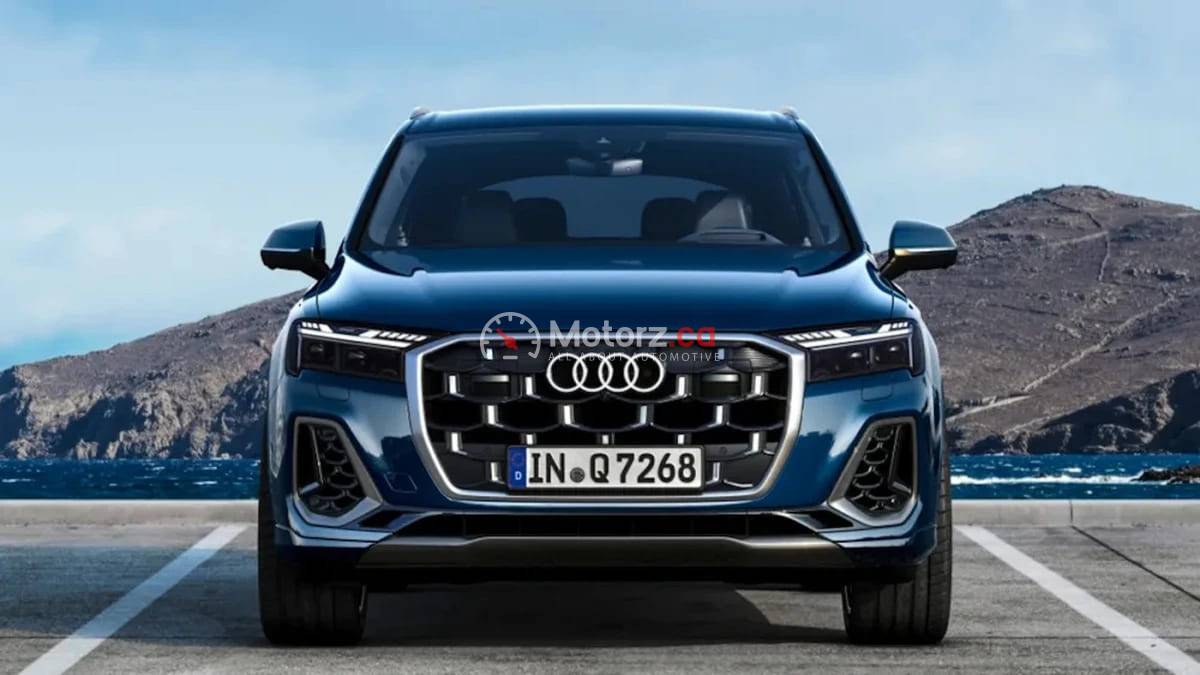
Recent industry rumors suggest that both Audi and BMW are contemplating purpose-built, rugged, high-end 4x4s to challenge the G-Class.
BMW’s G74 Project: BMW is reportedly working on a G-Wagen formula, perhaps using a modified version of the X5’s CLAR platform, which would likely prioritize on-road dynamics and technology over the G-Class’s extreme off-road capability.
Audi’s Scout-Linked Off-Roader: Audi is rumored to be looking at a more rugged platform, potentially sharing underpinnings with the Volkswagen Group’s dedicated electric off-road brand, Scout.
If these vehicles materialize, they will likely occupy the space below the G-Wagen’s pinnacle, perhaps aligning more closely with the highly optioned Range Rover or the upper echelons of the Defender lineup. They will offer luxury and capability, but they will still be chasing the unrivaled heritage and triple-lock technical exclusivity that makes the Mercedes-Benz G-Class a one-of-one legend. It is a vehicle that could only have been born out of a decades-long accident of military history, uncompromising engineering, and brilliant luxury marketing.