We often think of our Driving Your Car as indestructible machines of steel and glass, designed to withstand the rigors of the open road and the brutality of the changing seasons. We wash them on weekends, fill them with high-quality fuel, and maybe even give them a name. But despite our best intentions, many of us are unknowingly engaged in “mechanical sabotage.” Every time you get behind the wheel, your driving habits are either extending your car’s life or quietly accelerating its journey to the scrap heap.
In the world of “The Corner Wrench,” we see the aftermath of these habits every day. We don’t just see broken parts; we see the “death by a thousand cuts” caused by improper operation. In 2026, vehicles are more technologically advanced than ever, but they are also more sensitive to abuse. A modern transmission or a high-pressure turbocharger doesn’t handle neglect the way a rugged engine from the 1990s might have.
At Motorz, we want to help you break the cycle of unintentional wear and tear. Today, Lorraine Explains the seven common driving habits that are driving your car nuts—and how a few simple adjustments can save you thousands in avoidable repair bills.
The Driving Your Car: Why Your Engine Needs a Moment
It’s a chilly morning, you’re running five minutes late for work, and you need to get moving. You jump in, twist the key (or push the button), and immediately floor it out of the driveway. While modern fuel-injected engines don’t need to “warm up” for ten minutes like cars of the past, they do need about thirty seconds of patience.
The Physics of Lubrication
When your car sits overnight, the oil settles into the pan at the bottom of the engine. When you start the car, the oil pump has to push that lubricant back up into the cylinder heads and through the turbocharger. If you put the engine under heavy load immediately, the internal metal components are rubbing against each other with very little protection.
Pro Tip: In 2026, the best “warm-up” is to start the car, wait for the initial high-idle to drop (usually 20 to 30 seconds), and then drive gently for the first few kilometers until the temperature gauge begins to move.
Riding the Brakes Downhill: A Recipe for Overheating
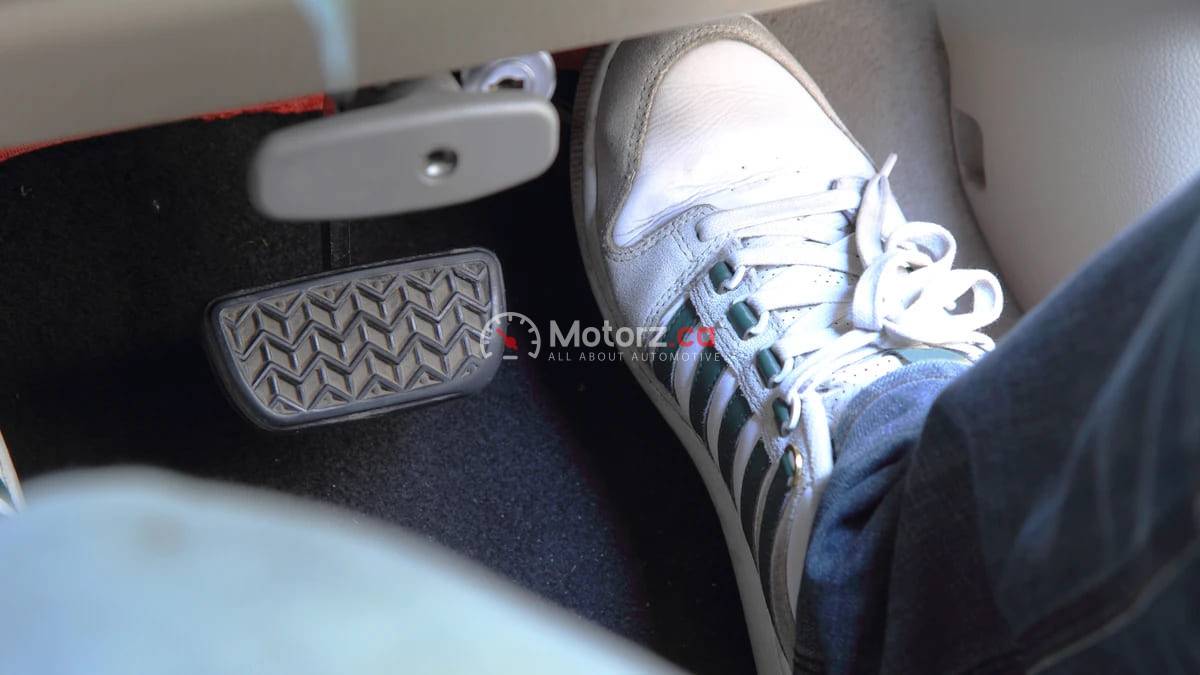
If you find yourself constantly resting your foot on the brake pedal during a long descent, you are “driving your brakes nuts.” This habit generates an immense amount of heat that has nowhere to go.
Understanding Brake Fade
When brakes get too hot, they suffer from “brake fade.” This is where the friction material on the pads becomes so hot that it essentially “gasses out,” creating a thin layer of hot air between the pad and the rotor. Suddenly, you press the pedal, and nothing happens.
The Fix: Use “engine braking.” Shift your car into a lower gear (even in an automatic, using the “L” or “M” mode) to let the engine’s compression hold your speed back. This keeps your brakes cool, fresh, and ready for when you actually need to stop.
Treating the Gear Shifter Like a Handrest
This is a common habit for those who drive manual transmissions or even automatics with a center console shifter. It feels natural to rest your right hand on the gear lever while cruising, but you are putting internal pressure on the transmission’s “shift fork.”
Internal Wear and Tear
The gear lever is connected to a selector fork that is designed to touch the rotating gear collars only for a split second during a shift. Constant pressure from your hand can cause the fork to rub against the rotating parts, leading to premature wear and expensive transmission teardowns.
Insight: Keep both hands on the wheel. It’s safer for your driving and much better for your transmission’s longevity.
Shifting from Drive to Reverse Before Stopping
We’ve all done it—you’re backing out of a parking spot, and while the car is still rolling backward at 3 kilometers per hour, you slap the shifter into “Drive” and take off. This might save you two seconds, but it is incredibly hard on your drivetrain.
The Drivetrain Shock
When you shift directions while moving, you are asking your transmission to use its internal clutches or a small locking pin (the parking pawl) to stop the momentum of the entire vehicle. This creates a massive “shock” to the transmission, CV joints, and engine mounts.
Better Habit: Come to a complete, 100 percent stop before moving the gear selector. Your transmission will thank you by lasting another 100,000 kilometers.
Running on “E”: The Danger of a Low Fuel Tank
Some drivers view the fuel light as a challenge rather than a warning. “I know my car, I can get another 50 kilometers,” they say. While the car might keep running, you are potentially damaging one of its most expensive components: the fuel pump.
The Cooling Power of Gasoline
In most modern cars, the electric fuel pump is located inside the fuel tank. It relies on the surrounding gasoline to act as a coolant and a lubricant. When you run the tank nearly dry, the pump is exposed to air, causing it to run hot. Furthermore, any sediment or “sludge” at the very bottom of the tank is more likely to be sucked into the system, clogging your filters.
Rule of Thumb: Try to keep your tank at least a quarter full. It’s a cheap way to prevent a 500-unit fuel pump replacement.
Flooring it at Low RPM
In an attempt to save fuel, some drivers stay in a high gear while trying to accelerate or climb a hill. You might notice the car struggling, vibrating, or making a “knocking” sound. This is called “lugging” the engine.
Pressure in the Combustion Chamber
Lugging puts an enormous amount of pressure on the engine’s pistons and bearings. It’s essentially the mechanical equivalent of trying to ride a bicycle up a steep hill in the hardest gear while sitting down—it puts maximum strain on your “joints.”
The Fix: Don’t be afraid to let the engine rev. Modern engines are designed to operate efficiently in their mid-range. If you need to accelerate, downshift or press the pedal enough to trigger the automatic transmission to find a better gear.
Ignoring the “Small” Vibrations and Noises
Your car is a symphony of moving parts. When a new “percussion” element joins the mix—a click, a hum, or a slight shimmy in the steering wheel—it is your car’s way of screaming for help.
The Cost of Procrastination
A slight vibration in the steering wheel at 100 kilometers per hour usually means a wheel is out of balance (a 20-unit fix). If you ignore it, that vibration will eventually destroy your tie rod ends, ball joints, and tires (a 1,000-unit fix).
The Corner Wrench Wisdom: If you hear it or feel it, address it. Cars don’t “heal” themselves; they only get more expensive the longer you wait.
Drive Like You Want to Keep It
At Motorz, we believe that the best way to save money on car repairs is to never need them in the first place. By adjusting these seven habits, you aren’t just being a “careful” driver—you are being a smart owner.
Wait 30 seconds after a cold start before driving off.
Use engine braking on hills to save your brake pads.
Hands off the shifter unless you are actually shifting.
Stop completely before switching from Reverse to Drive.
Keep the tank a quarter full to protect your fuel pump.
Avoid lugging the engine; let it breathe and rev when needed.
Listen to the car; small noises always lead to big bills.
Your car isn’t trying to drive you nuts; it’s just trying to do its job. Treat it with a little bit of mechanical empathy, and it will reward you with years of reliable, trouble-free service.