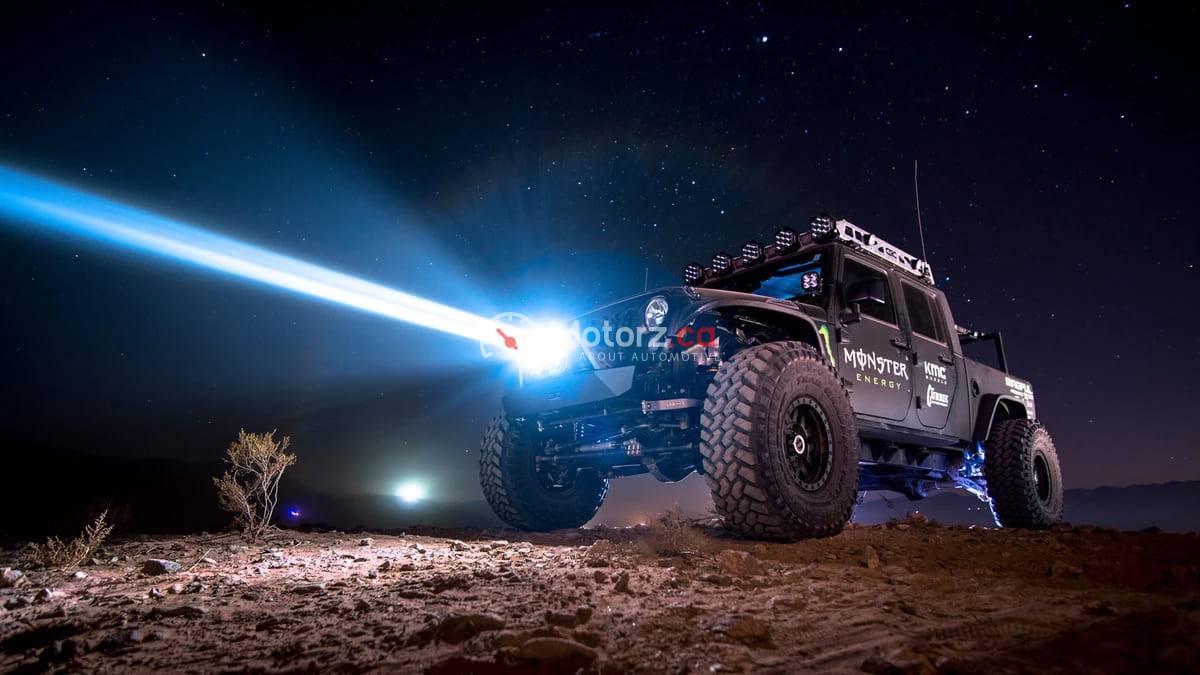
You are Vision at Night down a winding, unlit rural highway late at night. The road ahead is peaceful until a modern pickup truck or luxury SUV rounds the bend traveling in the opposite direction. Suddenly, your world is swallowed by a piercing, wall of bluish-white light. The glare is so intense it feels as though it is burning straight through your retinas. You instinctively squint, look away toward the white shoulder line, and pray that you don’t strike a rogue deer or a pedestrian while navigating the sudden blind spot. For several long seconds after the vehicle passes, you are left driving through a hazy, purple afterimage, your eyes desperately struggling to readjust to the darkness.
If this scenario feels incredibly familiar, you are not alone. Millions of motorists worldwide are experiencing a growing, deeply concerning phenomenon: night driving glare has transformed from a minor seasonal annoyance into an absolute public safety hazard.
While automotive lighting technology has advanced at a breakneck pace over the last decade, a strange paradox has emerged. In our quest to give drivers a clearer, brighter view of the road ahead, we have inadvertently created a hostile visual environment for everyone else sharing the asphalt. We are quite literally blinding ourselves and each other when driving at night.
In the service bays at “The Corner Wrench,” we don’t just fix mechanical gearboxes and leaky gaskets; we audit vehicle safety hardware from bumper to bumper. Today, Lorraine Explains the complex science behind modern headlight glare, the engineering flaws causing this epidemic of temporary blindness, and the practical, actionable strategies you can implement right now to safeguard your vision and stay safe behind the wheel after the sun goes down.
The Tech Shift: From Warm Halogen to Piercing LED
To understand why the roads feel so much more blinding tonight than they did a generation ago, we have to look at a fundamental shift in automotive bulb chemistry and physics. For decades, the standard automotive headlight relied on basic halogen technology. These bulbs utilized a tungsten filament suspended inside a capsule filled with halogen gas, emitting a soft, warm, yellowish light.
The Rise of Vision at Night Diodes (LEDs)
Today, halogen technology has been thoroughly outphased. The vast majority of new vehicles rolling off assembly lines feature Light-Emitting Diodes (LEDs) or High-Intensity Discharge (HID) xenon setups as standard equipment. Automakers made this transition for several incredibly valid engineering reasons:
Energy Efficiency: LEDs draw a fraction of the electrical current required by traditional halogen bulbs, reducing the load on the vehicle’s alternator and electrical bus.
Longevity: A factory LED headlight assembly is engineered to last the entire operational lifespan of the vehicle, completely eliminating the chore of replacing burned-out bulbs every few winters.
Pure Lumens: LEDs produce a massively superior volume of raw, unfiltered light, throwing illumination significantly farther down the road and widening the driver’s peripheral field of view.
The Problem with Color Temperature
The core issue that triggers human eye strain isn’t just the sheer volume of light; it is the color temperature, measured in Kelvins. Old-school halogen bulbs burned at a warm color temperature of around 3,000 Kelvins. Modern LEDs, by contrast, routinely burn at crisp, cool color temperatures ranging from 5,000 to over 6,000 Kelvins.
This cool light closely mimics daylight and features a heavy concentration of short-wavelength blue light. While blue light is exceptional at illuminating reflective road signs and white lane markings, the human eye is structurally poor at focusing it. Blue light scatters much more easily inside the ocular fluid of the human eye, creating a severe internal haze effect known as disability glare.
Geometric Warfare: The SUV and Pickup Truck Boom
The second factor fueling the night driving crisis has absolutely nothing to do with electronics and everything to do with vehicle geometry. The North American automotive market has experienced a massive shift away from low-slung station wagons, coupes, and traditional family sedans in favor of high-riding crossover utility vehicles (CUVs), midsize SUVs, and massive full-size pickup trucks.
Human Factors: Why Your Eyes Struggle After Dark
Our vehicles are only half of the night driving equation; the biological design of the human eye is the other. Driving at night forces our visual system to operate under highly unnatural, strenuous conditions.
Photopic vs. Scotopic Vision
During the daytime, our eyes utilize photopic vision, relying on millions of color-sensitive cone cells concentrated at the center of the retina to process sharp details. In the dark, our eyes transition toward scotopic vision, where light-sensitive rod cells take over around the periphery to navigate low-light environments.
To let in as much scarce ambient light as possible, your pupils dilate wide open. When your eyes are fully adapted to the dark with wide-open pupils, a sudden blast of 6,000-Kelvin LED blue light acts like a flashbang. It instantly overloads the rod cells, forcing the pupil to contract violently. It can take several minutes for the chemical compounds inside your retina to reset and re-adapt to low-light conditions, creating a dangerous window of temporary night blindness.
The Aging Eye and Advanced Scattering
As we age, the clear lens inside the human eye naturally begins to thicken and become slightly cloudy, even long before identifiable cataracts develop. When bright, oncoming blue-white headlight beams hit a slightly cloudy lens, the light is bent and scattered erratically inside the eyeball. This amplification causes older drivers to see enormous halos, starburst patterns, and long streaks of light radiating away from oncoming traffic, making night navigation highly stressful.
Hidden Culprits: Factory Assembly Mispairings and Consumer Errors
While factory technology and vehicle size are structural challenges, a massive percentage of headlight glare issues on the road today come down to simple maintenance neglect, poor alignment adjustments, and bad aftermarket modifications.
Improper Headlight Aiming from the Factory
Many drivers assume that because their car is brand new, every component was calibrated flawlessly at the factory. This is a common misconception. In the service bays, we routinely discover brand-new vehicles rolling off delivery trailers with headlight aim angles that are severely misaligned.
Headlights are equipped with manual adjustment screws that allow technicians to dial in the vertical and horizontal pitch of the light casing. If a vehicle leaves the assembly plant with its headlights aimed just a fraction of an inch too high, that beam pattern will point upward into the sky and directly into oncoming windshields rather than cutting down toward the asphalt.
The Aftermarket Drop-In Bulb Disaster
Perhaps the single biggest contributor to aggressive, illegal road glare is the DIY installation of aftermarket LED replacement bulbs into older vehicles designed exclusively for halogens.
The Problem: A traditional halogen housing uses a specialized reflector bowl or projector lens carefully calculated around a tiny, highly specific glowing wire filament.
The Conflict: Drop-in LED replacement bulbs feature large, flat circuit boards with light-emitting diodes slapped onto the sides. Because the light source does not align with the original factory focal point, the reflector bowl cannot control the light.
The Result: Instead of casting a crisp, focused beam pattern with a clean horizontal cutoff line, the housing throws a chaotic, unmanaged scatter-shield of blinding light in every direction, completely blinding oncoming traffic.
Practical Defense: How to Protect Your Sight This Winter
You don’t have to accept temporary blindness as an inevitable price of driving at night. By implementing a few deliberate maintenance habits and tactical adjustments, you can build a powerful visual shield against oncoming glare.
Keep Your Windshield Clean on Both Sides
It sounds incredibly basic, but a dirty windshield is a massive glare magnifier. Over weeks of daily commuting, a thin, hazy film of dust, interior plastic outgassing residues, and smoke accumulates on the inside surface of your glass.
During the day, this film is virtually invisible. At night, however, when oncoming high-intensity headlights strike that dirty glass, the film catches the light and diffuses it across your entire field of view, creating a blinding white fog effect. Use a dedicated automotive glass cleaner paired with a clean, low-pile microfiber towel to thoroughly scrub both the exterior and interior glass surfaces at least once a month.
Master the Night-View Mirror Toggle
If you drive an older vehicle equipped with a standard manual rear-view mirror, stop flipping it around or adjusting it with your hand when a tall truck gets tailgating close. Look closely at the bottom center edge of your mirror housing; you will find a small plastic toggle tab.
Flipping that tab forward or backward shifts the angle of the internal prism glass. It bounces the blinding headlight beams upward away from your eyes while reflecting a dimmed, secondary safety image that allows you to track the vehicle behind you without eye strain. If your vehicle features a modern automatic-dimming mirror, ensure the small photo-sensor hole on the front or back of the casing isn’t covered by a dashcam mount or a hanging air freshener, as this sensor detects glare to electronically darken the glass.
Use the Fog Line Tactical Trick
When an oncoming vehicle with blinding high-beams is rushing toward you, do not stare directly into the light sources. Instead, consciously shift your gaze down and slightly to the right side of your driving lane.
Focus your eyes on the thick white paint strip that marks the edge of the shoulder—commonly referred to as the fog line. By using the fog line as your steering guide, you can comfortably maintain your lane position using your peripheral vision while protecting your central retinas from the worst of the oncoming light blast.
Restoring Balance to the Nighttime Roadway
At Motorz, we are passionate advocates for automotive technological progress, but true progress should never come at the expense of public safety. High-output LED headlights are a miraculous engineering achievement that can illuminate hazards, pedestrians, and wildlife long before a collision occurs. However, lighting must be managed responsibly with proper alignment, strict regulation, and a mutual respect for all road users.
By taking control of your own vehicle’s lighting alignment, keeping your glass crystal clear, and training your eyes to execute tactical visual adjustments when encountering oncoming trucks, you can successfully mitigate the dangers of night blindness. Drive smart, audit your vehicle’s headlight aim annually, and protect the foundational asset of every great driver: your vision.