You are Vehicle Engine down a busy multi-lane highway, keeping pace with traffic, when a faint, metallic tapping noise begins to echo from the front of your car. Within a few kilometers, that light tapping transforms into a heavy, rhythmic mechanical knock. The check engine light flashes on your dashboard, the gas pedal hesitates, and suddenly, the engine cuts out completely, forcing you to coast across three lanes of fast-moving traffic without power.
For nearly 129,000 Hyundai owners in the United States, this terrifying script is a looming mechanical reality. In coordination with the National Highway Traffic Safety Administration (NHTSA), Hyundai Motor America issued a safety recall targeting multiple models over manufacturing defects that spark premature engine wear. If left unaddressed, this progressive internal degradation can trigger sudden engine stalling or even a catastrophic under-hood fire.
In the service bays at “The Corner Wrench,” we believe that an educated driver is a safe driver. A safety campaign of this scale can feel incredibly overwhelming, especially when it involves the absolute heart of your vehicle. Today, Lorraine Explains the exact mechanical breakdown behind Hyundai’s premature wear recall, the specific model years caught in the dragnet, the subtle sensory warning signs you need to watch out for from the driver’s seat, and how to get your vehicle repaired entirely for free.
The Vehicle Engine: Demystifying the Connecting Rod Bearing
To understand why this recall is so vital, we have to pull off the oil pan and peer into the absolute bottom of your engine. At the center of every internal combustion engine is the crankshaft, which spins at thousands of revolutions per minute to send rotational power to your transmission and wheels.
Connected to this spinning crankshaft are the engine’s pistons, driven downward by controlled fuel explosions. The component that links the piston to the crankshaft is called a connecting rod.
The Sacrificial Shield
Where the connecting rod clamps onto the smooth, polished metal journals of the crankshaft, engineers must place a specialized, semi-circular insert called a connecting rod bearing. These bearings are manufactured from soft, multi-layered metal alloys.
In a perfectly functioning Vehicle Engine, the bearing and the crankshaft journal never actually touch each other. Instead, high-pressure motor oil is continuously pumped into a microscopic clearance gap between them. The connecting rod literally floats on a pressurized cushion of engine oil.
The Core Defect
The problem plaguing the recalled Hyundai powertrains is a manufacturing or design vulnerability that disrupts this vital oil barrier. Due to internal deviations, the connecting rod bearings can experience rapid, premature wear.
As the protective bearing material shaves away, the clearance gap widens, the oil cushion collapses, and raw metal begins grinding violently against raw metal at high speeds.
The Affected Lineup: Is Your Hyundai on the List?
This specific campaign encompasses exactly 128,948 vehicles in the United States, focusing heavily on models built during the first half of the last decade. Because Hyundai utilizes different engine families across its vehicle tiers, not every model from these production years is vulnerable.
The recall strictly targets the following vehicles:
2011–2013 Hyundai Sonata Hybrid Sedans: Early iterations of Hyundai’s hybrid powertrain architecture.
2016 Hyundai Sonata Hybrid Sedans: Select later-generation midsize hybrid commuter models.
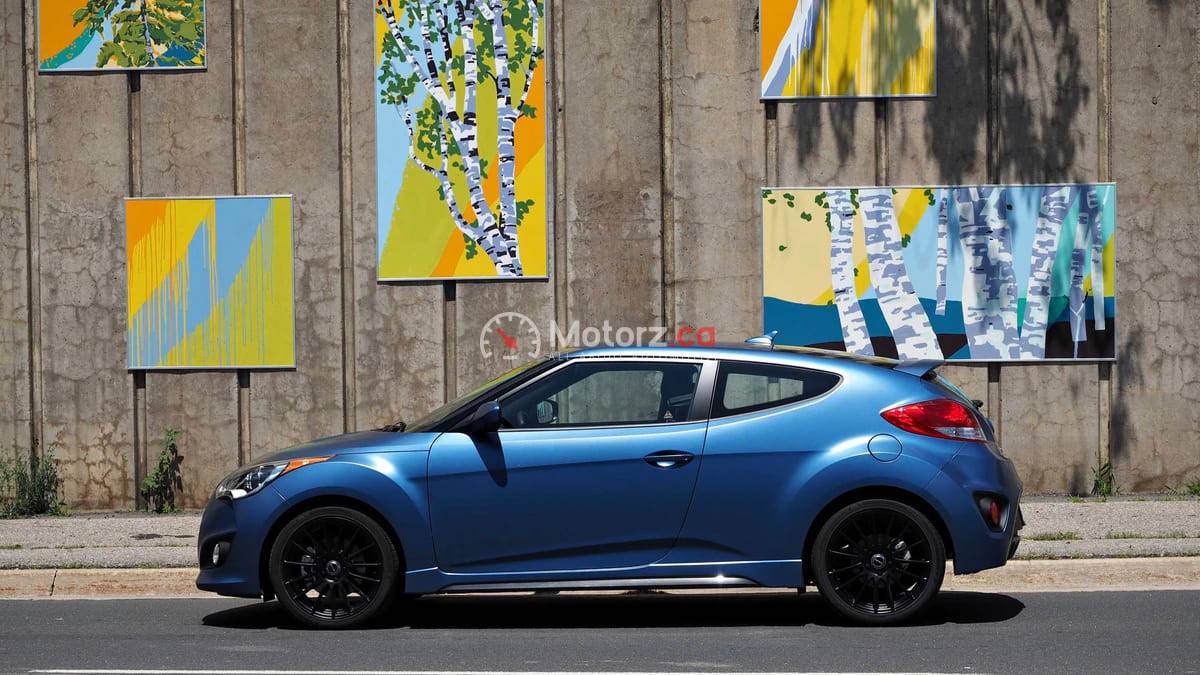
2015–2016 Hyundai Veloster Coupes: The distinct, three-door sporty compact models.
2012 Hyundai Santa Fe SUVs: The popular family crossover utility vehicles.
If you own or are currently shopping the used car market for one of these specific nameplates, you must check its open safety campaign status.
The Cascading Risk: From a Metallic Tap to an Engine Fire
When a connecting rod bearing wears prematurely, it triggers a dangerous chain reaction that compromises vehicle safety. At Motorz, we want to make sure you understand the absolute worst-case scenarios so you can treat this recall with the urgency it deserves.
Highway Stalling Hazards
As the bearing breaks down and friction increases, the internal temperatures of the rotating assembly skyrocket. The metal components can expand rapidly, causing the connecting rod to seize tightly around the crankshaft.
This causes the engine to instantly stop spinning while you are driving. While your electronic power steering, power brakes, and safety airbags will remain fully operational via battery backup, losing forward motive power on a fast-moving highway leaves you incredibly vulnerable to collisions.
The Punctured Engine Block (Fire Risk)
If the vehicle continues to be driven with a severely degraded bearing, the structural stress becomes unmanageable. The connecting rod can snap or fracture completely while the engine is running at high RPMs.
The broken, jagged piece of metal rod acts like a high-speed hammer, punching a massive hole straight through the aluminum engine block. Once the engine block is breached, highly pressurized, hot engine oil sprays out across the engine bay. If that misted oil makes contact with boiling hot exhaust surfaces or an electrical ignition source, a severe engine fire can erupt within seconds.
Driver Sensory Check: Red Flags You Cannot Ignore
Your car will almost always attempt to warn you that an internal component is failing before a catastrophic breakdown occurs. If you drive an affected Sonata, Veloster, or Santa Fe, turn down your sound system and pay close attention to these critical indicators:
The Engine Knocking Noise
The primary indicator of connecting rod bearing failure is a very distinct mechanical sound known as “rod knock”. This sounds like someone is taking a small metal hammer and tapping it rapidly against the inside of your engine block.
Unlike a light ticking noise caused by old fuel injectors or loose valve clearances, rod knock is deep, heavy, and metallic. Crucially, the frequency of the knocking sound will speed up in perfect synchronization as you step on the gas pedal and increase the engine’s RPMs.
Sudden Power Hesitation and Vibration
As internal friction climbs, the engine has to fight against its own internal components to stay running. You will notice a severe drop in overall power, sluggish acceleration when merging, and an unusual, coarse vibration rippling through the floorboards or steering wheel when idling at a stoplight.
Dashboard Warning Illuminations
Keep a watchful eye on your instrument cluster. Two distinct warning lights are tied directly to this premature wear issue:
The Check Engine Light: Triggers when the vehicle’s engine control module detects cylinder misfires or abnormal crankshaft rotation speeds.
The Low Oil Pressure Warning Lamp: This is an absolute emergency light. If your oil pressure drops because bearing wear has widened the internal engine clearances, this oil can symbol will glow red. If this light illuminates while driving, pull over safely and shut off the engine immediately.
The Free Factory Remedy: Software and Engine Replacements
Under the clear rules of the National Traffic and Motor Vehicle Safety Act, vehicle manufacturers are legally obligated to fix safety-related defects at zero cost to the consumer. If your vehicle is flagged in this 129,000-car recall, Hyundai has a two-stage repair process mapped out.
Step 1: The Technical Inspection
When you bring your vehicle to an authorized Hyundai dealership service center, a factory-trained technician will conduct a specialized inspection of your engine’s lower rotating assembly. They are checking for microscopic metallic debris in the oil pan and auditing the condition of the bearings.
If the technician discovers that your engine displays internal bearing wear or scoring damage, the dealer will remove your old engine block and install a brand-new factory engine assembly entirely free of charge.
Step 2: The Knock Sensor Detection System (KSDS) Update
Whether your engine passes inspection or receives a full replacement, the dealership will also perform a mandatory electronic control module software update. This update installs an advanced safety feature called the Knock Sensor Detection System (KSDS).
The KSDS repurposes your vehicle’s existing factory knock sensors to continuously monitor the engine block for the exact, specific acoustic vibration patterns generated by a failing connecting rod bearing. If the software spots a developing bearing issue before you can hear it, it will immediately flash the check engine light continuously to alert you, limit the engine’s maximum power output to keep it safe, and protect the block from throwing a rod or catching fire.
Proactive Ownership Protects Your Ride
At “The Corner Wrench,” we know that hearing your vehicle needs a potential engine replacement is incredibly stressful. However, safety recalls are a protective shield designed to keep dangerous defects off our roads.
If you own a 2011–2013 or 2016 Sonata Hybrid, a 2012 Santa Fe, or a 2015–2016 Veloster, do not wait for a mechanical failure to occur. Locate your 17-character Vehicle Identification Number (VIN) on your insurance card or driver’s side door jamb, run it through the NHTSA recall lookup database, and call your local dealer to schedule your free inspection and KSDS software installation. Taking action today ensures your Hyundai remains reliable, safe, and completely roadworthy for years to come.